 English
 Spanish
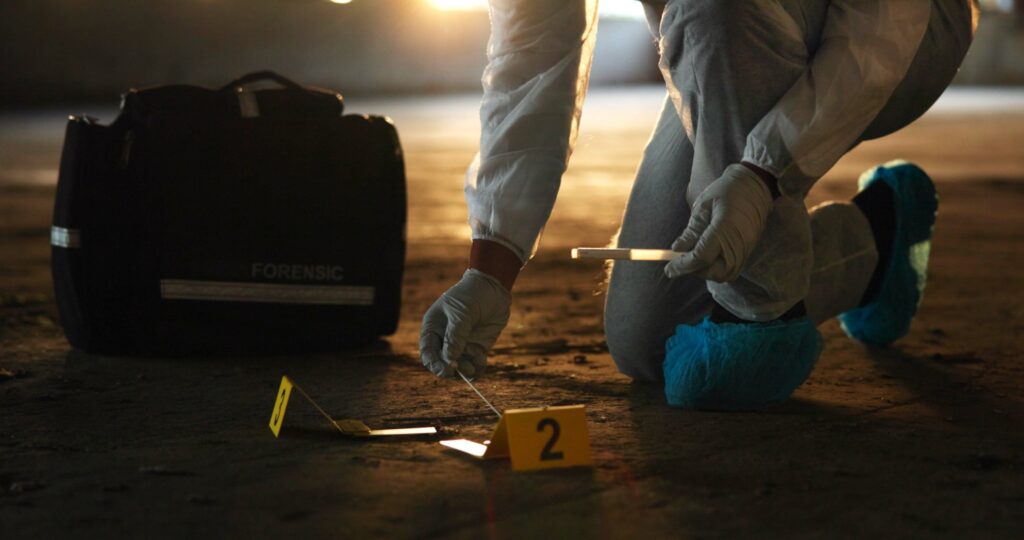
With millions of visitors each year, Las Vegas presents unique challenges for law enforcement, especially in cases involving violent crimes such as murder. Forensic evidence is an essential element in ensuring that justice is achieved. This article explores the pivotal role of forensic science in murder investigations, from initial evidence collection to courtroom presentations.

The Science Behind Solving Crimes: Forensic Evidence Overview
Forensic evidence is the application of scientific methods to aid criminal investigations and legal processes. This category encompasses various disciplines, including DNA analysis, fingerprint identification, and digital forensics. These techniques are invaluable in solving murder cases, where even the smallest piece of evidence can tip the scales.
DNA analysis stands as one of the most critical aspects of forensic science. Investigators collect DNA from items such as clothing, weapons, or personal items at a crime scene. This evidence can be matched against databases like CODIS (Combined DNA Index System) to identify suspects or connect cases. In Las Vegas, the use of DNA evidence has been pivotal in solving high-profile cases and cold cases, demonstrating its reliability in achieving justice.
The Las Vegas Metropolitan Police Department (LVMPD) has also made significant advancements in digital forensics. Their dedicated Digital Forensics Lab analyzes electronic data to track suspects’ activities and communications. This approach can provide insights that traditional investigative methods might overlook.
Forensic Evolution in Las Vegas Investigations
Historically, criminal investigations relied heavily on eyewitness accounts and circumstantial evidence. As forensic science evolved, so did the precision of investigations. Initially, evidence collection involved basic fingerprinting and rudimentary chemical analysis. Today, the LVMPD leverages sophisticated methods such as DNA profiling, ballistic examinations, and trace evidence analysis.

The importance of forensic evidence in Las Vegas’ unique environment—with its transient population and millions of annual tourists—cannot be overstated. The challenge of witness availability in such a dynamic setting underscores the necessity for forensic tools to provide concrete, objective proof. Cases like State v. Rowland, where DNA evidence was crucial in securing a conviction, highlight the transformative impact of forensic advancements.
The Role of Forensic Science in the Criminal Justice System
Forensic evidence is not only pivotal in investigations but also serves as an essential tool within the courtroom. Scientific findings provide prosecutors, defense attorneys, and judges with an objective basis for making decisions. In Las Vegas, the use of forensic evidence often becomes the cornerstone of murder trials, helping to either implicate or exonerate individuals.
Digital forensics is particularly vital in modern investigations. By extracting and analyzing data from computers, smartphones, and other electronic devices, investigators can uncover vital information about a suspect’s activities and communications. This data can reveal motives, plans, or even place suspects at crime scenes.
One recent development in the forensic field is forensic genealogy, which combines DNA analysis with genealogical research to identify suspects in cold cases. This approach has already been used successfully in cases across Nevada and can provide long-sought closure to families of victims.
The intersection of forensic science and legal proceedings underscores how technological advancements contribute directly to the pursuit of justice. For defense attorneys, understanding forensic processes and challenging discrepancies or biases in the analysis is crucial to safeguarding their clients’ rights.
Forensic Evidence’s Impact on Las Vegas Crime Cases
Given the sheer number of visitors and residents, Las Vegas poses unique challenges for criminal investigations. Forensic evidence plays a central role in helping investigators and legal teams navigate these complexities. In murder cases, DNA, fingerprints, and ballistic analyses are often the decisive factors in court outcomes.
For example, a notable Las Vegas case, State v. Hernandez, showcased how digital forensics helped secure a conviction by tracing online activity linked to the crime. This type of evidence often proves more reliable than eyewitness testimonies, which can be influenced by stress or poor recollection.
At The Defense Firm, we recognize the significance of forensic evidence and understand how to evaluate and challenge forensic reports effectively. Our attorneys leverage their expertise to identify potential flaws in the collection or analysis of forensic data. This approach is crucial for clients facing serious charges, as it ensures a fair trial based on accurate and impartial evidence.
Conclusion
The role of forensic evidence in Las Vegas murder investigations is undeniably significant. From DNA profiling to digital forensics, these scientific tools have reshaped how crimes are solved and tried in court. For individuals involved in criminal cases, understanding the weight of forensic evidence and securing experienced legal representation is essential.
If you or someone you know is facing charges involving forensic evidence, seeking prompt legal counsel is vital. At The Defense Firm, we are well-versed in the complexities of forensic science and its application in Nevada’s legal system. Contact us today for a consultation and let our experienced team guide you through the intricacies of your case and protect your rights at every stage of the process.