 English
 Spanish
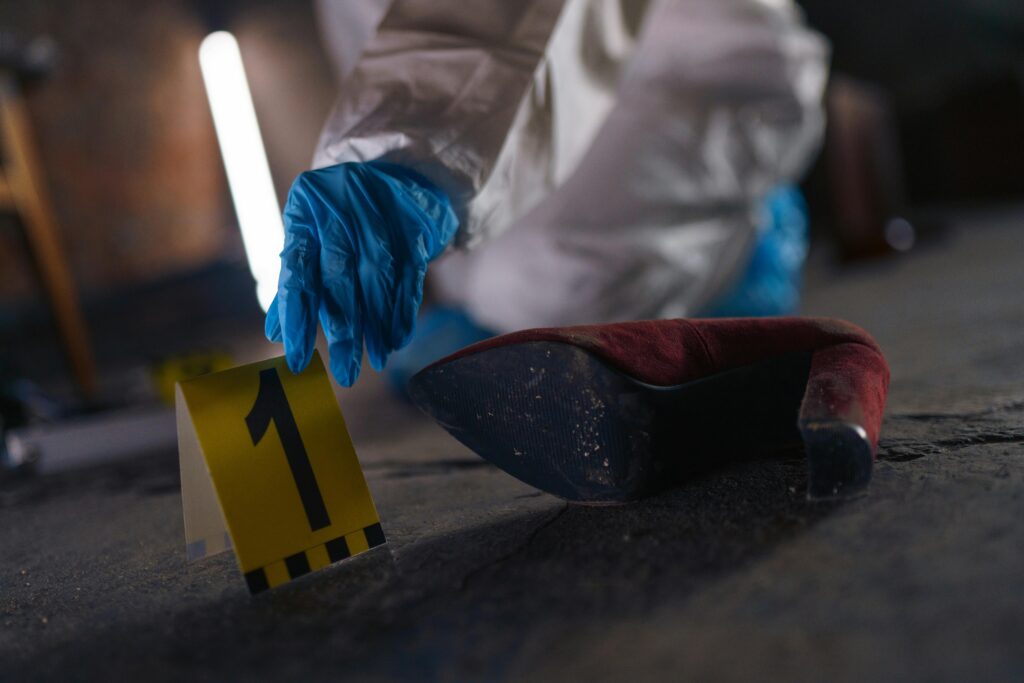
Circumstantial evidence plays a crucial role in Nevada murder trials, often shaping the outcome long before a jury reaches a verdict. While many people assume only eyewitness testimony or direct proof can establish guilt, the reality is far more complex. Nevada prosecutors frequently rely on circumstantial evidence to build a narrative, connect behavioral patterns, and argue that a defendant committed a homicide beyond a reasonable doubt.
Understanding how circumstantial and direct evidence work and how they can be challenged is essential for anyone facing a murder charge in Las Vegas, Henderson, or Clark County. The legal process can move quickly, and the consequences of misinterpreted evidence can be life-changing. With the right defense strategy, however, even the strongest-looking circumstantial evidence can be dismantled, reinterpreted, or excluded entirely.
Why Prosecutors Rely on Circumstantial Evidence During Nevada Murder Trials
Prosecutors often rely on circumstantial evidence when no single piece of direct proof is available. Unlike direct evidence, which claims to prove a matter asserted directly, circumstantial evidence relies on inferences drawn from the situation surrounding the murder scene.
In serious criminal cases, especially those involving violent crime, prosecutors use various forms of such evidence to suggest the defendant’s guilt. They may point to physical objects found near the crime scene, digital evidence, suspect’s fingerprints, or behavioral patterns that allegedly connect the defendant to the act.
The criminal justice system permits circumstantial evidence to carry the same weight as direct evidence under the Nevada Revised Statutes, even though it doesn’t directly prove a defendant committed the crime. This gives the prosecution broad authority, but also creates room for wrongful interpretations and even wrongful convictions when evidence is insufficient or unreliable.
How Direct and Circumstantial Evidence Differ in Nevada Criminal Cases
Direct evidence refers to testimony or material that claims to directly prove a fact. Examples include eyewitness accounts, recorded voices confessing to a crime, or surveillance footage clearly showing the defendant’s location at the time of the murder.
Circumstantial evidence, however, points to surrounding facts from which guilt may be inferred. A witness testifies about seeing someone flee the crime scene, DNA evidence is found on a murder weapon, or digital evidence places the defendant’s phone near the location.
Although indirect evidence does not directly prove the act itself, Nevada courts allow both types of evidence to be used together when presenting evidence in murder cases. When both the prosecution’s evidence and the defense attorneys’ arguments collide in court, jurors must examine all the evidence to decide whether it establishes guilt beyond a reasonable doubt.

The Role of Forensic and Physical Evidence in Establishing Guilt
Forensic evidence often becomes a determining factor in Nevada murder trials. DNA evidence, suspect’s fingerprints, blood spatter analysis, and ballistic comparisons are frequently used to create what prosecutors argue is a concrete evidence chain linking the defendant to the criminal act.
However, forensic evidence is not infallible. Mistakes in collection, contamination, mislabeling, or flawed laboratory interpretation can lead to false evidence being presented in court. Defense attorneys often file pre-trial motions to exclude unreliable forensic findings or challenge the credibility of expert testimony that attempts to establish guilt based on questionable scientific methods.
How Eyewitness Testimony Can Strengthen or Destroy a Murder Case
Eyewitness testimony is often viewed as powerful, but Nevada courts recognize that human memory is imperfect. Stress, lighting conditions, recognition errors, and personal biases may lead to inaccurate witness statements.
In some murder cases, eyewitness accounts contradict physical evidence or digital records. When a witness testifies inconsistently or admits to influencing factors, the credibility of the prosecution’s case can weaken significantly. Defense attorneys often highlight these inconsistencies to cast doubt on whether the defendant’s guilt has truly been proven beyond a reasonable doubt.
Digital Evidence: Phones, Messages, and Surveillance Footage
Modern murder trials routinely rely on digital evidence to reconstruct timelines. Cell phone records, GPS data, deleted messages, and surveillance footage can be used to claim a defendant’s location or intent.
But digital evidence is only as reliable as the interpretation behind it. A phone near a crime scene does not prove the defendant personally committed the act. Messages taken out of context can misrepresent intent. Surveillance footage may be low-quality or ambiguous.
Experienced criminal defense attorneys know how to challenge these assumptions and present exculpatory evidence that counters the prosecution’s narrative.
Behavioral Patterns and Motive: Why They Often Mislead Juries
Prosecutors sometimes argue that behavioral patterns—such as stress, anger, debt, or arguments—point toward a defendant’s guilt. But in criminal law, behavior alone cannot directly prove that a murder occurred.
These forms of evidence rely heavily on interpretation. A normal reaction can be twisted to imply intent or consciousness of guilt when no such connection exists. Defense strategies often include expert testimony to demonstrate that behavioral patterns are an unreliable basis for establishing criminal intent.
When Circumstantial Evidence Is Not Enough for a Nevada Murder Conviction
Nevada law requires jurors to find guilt beyond a reasonable doubt. If circumstantial evidence is weak, inconsistent, or contradicted by physical evidence or witness testimony, the prosecution’s case may collapse entirely.
Insufficient evidence frequently results in acquittals when the defense successfully exposes flaws, gaps, or speculative reasoning. Jurors must consider whether all the evidence forms a complete and credible picture—rather than a patchwork of assumptions.
How an Experienced Nevada Criminal Defense Attorney Challenges Circumstantial Evidence
Defense attorneys have multiple strategies to challenge circumstantial evidence in murder trials. They often begin by reviewing the prosecution’s evidence to identify questionable conclusions, faulty forensic analysis, or misinterpreted witness statements.
They also examine whether law enforcement complied with constitutional protections when collecting evidence. If police violated the defendant’s constitutional rights, the defense may file pre-trial motions to suppress unlawfully obtained evidence.
The goal is to cast doubt, expose weaknesses, and present the jury with an alternative explanation that protects the defendant’s innocence.
When Circumstantial Evidence Leads to Wrongful Convictions
Wrongful convictions are a real risk when indirect evidence is misused. Unreliable forensic methods, misleading behavioral interpretations, or false testimony can lead juries to accept conclusions that have no concrete basis.
When false evidence or misinterpretation impacts the outcome, appealing the conviction or pursuing post-conviction relief becomes critical. With the right legal representation, defendants may be able to present new evidence, challenge flawed testimony, or overturn an unjust verdict.
The Importance of Legal Representation in Murder Cases
Facing a murder charge in Nevada without strong representation invites serious consequences. The stakes include a permanent criminal record, life imprisonment, or even harsher penalties depending on the nature of the case.
An experienced criminal defense attorney provides guidance through the legal process, protects the defendant’s constitutional rights, counters the prosecution’s evidence, and works to achieve the best possible outcome.
Without skilled counsel, circumstantial evidence may appear overwhelming when, in reality, a strong defense strategy can weaken or dismantle it entirely.
FAQ
Can someone be convicted of murder in Nevada based solely on circumstantial evidence?
Yes, Nevada law allows circumstantial evidence to carry the same weight as direct proof. However, the prosecution must still convince the jury of guilt beyond a reasonable doubt, and a strong defense can often expose weaknesses in such evidence.
What is the biggest problem with relying on circumstantial evidence in murder cases?
Circumstantial evidence can be misinterpreted or taken out of context. When prosecutors rely too heavily on inferences instead of concrete proof, the risk of wrongful convictions increases significantly.
How can a Nevada criminal defense attorney challenge circumstantial evidence?
Defense attorneys may challenge the reliability of forensic results, expose inconsistencies in witness statements, present exculpatory evidence, or file motions to exclude unlawfully obtained evidence. Their goal is to show the jury that the prosecution’s case is incomplete or unreliable.
Conclusion
Circumstantial evidence can shape the direction of a murder trial, but it does not automatically determine guilt. Nevada law allows indirect evidence to support a conviction, yet jurors must still be convinced beyond a reasonable doubt. When evidence is flawed, misinterpreted, or incomplete, a powerful defense can prevent devastating consequences.
If you or a loved one is facing a murder charge in Las Vegas, Henderson, or Clark County, you don’t have to navigate this alone. Contact The Defense Firm for a free consultation with a skilled Nevada criminal defense attorney who knows how to challenge circumstantial evidence and fight for your freedom.