 English
 Spanish
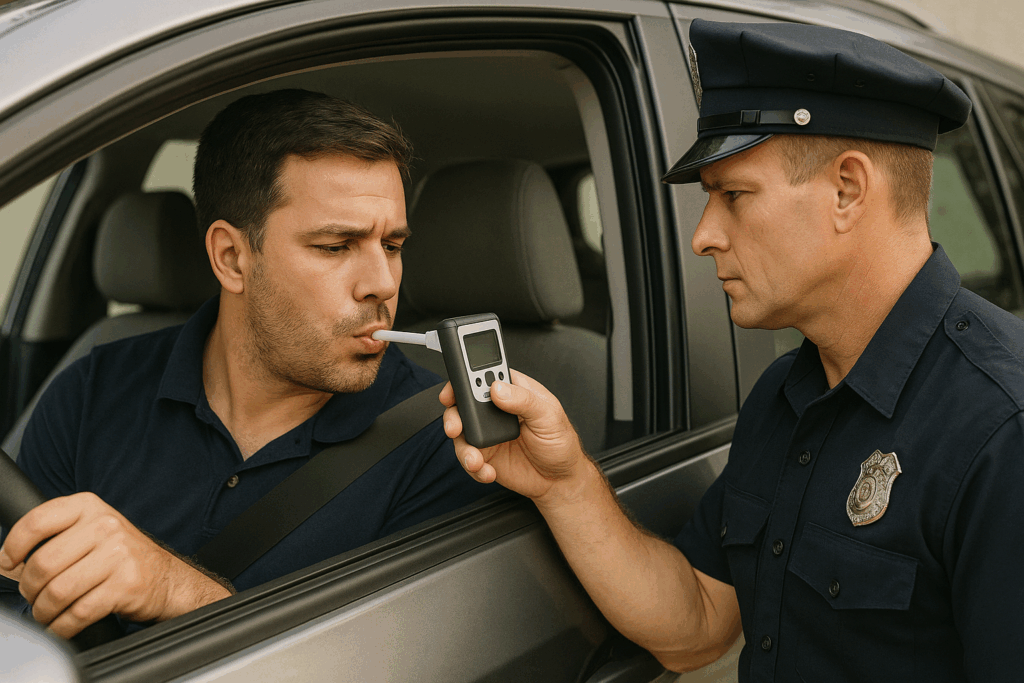
When someone is arrested for DUI in Las Vegas, the timeline of alcohol absorption becomes one of the most important factors in the case. The police may rely on a breath or blood test taken long after the traffic stop, but these delayed measurements do not always reflect the driver’s blood alcohol concentration (BAC) at the moment of driving. This gap creates a powerful defense strategy known as the rising blood alcohol defense, which challenges whether the state can prove the driver was above the legal limit at the actual time of driving.
In Nevada, prosecutors build DUI cases around chemical test results, officer testimony, and field sobriety observations. But when the driver’s BAC was still rising due to alcohol absorption, even a high test result taken later may not indicate impairment during the stop. Because the science behind alcohol metabolism directly contradicts the assumption that BAC stays constant, this defense forces courts to closely examine timing, procedures, and scientific reliability.
Rising BAC defenses are technical, evidence-driven, and deeply tied to Nevada’s legal requirements. Understanding how they work can significantly change the outcome of a Las Vegas DUI case, especially when jail time, fines, or felony enhancements are on the line.
Why the Timeline of Alcohol Absorption Matters in Las Vegas DUI Trials
A rising BAC defense begins with one central fact: a person’s blood alcohol concentration does not peak immediately after drinking. Instead, it increases gradually as alcohol moves from the stomach into the bloodstream. This period of alcohol absorption often lasts between 30 minutes and two hours, depending on metabolism, body weight, food intake, medical conditions, and the amount of alcohol consumed.
During this window, a driver’s BAC may be below the legal limit while operating the vehicle, but significantly higher when the breath test or blood test is taken later. Nevada law requires that prosecutors prove the driver’s BAC at the time of driving, not just at the time of the test. This distinction becomes critical when chemical tests occur long after the initial traffic stop.
Drivers may be pulled over for something minor—a broken taillight, drifting within a lane, or speeding—but the chemical tests administered an hour later may no longer reflect their true impairment level at the time the police initiated the stop.
How Law Enforcement Conducts BAC Testing After a Las Vegas DUI Arrest
The rising BAC defense focuses on the timing between driving and testing. After a DUI arrest, police officers in Las Vegas generally administer a preliminary breath test followed by an evidentiary breathalyzer test or blood draw at the station. These procedures may take significant time due to arrest protocols, transport, or officer availability.
Nevada’s two-hour rule allows the state to use test results taken within two hours of driving as evidence of BAC levels. But this “allowance” does not eliminate a rising BAC argument. It simply means prosecutors may legally submit the test. They still must prove that the result reflects the driver’s BAC at the time of the offense, something a rising BAC defense sharply challenges.
Delays caused by questioning, paperwork, field sobriety evaluations, or waiting for medical personnel to take a blood sample can create a scenario where the BAC is artificially elevated by the time testing occurs.

How Rising Blood Alcohol Levels Form the Basis for a Strong DUI Defense
A rising BAC defense argues that the driver was still absorbing alcohol, meaning the BAC was increasing during the period between driving and testing. If the absorption curve was still climbing, the BAC test results would be higher than the BAC while the driver was actually behind the wheel.
This defense relies on scientific evidence showing that BAC peaks later for some individuals due to differences in digestion, drinking patterns, and metabolic rate. If the driver consumed alcohol shortly before driving, their BAC levels may not have reached their peak until much later.
During the rising phase, performance on field sobriety tests may not match what would normally be expected from someone with a high BAC. This inconsistency becomes powerful evidence that the BAC result is misleading or scientifically inaccurate.
How Nevada DUI Laws Treat Rising BAC in Criminal Trials
Nevada prosecutors often argue that chemical test results should speak for themselves, but Nevada DUI laws require that the state prove the defendant’s BAC or impairment at the specific moment of driving. Because a rising BAC defense challenges this exact point, the courts must scrutinize whether the test results are tied to the actual time of operation.
A defense attorney can highlight mismatches between the chemical test and real-time impairment. Nevada juries are instructed to consider evidence that raises reasonable doubt, and a scientifically supported rising BAC argument forces them to question the reliability of the prosecution’s case.
When BAC was rising at the moment of testing, the results may be legally insufficient to justify a DUI conviction, especially in cases involving borderline BAC levels near the legal limit.
How the State Attempts to Undermine Rising BAC Defenses
Prosecutors sometimes call upon law enforcement or expert witnesses to counter the rising BAC argument. They may attempt to show:
The defendant drank much earlier than claimed.
The alcohol absorption curve had already peaked.
The chemical test reflected accurate levels.
Officer observations matched impairment.
Field sobriety test performance was consistent with a high BAC.
However, these points require strong factual support. In many Las Vegas DUI cases, the prosecution’s case relies heavily on assumptions rather than verified timelines. Any gaps in officer testimony, inconsistencies in lab procedures, or missing medical documentation help strengthen the defense.
Why Scientific Evidence and Lab Procedures Become Central to a Rising BAC Case
A rising BAC defense is highly technical and depends on challenging both the testing procedures and the scientific assumptions behind BAC measurements. Attorneys analyze:
The time alcohol was consumed.
When the driver last ate.
The absorption rate for the individual.
Lab handling of the blood sample.
Whether contamination or custody errors occurred.
The driver’s metabolic characteristics, including weight and health.
Whether medical conditions impacted absorption.
Any flaw in the chain of custody or analytical process may support a rising BAC defense and cast doubt on the prosecution’s case. In Clark County, judges expect strict adherence to testing protocols. Deviations can render test results unreliable or inadmissible.
How Medical Conditions and Human Variability Impact BAC Absorption
Not every driver absorbs alcohol the same way. Conditions such as diabetes, reflux disorders, liver issues, and other metabolic irregularities can alter how rapidly alcohol enters the bloodstream. Even body composition differences can dramatically affect the timing and peak of BAC.
Because of these variables, a DUI defense attorney may argue that assumptions made by police or prosecutors oversimplify a complex biological process. This variability helps strengthen the argument that BAC was rising and could not accurately reflect the defendant’s BAC while driving.
How Field Sobriety Tests Interact With Rising BAC Defenses
Field sobriety tests do not reliably correspond with rising BAC patterns. A driver may appear coordinated and responsive during the field sobriety test procedures while still having alcohol absorbed in their system. Later, their BAC might register high despite performing well at the roadside.
This inconsistency becomes powerful evidence that BAC was increasing after the time of driving. If the breathalyzer test suggests severe impairment but the officer’s observations do not, this discrepancy can create strong reasonable doubt.
How Forced Blood Draws and Warrants Affect the Rising BAC Argument
When a driver refuses a breath test or when a breath sample is unavailable, Nevada officers may request a search warrant for a forced blood draw. However, these additional steps can introduce delays, further widening the time gap between driving and testing.
Longer delays significantly increase the likelihood that a rising BAC defense will be effective, particularly when the test occurs well past the metabolic peak.
Defense Strategies Used by Las Vegas DUI Lawyers in Rising BAC Cases
A defense attorney evaluates every aspect of the case, including timelines, officer statements, field sobriety observations, and scientific inconsistencies. By reconstructing the sequence of alcohol consumption and identifying deviations in evidence collection, the attorney builds a narrative that conflicts with the prosecution’s version of events.
An experienced DUI lawyer may also highlight that BAC curves differ for each person and that small errors in timing can dramatically alter a BAC number. When combined with officer inconsistencies, delayed testing, or questionable probable cause, these arguments become even more persuasive.
FAQ
Can a rising BAC defense get DUI charges dismissed in Nevada?
Yes, if the defense can show that the driver’s BAC was rising and did not reflect their alcohol level while driving, prosecutors may be unable to meet their burden of proof.
Does the two-hour rule prevent a rising BAC defense?
No, the two-hour rule allows test results to be introduced as evidence, but it does not prove the driver’s BAC at the time of driving. Rising BAC arguments remain fully valid.
Do forced blood draws hurt a rising BAC defense?
Not necessarily. Forced blood draws often occur after long delays, which can strengthen the argument that BAC was still rising.
Conclusion
A rising BAC defense is one of the most powerful tools available in Nevada DUI trials because it exposes weaknesses in both the chemical testing process and the state’s assumptions about impairment. When BAC is still increasing at the time of testing, chemical evidence becomes unreliable, and the prosecution must address the scientific reality that BAC at testing does not equal BAC at driving.
If you are facing DUI charges in Las Vegas or Clark County, timing matters—and so does having the right defense strategy. An attorney who understands the science behind rising BAC can challenge test results, question police procedures, and build a defense capable of generating reasonable doubt.
If you’re facing a DUI in Las Vegas and believe your BAC was rising at the time of testing, contact The Defense Firm today for a free consultation with a Nevada DUI defense attorney who can protect your rights and your future.