 English
 Spanish
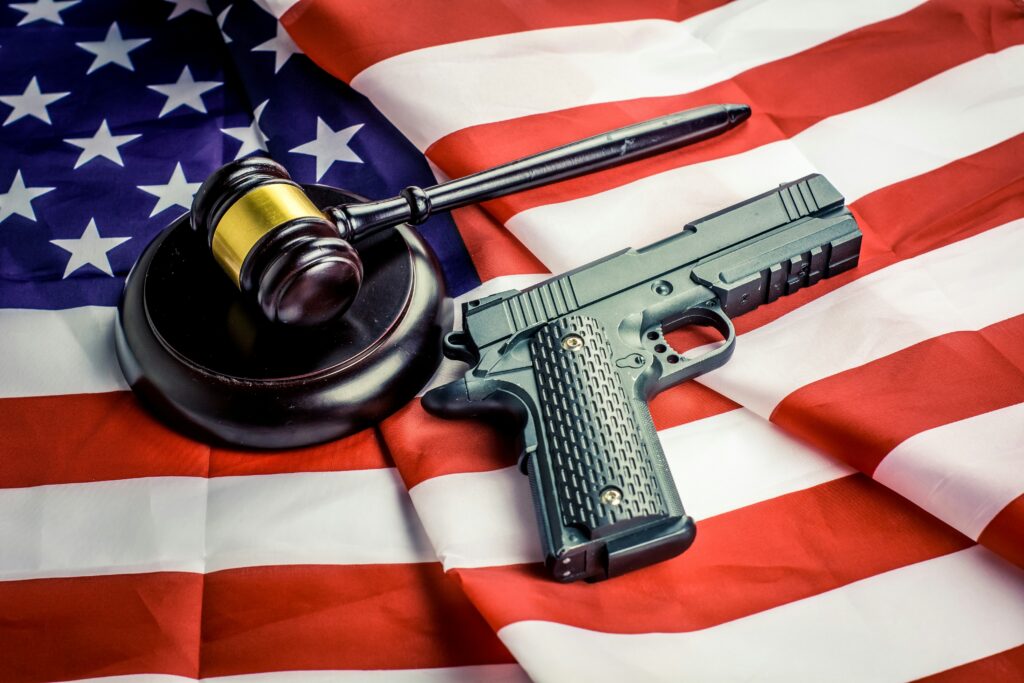
In Las Vegas, Henderson, and across Clark County, many people believe that if they can legally possess a gun, they are automatically safe from criminal charges. The problem is that Nevada gun laws and federal gun laws can turn ordinary conduct into a gun-related offense in ways that feel sudden—often triggered by a traffic stop, a tense call to law enforcement, a misunderstanding about a CCW permit, or a prior record that changes your status into a prohibited person.
The legal line is not “guns are legal” versus “guns are illegal.” The real line is whether your situation fits a possession statute, whether prosecutors can prove actual possession or constructive possession, and whether your history includes a felony conviction or a disqualifying condition like a recent commitment to a mental health facility. When that line is crossed, “legal ownership” can become unlawful possession, and the consequences can include felony charges, prison time, and a permanent criminal record.
If you are facing questions about when legal firearm possession becomes a criminal charge in Nevada, this guide explains how the legal process works, which weapons offenses are most common, what Nevada criminal penalties can apply, and how an experienced criminal defense attorney can build a strong defense strategy to protect your rights and your future in the Nevada legal system.
How the Legal Process Starts After Police Discover a Firearm in Clark County
A firearm case often begins with a police report, not a courtroom filing. In Las Vegas, a traffic stop, a call for service, or a search related to another allegation can lead officers to document gun possession, ask who owns the weapon, and note where it was found. Those early details—who was closest, what was said, whether it was a concealed weapon, and whether a permit was produced—become the foundation of the case that the prosecutor later presents in state court.
Once officers believe a law was violated, the case may move quickly into booking, bail, and charging. In Clark County, prosecutors often file separate charges for the firearm issue and the underlying allegation that led to contact with police, especially if the gun is tied to an alleged violent act or another “enhancement” theory. Even where the incident begins as a misunderstanding, the state’s charging decision can elevate the matter into a felony track with major exposure.
Early defense matters because the first version of events tends to “stick.” An experienced attorney can act immediately to preserve evidence, identify contradictions, and prevent avoidable statements from turning into admissions. That early intervention is often the difference between a manageable outcome and a case that snowballs into severe consequences.
What Police Look For When Deciding Whether to Make an Arrest for Gun Charges
From a legal standpoint, officers are trained to evaluate possession of a firearm through access, control, and safety concerns. In practice, that means they look at where the gun was located, whether it was loaded, whether it was accessible, and whether anyone appears to be concealing it. In a vehicle, officers often focus on the center console, glove box, waistband area, or any bag that could conceal a firearm.
Officers also assess whether any person fits a prohibited category under state law or federal law. If dispatch returns a criminal history suggesting a prior felony conviction, or if officers suspect the person is an undocumented immigrant status category under federal definitions, they may treat the incident as a higher-risk firearm stop and move toward arrest. Even if the gun itself is lawfully purchased, status-based prohibitions can transform the case into a felony prosecution.
That “status check” is one reason firearm arrests feel unfair to defendants. The weapon may be legally owned, but the state may claim you cannot possess it because of who you are under the law—such as a convicted felon, a person under certain protective orders, or a person with disqualifying mental health adjudications. Under federal frameworks, prohibited-person categories are commonly tied to 18 U.S.C. § 922(g).
The Hidden Risk of Statements: How a “Simple Explanation” Becomes Evidence
Most people try to be helpful when dealing with the police, but firearm cases punish overexplaining. A statement like “It’s my gun, but I forgot my permit,” or “It’s not mine, I’m just holding it,” can supply the prosecution with the two elements it wants most: knowledge and control. In Nevada firearm cases, prosecutors often build their theory of possession from what the accused said before a lawyer was involved.
Even silence can be misinterpreted if the police report frames the situation as evasive. That is why the best approach is not to argue roadside, but to protect your legal position and let counsel handle communication. A defense lawyer’s job is to prevent you from accidentally providing the missing puzzle piece that transforms a questionable stop into a strong possession case.
This matters even more when there are multiple occupants, shared property, or inconsistent stories. In those scenarios, prosecutors may rely on constructive possession to argue that more than one person “possessed” the firearm. Your defense strategy should anticipate that risk early and respond with facts—not guesses—about ownership, access, and control.
When “Legal to Own” Still Means Illegal to Carry in Nevada
Nevada is often described as gun-friendly, but that does not mean every carry method is legal. Many arrests happen because a person assumes that owning a firearm automatically authorizes carrying it in a certain way. The most common issues involve concealed weapon carry, failure to comply with permit requirements, and carry in prohibited locations or circumstances.
For the accused, the key legal concept is this: you can be legally allowed to own a gun and still commit a gun-related offense by how you carry it. That is why a lawful purchase receipt does not end the case. The government focuses on whether the manner of carry violates Nevada’s possession statute or related regulations, not whether you bought the weapon legally.
Because these cases can lead to misdemeanor charges or even felony exposure depending on the facts, it is critical to understand how the law defines concealment, what a valid permit requires, and how officers interpret “readily accessible” carry during stops in Las Vegas and Henderson.
Concealed Firearm Allegations and the Role of NRS 202.350
One of the most cited Nevada statutes in carry-related cases is NRS 202.350, which addresses carrying a concealed weapon without the required permit and related weapon rules. The risk is not just the charge itself—it is the downstream consequences, including court supervision, firearm restrictions, and a record that can impact future background checks.
A concealed carry case often turns on details the defendant did not realize mattered: whether the firearm was fully concealed, whether the permit was valid and current, and whether the person had the permit on their person. Officers may treat “I have a permit but left it at home” very differently from “I do not have a permit,” and those distinctions can affect charging decisions, plea offers, and the tone prosecutors take in state court.
Defense strategy typically focuses on the stop legality, how the weapon was discovered, and whether the state can prove the required elements beyond a reasonable doubt. When the government’s proof is thin, an experienced criminal defense attorney can push for dismissal, reduction, or outcomes that minimize damage to future gun rights.
Open Carry Confusion: Why “Openly Carry” Doesn’t Always End the Investigation
Many people believe that because Nevada allows some forms of open carry, they are protected if a firearm is visible. But “open carry” does not resolve every issue in the Nevada legal system. If officers believe the weapon was partially concealed, or if the firearm is in a location that is restricted, the stop can still become a weapons investigation and lead to gun charges.
Open carry also does not solve status-based prohibitions. A person who is legally allowed to carry openly may still be a prohibited person under federal rules or state restrictions due to a prior felony conviction, certain protective orders, or disqualifying mental health conditions. When that happens, what felt like lawful public carry can quickly become alleged unlawful possession.
In real cases, officers and prosecutors often frame the situation around safety and escalation risk. That framing can color how the judge views bail, conditions, and negotiations. A strong defense addresses the law, but also manages the narrative to prevent prosecutors from inflating ordinary conduct into an exaggerated “public danger” story.
Prohibited Person Cases: The Fastest Way Legal Possession Turns Into a Felony
The most common way legal gun ownership turns into a felony is through a prohibited-person status. Under Nevada law, certain individuals are barred from owning or possessing firearms, and violations can be charged aggressively. The cornerstone statute is NRS 202.360, which addresses ownership or possession of a firearm by certain persons prohibited and includes penalties that can rise to a category B felony.
In practice, the state often files prohibited-person charges when the defendant has a prior felony record, is alleged to be an unlawful user of a controlled substance, or falls into another disqualifying category. Once prosecutors label someone a prohibited person, the case tends to be treated as more serious, with increased pressure for harsh outcomes and less willingness to assume “mistake.”
For defendants, the client-facing implication is urgent: the firearm does not need to be used in a crime for the prosecution to claim felony possession. The mere allegation of possession—paired with prohibited status—can be enough to trigger felony exposure, including real risk of state prison time.
Convicted Felon and Prior Felony Conviction Allegations Under Nevada Law
Being a convicted felon is one of the most common prohibited categories used in Nevada firearm cases. Prosecutors often present the issue as straightforward: a person convicted of a felony cannot possess a firearm, so possession equals guilt. But the defense analysis is rarely that simple, because the state must still prove the defendant knowingly had possession, custody, or control under the law.
In shared homes and shared vehicles, the defense often focuses on possession—what was actually in your control versus what was merely near you. A gun in a closet in a shared home, or in a car’s glove box, used by multiple people, can create reasonable doubt. A strong defense strategy forces the prosecution to prove the case with evidence, not assumptions, especially where there is no DNA, fingerprints, or admissions.
The stakes are high because prohibited-person charges can become felony charges with severe sentencing exposure. Once a case is filed as a category B felony, the defendant may face the possibility of mandatory prison time arguments by the state, depending on the case posture and enhancements, making early legal strategy essential.
Mental Health Facility and Mental Illness Disqualifications That Surprise Defendants
Another prohibited category that surprises people involves certain mental health adjudications or commitments. Defendants may not realize that a past admission to a mental health facility, a court-ordered commitment, or a legal determination related to mental illness can affect their eligibility to possess firearms under state and federal frameworks.
The legal issue is not stigma—it is status under the statute. Prosecutors may argue that a disqualifying condition exists and that possession is unlawful regardless of intent. Because these issues are record-driven, they often require an attorney to obtain and interpret court documents and agency records, rather than relying on what the defendant remembers.
This category also becomes complex because the defense may involve relief pathways, record clarification, or challenging whether the prohibition actually applies. An experienced criminal defense attorney will treat prohibited-person status as a legal question that must be proven, not a label that should be accepted without scrutiny.
Undocumented Immigrants, Non-Citizens, and Federal Prohibited Persons Exposure
For non-citizens, firearm cases can carry a second set of risks that go beyond the Nevada courthouse. Federal law includes categories of prohibited persons that can apply based on immigration status, and federal agencies may treat firearm possession as a serious enforcement priority. Under the Gun Control Act framework, prohibited-person rules are commonly enforced through 18 U.S.C. § 922(g).
This does not mean every case becomes federal, but it does mean federal exposure can influence negotiations and case strategy. Prosecutors may use the possibility of federal referral as leverage, and the defense must plan carefully to avoid outcomes that increase immigration consequences. In a firearm case, the wrong plea can create risks that extend far beyond Nevada’s state court system.
For defendants, this is where coordinated legal counsel matters. Your criminal defense lawyer should recognize when immigration consequences are possible and ensure that decisions are made with full awareness of how federal systems might interpret the outcome.
FAQ
Can I be charged if I legally own the gun, but I didn’t have my CCW permit with me?
Yes, depending on how the firearm was carried and what officers believe the law required in that moment. If the state claims the gun was carried as a concealed weapon, prosecutors may rely on NRS 202.350 to argue the carry was unlawful without the required permit compliance. That does not mean a conviction is inevitable. A defense lawyer can challenge whether the gun was actually concealed under the legal definition, whether the stop and search were lawful, and whether the state can prove each element beyond a reasonable doubt without overreaching assumptions.
What if the gun was in the car, but it wasn’t mine—can I still face possession charges?
Yes, because prosecutors often use constructive possession to argue that a person possessed a firearm if they had knowledge and the ability to control it, even without ownership. This is common in shared vehicles in Clark County, especially when police believe the gun was within reach or associated with the defendant’s seat position or personal items. A strong defense strategy focuses on access and control. Your attorney may present facts showing shared access, lack of exclusive control, absence of admissions, and missing forensic ties—each of which can create reasonable doubt and weaken the state’s theory.
If I have a prior felony conviction, is firearm possession automatically a category B felony in Nevada?
Often, prosecutors charge prohibited-person firearm possession under NRS 202.360, which can be treated as a category B felony depending on the specific subsection and facts. The state still must prove knowing possession, and that is where many cases become defensible—particularly in shared spaces or where the firearm was not accessible or known to the defendant. The safest move is to speak with an attorney immediately, because early decisions—statements, consent to search, and how the record is formed—can make a prohibited-person case significantly harder to fight later.
Conclusion
Understanding when legal firearm possession becomes a criminal charge in Nevada requires looking beyond ownership and into the details that prosecutors actually litigate: unlawful possession, prohibited-person status, constructive possession, concealed carry rules, and enhancements like NRS 193.165. In Las Vegas, Henderson, and throughout Clark County, these cases often turn on the earliest evidence—how the gun was found, what was said, and whether police followed constitutional rules in the search and seizure process.
Even if you believe you did nothing wrong, firearm cases can escalate into felony charges, a category B felony allegation, or a layered prosecution with separate charges and increased sentencing exposure. The legal system is unforgiving when it comes to technical violations, and prosecutors often treat firearms allegations as a public safety priority, even when the incident was nonviolent.
If you are facing gun charges in Clark County, do not wait until the case hardens against you. Contact The Defense Firm today for a free and confidential consultation with an experienced criminal defense attorney who can evaluate your case, challenge an illegal search, build a strong defense strategy, and fight tirelessly to protect your rights and your future.