 English
 Spanish

A person can face robbery charges in Nevada even when the object involved was a fake weapon, because the law focuses heavily on whether property was taken by force, intimidation, or fear. Under NRS 200.380, robbery is the unlawful taking of personal property from another person, or in that person’s presence, against that person’s will, through force, violence, or fear of injury. That means a case can become a very serious felony even when no one claims the object was fired or physically used to cause injury.
This is one reason armed robbery charges involving a fake gun, toy gun, or imitation firearm can create immediate legal trouble. Prosecutors in Las Vegas or Clark County may focus on the fear created during the incident and on whether the victim believes there was a real and immediate threat. In practical terms, if the object was used to compel compliance during a theft, the State may still treat the case as a violent crime with potentially severe consequences.
At the same time, the legal answer is not as automatic as some online articles suggest. A real or fake weapon can still matter in a major way when the case turns to enhancement allegations, sentencing exposure, and whether the object legally qualifies as a deadly weapon. That distinction can be one of the most important strategic issues in a Nevada criminal defense case.
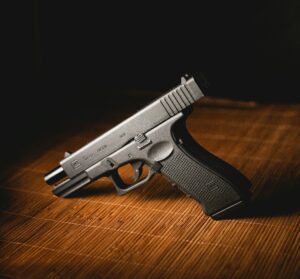
Armed Robbery with a Fake Weapon: How Nevada Law Focuses on Force, Fear, and the Taking
Under NRS 200.380, robbery occurs when property is taken by means of force or fear, including force or fear used to obtain or retain possession, prevent resistance, or facilitate escape. Robbery is a form of theft involving the unlawful taking of property from another person by force, intimidation, or threat of violence. The statute also makes clear that the degree of force is not the core issue if it was used to compel acquiescence. In many jurisdictions, there is no need for the actual use of force for the theft to be considered a robbery—threats or intimidation can be sufficient. The concept of ‘actual use’ is important, as the law often considers whether a weapon—real or fake—was actually used or threatened to establish robbery. That is why robbery is treated so differently from a basic property offense in Nevada.
For a person accused in Las Vegas, Henderson, or North Las Vegas, this means the prosecution is often less focused on whether the object was technically operable and more focused on whether the interaction created fear and submission. A fake weapon robbery allegation may, therefore, still be framed as a serious matter because the State will argue that the conduct created the same immediate pressure on the alleged victim as a real threat would have created.
That does not remove the prosecution’s burden. The State still has to prove that the accused person committed the taking, that the required intent existed, and that the circumstances amounted to robbery rather than confusion, a lesser offense, or even mistaken identity. Those issues can become especially important when witness accounts change or when the alleged object is never reliably recovered.
Defining Robbery in Nevada
Robbery in Nevada is defined as the unlawful taking of property from another person by means of force, intimidation, or threat of violence. Under Nevada law, it does not matter whether the weapon used is real or fake—a toy gun, imitation firearm, or any object that induces fear can be enough if the victim believes they are facing a genuine threat. The law treats the use of a fake weapon in a robbery as a serious crime because the psychological impact and the victim’s reasonable belief in the danger are central to the offense. If a person uses a fake weapon or even suggests they are armed, and the victim submits out of fear, the crime can be charged as armed robbery. This means that the focus is on the victim’s perception and the intimidation or force used, not just the actual capability of the weapon. As a result, those accused of robbery—whether involving a real or fake weapon—face the possibility of years in prison and other severe consequences, reflecting how seriously Nevada law treats these offenses.
Types of Robbery
Nevada recognizes several types of robbery, each carrying different levels of severity based on the circumstances and the presence or use of a weapon. Simple robbery involves taking property directly from a person through force or intimidation, but without the use of any weapon. Armed robbery, on the other hand, occurs when the perpetrator uses or threatens to use a deadly weapon—such as a gun, knife, or even a realistic-looking toy gun or BB gun—to induce fear and compliance. Aggravated robbery is the most serious form, involving not only the use of a deadly weapon but also resulting in serious bodily injury or death to the victim. Importantly, even if the weapon turns out to be fake, such as a toy gun or imitation firearm, the charge can be elevated to aggravated robbery if the circumstances show intent to cause harm or if the victim is injured during the crime. The severity of the charges depends on factors like the type of weapon used, the level of force or intimidation, and the harm caused to the victim, making it crucial to understand how each element can impact the outcome of a robbery case.
Why the Victim’s Reasonable Belief Can Influence Charging Decisions
In many robbery cases, prosecutors emphasize the victim’s reasonable belief about what was happening in the moment. If someone sees a fake gun, a BB gun, or a realistic-looking toy gun, the State may argue that a reasonable person would fear immediate harm and comply. That theory often becomes central to how the event is described in police reports and later in court.
This is where the facts become highly sensitive. The exact words used, whether the hand was visible or concealed, whether the object was pointed, and whether the alleged threat was explicit or implied can all affect how the case is charged. In a close case, what sounded like a clear threat in a report may look far more ambiguous when matched against body-cam audio or surveillance footage.
A careful defense review often focuses on these gaps. If witnesses described different objects, gave uncertain timing, or used vague phrases like “something like a gun,” that can matter. The legal question is not only whether fear existed, but whether the State can prove beyond a reasonable doubt that the accused committed robbery under Nevada law.

A Toy Gun Does Not Automatically Create a Deadly Weapon Enhancement
This is one of the most important corrections the page should make. Nevada robbery law is serious on its own, but the separate “with use of a deadly weapon” enhancement is not automatic every time a fake gun is involved. In McIntyre v. State, the Nevada Supreme Court held that a toy gun, without proof that it was actually capable of causing substantial bodily harm, could not support the deadly-weapon enhancement.
That matters because robbery itself is already a category B felony punishable by 2 to 15 years in prison under NRS 200.380. A prosecutor may still pursue the underlying robbery charges, but the enhancement question requires a more specific legal analysis of the object and the evidence. A page that suggests Nevada will always treat a fake weapon exactly like a real firearm would be oversimplifying the law.
In other words, a person can still be in serious legal trouble even when the item was fake, but the exact level of exposure may depend on how the object is characterized, what police actually recovered, and whether the State can legally sustain the enhancement theory. That is one reason early case review by a defense attorney can be so important.
What the Legal Process Often Looks Like After a Nevada Arrest
After an arrest in Clark County or elsewhere in Nevada, the case may move quickly through booking, a bail decision, and an initial court appearance. This stage often feels overwhelming because the accused person is suddenly dealing with release conditions, formal criminal charges, the legal consequences of the alleged offense, and the beginning of a public legal process that can affect work, family life, and reputation almost immediately. The presence of a fake weapon can escalate a situation, leading to potential arrests or even police shootings.
From there, the case usually enters discovery. This is the stage where the defense examines police reports, witness statements, body-cam recordings, surveillance footage, and any recovered objects or physical evidence. Discovery matters because it is often where contradictions appear, including problems with identification, gaps in timing, unclear descriptions of the weapon, or weak links between the accused person and the alleged event.
Plea discussions may begin early, but they should be grounded in evidence rather than fear. A rushed explanation to police or an attempt to minimize the object by saying it was “just a toy gun” can still damage the case if the statement is later used to place the accused at the scene or to support the required intent. That is why the right to remain silent and the right to counsel are so important from the start.
The Importance of Legal Representation in Robbery Cases
Robbery cases, especially those involving armed robbery or aggravated robbery charges, are among the most serious criminal matters in Nevada. The consequences of a conviction can include lengthy prison sentences, substantial fines, and a permanent criminal record that can affect every aspect of a person’s life. Because the stakes are so high, having strong legal representation is essential. An experienced criminal defense attorney can guide you through the legal process, challenge the prosecution’s evidence, and negotiate with prosecutors to seek reduced charges or a more favorable outcome. In cases involving a fake weapon, a skilled attorney may be able to argue that the victim’s belief was not reasonable under the circumstances, or that there was no intent to cause harm—potentially leading to a reduction or dismissal of charges. The right legal defense can make a significant difference, whether you are facing a lengthy prison sentence or hoping to avoid a conviction altogether. If you or a loved one is dealing with robbery charges, especially those involving a fake weapon, it is critical to seek a free consultation with a qualified criminal defense attorney who can help you understand your rights, evaluate the evidence, and develop the strongest possible defense.

Penalties, Court Conditions, and Criminal Record Consequences
Nevada robbery is a category B felony punishable by 2 to 15 years in prison. Robbery cases are prosecuted as felony charges, reflecting the seriousness of the offense. That sentencing range alone can shape every stage of the case, from bail arguments to negotiations to the decision about whether to challenge the allegations at trial. Robbery with a fake weapon can carry some of the harshest penalties, similar to those involving real weapons, because the emotional and psychological impact on the victim is considered during sentencing. Even before any conviction, the possibility of prison time can create enormous pressure on the defendant and family.
There are also immediate practical consequences that people often underestimate. If convicted, a person faces not only imprisonment but also other severe penalties, such as fines and restrictions on firearm ownership. A pending felony case can affect employment, housing, professional opportunities, immigration concerns, and personal reputation. Court dates, release conditions, and the stress of public accusations can disrupt normal life long before any final decision is reached. In that sense, the damage from a robbery case can begin well before sentencing is even discussed.
The record consequences also matter. Nevada law provides a framework for sealing certain records after conviction or after a case is resolved, but eligibility depends on the final charge, the outcome, and the waiting period that applies to the offense. A conviction for armed robbery, whether involving a real or fake weapon, can lead to substantial prison sentences and significant fines. That is why people should be cautious about broad promises online; record consequences should be discussed carefully and in light of the exact procedural history of the case.
Why Evidence Can Change the Direction of the Entire Case
In a fake weapon robbery case, evidence often decides whether the State’s version remains strong or begins to weaken, and can significantly impact the severity of the armed robbery charges brought against the accused. The appearance of the object, whether it looked like a real gun, whether it was openly shown or partially hidden, and whether witness descriptions were consistent can all affect how credible the prosecution’s theory becomes.
Video can be especially important. Sometimes surveillance footage supports the allegation, but in other cases it shows hesitation, poor visibility, inconsistent witness perception, or conduct that does not clearly match the dramatic wording used in a police summary. For that reason, a strong defense does not rely on headlines or assumptions; it compares every accusation against the best available evidence.
The recovery of the object can matter just as much. If police later recover a BB gun, an imitation gun, or another offensive weapon-type object that does not match witness descriptions, that gap may influence both charging leverage and credibility. In many armed robbery cases, the details around the object are far more contested than the initial accusation suggests.
It is important to note that the mere possession of a fake weapon during a robbery can lead to an armed robbery charge.
FAQ
Does a toy gun automatically make the case armed robbery?
Not automatically in the broad way many articles imply. Nevada robbery law is serious on its own, but the Nevada Supreme Court has held that a toy gun does not automatically qualify for the “with use of a deadly weapon” enhancement without proof of actual deadly capability. However, in many jurisdictions, the mere display of a fake weapon during a robbery can elevate the charge to armed robbery due to the victim’s perception of danger. This can sometimes result in an aggravated robbery charge, which is a serious felony and carries severe legal consequences. That distinction can be critical in evaluating exposure and defense strategy.
What happens after a robbery arrest in Las Vegas or Clark County?
After arrest, a person may go through booking, a bail decision, and an initial court appearance where the case formally begins. The prosecution then starts building its proof through reports, witness accounts, video, and physical evidence. Early review matters because statements, identification issues, and inconsistencies can shape the direction of the case from the beginning.
Should you talk to the police if they say they already know the weapon was fake?
It is usually safer not to give a detailed explanation without a lawyer present. Even if police mention a fake weapon, they may still use the conversation to gather statements about intent, location, or knowledge of the incident. Protecting against self-incrimination early can help avoid unnecessary damage to the defense.
Can a robbery conviction affect your record in Nevada?
Yes. A robbery conviction can create long-term consequences that affect employment, housing, reputation, and other opportunities. Nevada law does provide a statutory process for sealing some records in some circumstances, but eligibility depends on the charge, the outcome, and the waiting period that applies.

Conclusion
Facing allegations involving armed robbery, a fake weapon, or a toy gun in Nevada can still place a person in very serious legal trouble, even when the object was not a real firearm. What matters in many robbery cases is how prosecutors interpret the event, what the victim believes happened in the moment, and whether the State can prove the required elements beyond a reasonable doubt. At the same time, the difference between a real or fake weapon can still matter in major ways when the case turns to enhancement allegations, charging strategy, and overall exposure.
For that reason, these cases should never be treated as simple or automatic. A robbery accusation can affect bail, plea discussions, employment concerns, reputation, and the long-term impact of a possible criminal record, especially in Las Vegas, Clark County, and other Nevada courts. Early case review can help identify weaknesses in witness accounts, problems with surveillance footage, questions about the alleged dangerous weapon, and strategic opportunities to protect your case before avoidable mistakes make the situation harder.
People dealing with this kind of serious crime accusation do not have to sort through the legal process alone. Giving yourself the chance to get informed early can make a meaningful difference in how you understand your rights, your options, and the next practical steps. The Defense Firm can help people facing robbery charges in Nevada better understand the case against them and explore their legal options with more clarity. This is general information, not legal advice, and outcomes depend on the specific facts, evidence, and procedural history of each case.