 English
 Spanish

A concealed carry case in Nevada often begins with a split-second decision during a traffic stop, a security screening, or an encounter with law enforcement in a prohibited area. What many responsible gun owners do not realize is that a misunderstanding about a concealed carry permit, an expired permit, or where a concealed firearm may be carried can quickly become a criminal case rather than a routine citation. Nevada still requires a permit to carry concealed handguns, even though open carry is treated differently under state law.
That is why concealed carry violations permit rights defense needs to be approached as a real criminal law issue, not just a paperwork problem. The State may focus on whether the weapon concealed was actually hidden from ordinary observation, whether the person had a valid concealed carry permit, and whether the location was one of Nevada’s restricted areas. For people in Las Vegas, Clark County, Henderson, or North Las Vegas, early legal guidance can help protect your case before assumptions harden into formal criminal charges.
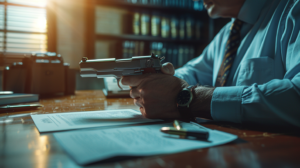
Concealed Carry Violations, Permit Rights Defense: Why Nevada Laws Create More Legal Risk Than People Expect
Nevada’s concealed carry laws are detailed, and the risk is not limited to someone carrying without any permit at all. Problems can arise from permit status, carrying inside government buildings, failing to have the permit physically available, or misunderstanding how reciprocity agreements work for visitors from other states. The law distinguishes between a concealed weapon and visible carry, and that distinction can become central evidence in criminal defense cases. While the amendment protects the right to bear arms under the Second Amendment, this right is subject to local laws and permit requirements that regulate how and where firearms may be carried.
The current article also benefits from a clearer Nevada focus because readers often arrive after an arrest or citation, not while casually researching policy. National debates about the Second Amendment, what many states do, or how most states regulate firearms may provide background, but they do not answer the immediate question of how Nevada prosecutors, judges, and police officers analyze the facts in a local case. A defense-centered page should keep the emphasis on local process, local restrictions, and the evidence that can shape the outcome. A concealed carry permit grants a person the legal right to carry a hidden firearm, but only if they comply with all local laws and permit requirements.
What Usually Triggers a Concealed Carry Charge in Las Vegas or Clark County
A concealed-carry allegation often starts when law enforcement believes a firearm was hidden on the person or in a way that was not discernible by ordinary observation. Under NRS 202.3653, a concealed firearm is a handgun carried upon a person so that it is not discernible by ordinary observation. That definition matters because some cases turn less on ownership and more on whether the State can prove the item was truly concealed under the statute. Nevada law regulates the ability to carry concealed weapons and carry concealed handguns, and these laws apply to both public and private properties.
Other cases begin with location-based issues. A person may have a valid permit and still face legal issues for entering certain public buildings, airport-related public buildings, or posted buildings covered by Nevada’s prohibited-location rules. Carrying in prohibited areas includes locations such as schools, government buildings, courthouses, or private businesses that post ‘no weapons’ signs. Those cases often involve disputes about signs, entrances, notice, and whether the person knowingly remained armed in a place where concealed carry was barred.
Permit holders must also understand the legal standards for self-defense as outlined in state statutes and the Second Amendment.

Common Incident Scenarios: Traffic Stop, Screening, or Posted Building
A traffic stop is a common starting point because an officer may ask about weapons, see a firearm during contact, or extend the encounter after observing something that raises concern. In that setting, concepts like reasonable suspicion, probable cause, and Miranda issues can matter, especially if statements are taken before the person understands the seriousness of the situation. Such encounters often involve questions of criminal law, as violations may result in criminal charges. A calm assertion of the right to remain silent and the right to counsel may help avoid self-incrimination.
Screening checkpoints and posted locations create a different kind of case. When someone enters a place treated as a prohibited area, the prosecution may argue that possession itself was unlawful in that setting, even if the person is otherwise a lawful carrier. Evidence in these cases can include surveillance video, building signage, officer testimony, statements, and the exact location of the concealed handguns at the time of contact.
Permit Status Problems Can Become Criminal Charges or Civil Exposure
Nevada is a shall-issue state, and the sheriff generally issues a permit unless the applicant is disqualified under state law or federal law. Carry permits are issued after an application process that usually requires submitting paperwork to a local law enforcement agency, passing a background check, and completing a firearms safety course. The official framework also confirms that one permit may cover handguns owned now or obtained later, and permits generally expire five years after issuance unless suspended or revoked. These rules matter because a charge can hinge on whether the person had a valid concealed carry permit at the time of the encounter, not simply whether they once qualified for one.
Permit holders also need to remember the document requirement itself. Under NRS 202.3667, a permittee must carry the permit and proper identification when actually possessing a concealed firearm, and failure to do so carries a $25 civil penalty. Permit suspension can occur immediately after certain violations, and many violations lead to the immediate suspension or permanent revocation of your concealed carry permit. That means not every concealed carry violation is the same: some issues involve paperwork and compliance, while others create far more serious criminal charges.
Permit holders must also understand and follow all applicable state laws and reciprocity agreements if they plan to carry a concealed weapon in another state.
Expired Permit, Missing Permit, and Reciprocity Confusion
An expired permit can create much more risk than simply forgetting the physical card. If the permit had lapsed before the encounter, the State may treat the person as carrying without a valid permit, which can escalate the case beyond a minor compliance issue. Timing matters here, and an early records review can confirm whether the permit actually expired, was suspended, or was still valid on the date alleged. A concealed carry permit grants the legal right to carry a concealed firearm, but only if all permit requirements—such as application procedures, training certification, and permit validity—are met, and the permit remains current.
Reciprocity can also be misunderstood, especially for travelers from other states such as New Mexico, North Dakota, South Dakota, or South Carolina who assume their home rules apply everywhere. Nevada’s official guidance explains that only certain out-of-state permits are recognized and that the permit must be in the holder’s possession while carrying in Nevada. Nevada recognizes reciprocity agreements with certain other states, allowing visitors to carry concealed weapons if they possess a valid out-of-state permit. A criminal defense lawyer should verify reciprocity carefully rather than relying on assumptions, internet summaries, or what is true in many states but not here.

How Past Records and Administrative Errors Can Lead to Unexpected Legal Trouble
When you apply for a concealed carry permit in Nevada, your application triggers a thorough background check. This review covers your criminal history, mental health records, and other factors that could disqualify you under state law or federal law. Nevada’s “shall issue” framework means that, in theory, anyone who meets the statutory requirements should receive a permit. But in practice, the process is not always error-free.
Administrative mistakes can have serious consequences. For example, if your name or date of birth is similar to someone with a disqualifying criminal record, you could be mistakenly denied a permit or, worse, have your existing permit suspended or revoked. Conversely, outdated or incomplete records might allow someone with a disqualifying history to slip through, only to face criminal charges later if the error is discovered during a traffic stop or other law enforcement encounter.
Even after a permit is issued, changes in your legal status—such as a new domestic violence conviction or a restraining order—can trigger automatic suspension or revocation. However, administrative delays or communication errors between agencies sometimes mean that permit holders are not notified promptly. Carrying a concealed firearm with a suspended or expired permit—even unknowingly—can expose you to serious concealed carry violations and potential prosecution.
Another hidden pitfall involves reciprocity agreements. Many other states have different standards for issuing permits, and not all out-of-state permits are recognized in Nevada. If you move to Nevada or travel here with a permit from another state, it’s essential to verify that your permit is valid under Nevada law. Relying on outdated information or assumptions about reciprocity can lead to criminal charges for carrying without a valid permit.
Law enforcement personnel face their own challenges in verifying permit status, especially during roadside encounters or in high-stress situations. While Nevada has made strides in electronic verification, discrepancies or delays in updating records can still result in confusion—and sometimes, wrongful arrests or citations.
For carry permit holders, the best defense is vigilance. Regularly check the status of your permit, especially if you have had any recent legal issues or changes in your personal information. If you receive any notice from the issuing authority, respond promptly and seek clarification if anything is unclear. If you believe your permit has been wrongly suspended or denied due to a background check error, consult a criminal defense lawyer immediately to protect your rights and avoid further complications.
Ultimately, the intersection of background checks, administrative processes, and concealed carry laws creates a landscape where even honest mistakes can have serious consequences. Staying informed, keeping your documentation current, and seeking legal advice when needed are the best ways to avoid hidden pitfalls and continue to legally carry a concealed handgun in Nevada—while also helping to protect public safety for everyone.
What the Nevada Criminal Process Looks Like After an Arrest
Once police decide to arrest rather than warn or cite, the case can move quickly into booking, release conditions, and a first court appearance. A person accused of a concealed carry offense may face bail, return-to-court orders, and pressure to explain what happened before full discovery is available. That is often the worst time to guess, because the defense may not yet have body-cam video, dispatch audio, screening footage, or the exact reports needed to evaluate the stop and the alleged violation.
This early stage is where legal team strategy begins to matter. An experienced criminal defense lawyer can review the charging theory, preserve evidence, and identify whether the case is really about a permit problem, a search issue, a location issue, or alleged criminal intent. In criminal defense cases, knowing the exact statute, the facts, and the timeline can make a substantial difference in how plea negotiations or motion practice develop.

What to Avoid Saying and Why Timing Matters
People often try to be helpful by volunteering explanations to police officers, security staff, or investigators. But statements about why you were carrying, whether you knew the building rules, or whether the gun was for self-defense can later be used to support intent, knowledge, or notice. Even when there is no bad motive, unguarded remarks can strengthen the State’s narrative before the defense has reviewed the evidence.
That is why avoiding self-incrimination is practical advice, not an abstract slogan. Invoking amendment rights and asking to talk to a lawyer can help preserve options while the defense examines the reports, signs, permit records, and video. In some cases, the best defense comes from what the prosecution cannot prove, not from a rushed roadside explanation.
When a Misdemeanor-Type Issue Starts to Feel Much Bigger
Some cases that begin as a compliance problem become more serious because of surrounding allegations. If prosecutors believe the concealed firearm was connected to violent crimes, domestic violence, drug allegations, or a separate prohibited-person issue such as certain felony convictions, the stakes can rise quickly. That does not mean guilt is clear, but it does mean the defense has to evaluate both the weapons allegation and the broader case theory.
This is also where readers need accurate reassurance. Not every person accused of a concealed-carry violation is acting dangerously or unlawfully in the broader sense; sometimes the case is about location, notice, paperwork, or officer interpretation. But firearm-related charges can still bring jail time, fines, and a damaging criminal record if they are not handled carefully.
Bail, Court Conditions, and Record Consequences Can Outlast the Incident
After an arrest, people are often focused on getting home, but the longer-term burden can be just as serious. Court dates, reporting requirements, travel limits, and the cost of defending the case can disrupt ordinary life in Las Vegas or Clark County well before any final result. A pending allegation involving a deadly weapon may also affect employment screening or professional confidence, even when the case remains contested.
Record consequences matter too. Nevada allows sealing of some criminal records in certain circumstances, but sealing depends on the disposition and applicable waiting period, and it is not the same as expungement. The Nevada Repository explains that record sealing is available only when statutory conditions are met, and access is then restricted rather than erased.
Why Firearm Restrictions and Case Outcomes Need Careful, Individual Review
One important point is that outcomes depend heavily on the actual charge and the person’s history. Some allegations may create firearm restrictions or related consequences while the case is pending or after a conviction, especially when the facts involve disqualifying history or related offenses. That analysis must be handled carefully and individually under state law and federal law, not through broad assumptions.
Because of that, a calm, early review often provides the best clarity. The person needs to know what was charged, what the statute requires, what the prosecutor still must prove beyond a reasonable doubt, and whether early defenses can narrow the case before it causes deeper personal or professional harm.

FAQ
What happens if I have a permit but am not carrying it with me?
That can still create a problem, but it is not necessarily the same as carrying with no permit at all. Under NRS 202.3667, a permittee must carry the permit and proper identification when actually possessing a concealed firearm, and violation of that requirement is subject to a $25 civil penalty. The exact consequence depends on whether the permit was valid and whether other allegations are involved.
Can a valid concealed carry permit protect me if I enter a prohibited building?
Not necessarily. Nevada’s prohibited-location rules still apply to permittees, and the statute specifically restricts concealed firearms in certain airport public buildings, some school-related public buildings, and certain posted or secured public buildings. Cases often turn on the precise location, posted notice, and what the evidence shows about entry and awareness.
Should I explain everything to the police if I was trying to follow the law?
Usually, it is wiser to be polite, identify yourself as required, and avoid detailed explanations until you have legal advice. Statements about why you were carrying, what you understood about the permit, or whether you saw a sign may later be used to support the prosecution’s theory. Asking to speak with a lawyer can help preserve your options while the defense reviews the reports and evidence.
Conclusion
A Nevada concealed carry allegation can affect much more than a single court date. Whether the issue involves a concealed carry license, an expired permit, a disputed prohibited area, or a more serious allegation under NRS 202.350, the practical impact can reach your work, your record, and your peace of mind. What looks simple on paper can quickly become a fact-specific case about notice, permit validity, concealment, and police procedure.
People facing concealed carry violations in Las Vegas, Henderson, North Las Vegas, or elsewhere in Nevada do not have to sort through those issues alone. Contact The Defense Firm to better understand your rights, review your permit and charging issues, and get clear guidance about the next steps that may help protect your future. This is general information, not legal advice, and every outcome depends on the specific facts, evidence, and procedural history of the case.