 English
 Spanish

When people are arrested for a DUI in Las Vegas, the most common assumption is that the case is already decided — that a failed breathalyzer, an officer’s testimony, and a police report all add up to a conviction that can’t be avoided. That assumption is wrong, and it costs people convictions they never had to accept. The reality is that DUI defense strategies in Nevada are more effective and more frequently successful than most defendants realize when they’re sitting in the Clark County Detention Center trying to understand what just happened to them.
DUI charges in Las Vegas are regularly challenged, reduced, and dismissed — not through procedural loopholes or technicalities in the movie-plot sense of the word, but through substantive, legitimate defenses that expose genuine weaknesses in the prosecution’s evidence. Every DUI case in Nevada depends on a chain of legally required actions, standards, and procedures. A break anywhere in that chain changes what the prosecution can prove and, by extension, what outcome your case can reach. Understanding where those breaks happen — and how a skilled Las Vegas DUI attorney finds and exploits them — is the foundation of every successful DUI defense. The evidence is not always as strong as it looks, and the only way to know for certain is to have an attorney examine it systematically.
The Foundation of Every DUI Defense — Challenging the Traffic Stop
Every DUI defense in Nevada begins with the traffic stop, because the stop is the legal gateway through which all other evidence must pass. Under the Fourth Amendment rights guaranteed by the U.S. Constitution and enforced by Nevada courts, a law enforcement officer must have reasonable suspicion of a specific, articulable legal violation before initiating a stop. This is not a high bar, but it is a real one — and it is a bar that officers sometimes fail to clear when they pull someone over based on instinct, proximity to a bar district, or observations that do not actually constitute a traffic violation under Nevada law.
A case investigation that begins with the traffic stop reviews every available piece of evidence about how and why the stop occurred: dashcam footage from the patrol vehicle, body camera recordings from the officer, the computer-aided dispatch log showing what was communicated before and after the stop, and the officer’s written report. When these sources are compared, they frequently tell different stories. An officer’s report may describe a definitive lane violation; the dashcam may show a vehicle that drifted briefly within its lane before correcting. That difference — between what the law requires for reasonable suspicion and what the officer actually observed — is the difference between admissible evidence and a case that cannot proceed.
The Motion to Suppress and Its Consequences for the Prosecution
When a traffic stop lacks the legal foundation the Fourth Amendment requires, the defense files a motion to suppress all evidence derived from that stop. This includes the officer’s field observations, the field sobriety test results, any statements you made, and the chemical test results. In Nevada courts, a successful suppression motion doesn’t just weaken the prosecution’s case — it typically ends it. Without the ability to present its core evidence, the prosecution almost always declines to proceed. This outcome — a case dismissal before trial — is available in a meaningful number of DUI cases where the defense does its initial investigative work thoroughly, and it is the primary reason why early intervention by an experienced criminal defense attorney matters so much.
Attacking the Chemical Test — The Core of Most DUI Prosecutions
The chemical test — whether a breathalyzer or a blood test — is the centerpiece of the prosecution’s case in most DUI prosecutions in Nevada. It is also one of the most technically vulnerable categories of evidence in criminal law, provided the defense has the knowledge and resources to examine it properly. An unexamined chemical test result looks like an objective scientific measurement. An examination frequently reveals a paper trail of calibration errors, certification lapses, protocol deviations, and handling failures that substantially undermine its reliability.
Breathalyzer accuracy in Nevada DUI cases depends on a series of requirements that must be met both for the specific device used and for the officer operating it. The Intoxilyzer 8000 — the machine used by most Nevada law enforcement agencies — requires regular calibration against a reference solution of known concentration, maintenance by a certified technician, and operation by an officer who holds a current certification in the specific device. Calibration records must be requested from the state agency that maintains them, and they frequently reveal that the device used in a given arrest was overdue for calibration or had failed a previous calibration check without proper follow-up maintenance. A breath test challenge built on this documentation can render the breathalyzer result inadmissible or, at a minimum, create the reasonable doubt a jury needs to acquit.

Blood Test Procedures and the Chain of Custody Challenge
When the prosecution’s chemical test evidence rests on a blood test rather than a breathalyzer, the defense challenge focuses on blood test procedures and the chain of custody. A blood test accuracy defense examines whether the blood was drawn by a qualified phlebotomist, whether the vial contained the correct preservative and anticoagulant to prevent fermentation and degradation, whether the sample was refrigerated appropriately during storage, and whether the laboratory that analyzed the sample maintained the quality control standards required for forensic testing. Each of these factors has documented effects on the accuracy of the final BAC measurement, and an independent forensic toxicologist retained by the defense can often identify specific failures that the prosecution’s lab report never discloses.
The Rising Blood Alcohol Defense
One of the most scientifically grounded — and most frequently overlooked — DUI defense strategies in Nevada is the rising blood alcohol argument. Alcohol is not instantaneously absorbed from the digestive system into the bloodstream; the process takes time, and a person’s BAC may continue to rise for 30 to 90 minutes after their last drink. This means that a defendant who was at or slightly below the 0.08% BAC threshold when driving may have registered above that threshold by the time the chemical test was administered at the jail or the police station — sometimes an hour or more after the stop. An experienced toxicologist can calculate the likely BAC at the time of driving based on documented body weight, gender, time of last drink, and the amount consumed, and present that calculation to the jury as evidence of the true BAC during the relevant period.
Field Sobriety Tests and the Evidence Officers Don’t Mention
Field sobriety tests are presented in court with an air of scientific authority that they do not entirely deserve. The three NHTSA-standardized tests — the Horizontal Gaze Nystagmus, the Walk and Turn, and the One Leg Stand — have documented error rates in controlled research settings, and those error rates increase substantially when the tests are administered by the side of a road at night under stressful conditions. Officers are trained to cite overall accuracy rates above 65 to 70 percent when these tests are challenged, but they are also trained not to volunteer that this figure comes from studies comparing clearly sober subjects against clearly intoxicated ones — not from the full range of drivers who might have a borderline BAC, a physical condition, or a case of nerves that affects performance independently of alcohol.
A case investigation that includes a thorough review of field sobriety test evidence examines the surface the tests were conducted on (whether it was level and free of debris), the lighting conditions, the defendant’s footwear, any medical conditions disclosed to the officer, and whether the officer’s scoring of each clue was consistent with NHTSA training standards. Body camera and dashcam footage is often the most valuable tool in this analysis, because what the officer’s report describes as unsteady or non-compliant performance frequently looks different on video than it was characterized. Bringing that footage to the jury’s attention — and having an expert explain the documented limitations of the tests — changes how the field sobriety evidence is perceived.
Dashcam Footage as the Most Objective Witness
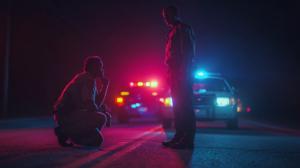
Clark County law enforcement vehicles are equipped with dashcam systems, and most officers in Nevada carry body cameras. These recordings are the most objective evidence in a DUI case, and they frequently undercut the prosecution’s narrative. An attorney who subpoenas this footage immediately — before it is overwritten, as happens routinely when evidence preservation requests are not made promptly — gives the defense access to the most unbiased account of what actually occurred at the stop and during the field sobriety test administration. In many cases, this footage is the difference between a conviction and a case dismissal.
How DUI Charges Are Reduced or Dismissed in Clark County
Even in cases where the traffic stop was legally sound, and the chemical test result is difficult to challenge directly, there are still meaningful paths to a significantly better outcome than a DUI conviction on your record. Plea negotiation is a routine and legitimate part of the DUI defense process in Nevada, and for first-time defendants with favorable circumstances, it can produce outcomes that protect the criminal record and minimize the disruption to daily life in ways that a DUI conviction does not permit.
The most common negotiated outcome for first-time defendants is a reduction to reckless driving — the “wet reckless” charge that Nevada prosecutors have discretion to offer in appropriate cases. A wet reckless carries lower fines, less severe license consequences, and a less damaging profile on background checks than a DUI conviction. It does not trigger the same mandatory DUI school and ignition interlock device requirements in every case. And it does not count against the defendant as a prior DUI conviction under Nevada’s seven-year look-back rule for sentencing enhancements. A plea negotiation that achieves a wet reckless outcome for a first-time defendant is a genuinely good result — but it requires an attorney with credibility in the local courts and a thorough understanding of the prosecution’s evidence.
Building Your Defense Strategy before the First Court Date
The most important period in any DUI case is the time between the arrest and the first significant court proceeding. This is when evidence is most available and most vulnerable to challenge, when witnesses’ memories are sharpest, and when the prosecution’s case has not yet been locked in by its own momentum. An attorney who starts working your case immediately — requesting evidence, reviewing dashcam footage, pulling calibration records, and identifying the specific issues in the state’s approach — enters the arraignment with a position rather than a question mark.
Early intervention also affects the DMV hearing track, which runs parallel to the criminal case. The DMV hearing must be requested within seven days of the arrest, and evidence developed for the criminal defense — the traffic stop analysis, the chemical test challenge, the officer’s certification records — is often directly applicable in the DMV hearing as well. An attorney who coordinates both proceedings strategically gives you the best chance on both tracks simultaneously, rather than losing the license suspension fight because it was addressed too late.

FAQ
Is It Worth Challenging a DUI If I Failed the Breath Test?
Yes. A failed breathalyzer is the beginning of a defense, not the end of one. Breathalyzer results depend on calibration records, operator certification, testing protocol, and the absence of interfering factors that can inflate readings. Many Nevada DUI cases where the defendant blew above 0.08% are still successfully defended through challenges to the machine’s maintenance history or the officer’s procedure. Challenging breath test evidence is standard practice, not a last resort.
What Is the Best Outcome I Can Realistically Expect in a First DUI Case?
Outcomes in a first DUI case range from full dismissal — when the stop was legally deficient,t or the chemical test evidence is successfully challenged — to a conviction with minimum penalties, with a wet reckless reduction in between. Where your case falls depends on the specific facts. An attorney who reviews those facts honestly can tell you what is realistically achievable, which is why an early case review matters.
How Long Does It Take to Resolve a DUI Case in Las Vegas?
A first-offense misdemeanor DUI in Clark County typically resolves in two to four months when the parties are negotiating a plea. Cases involving suppression motions or trial preparation can take six months to a year. Felony DUI cases often take a year or more, depending on the evidence. The timeline is heavily influenced by how early your attorney begins working on the case.
Conclusion
A DUI arrest is not a DUI conviction. Between those two events lies a legal process full of decision points where a strong criminal defense makes a measurable, documented difference in how cases resolve. The evidence is rarely as airtight as the police report makes it seem, the procedures are rarely as clean as they should be, and an attorney who knows how to examine both gives you a genuine chance at an outcome that protects your criminal record, your driver’s license, and your future.
Contact The Defense Firm today for a free consultation with Las Vegas DUI attorney K. Ryan Helmick. Bring the facts of your case — and leave with an honest assessment of what your defense strategy looks like. Call now.