 English
 Spanish
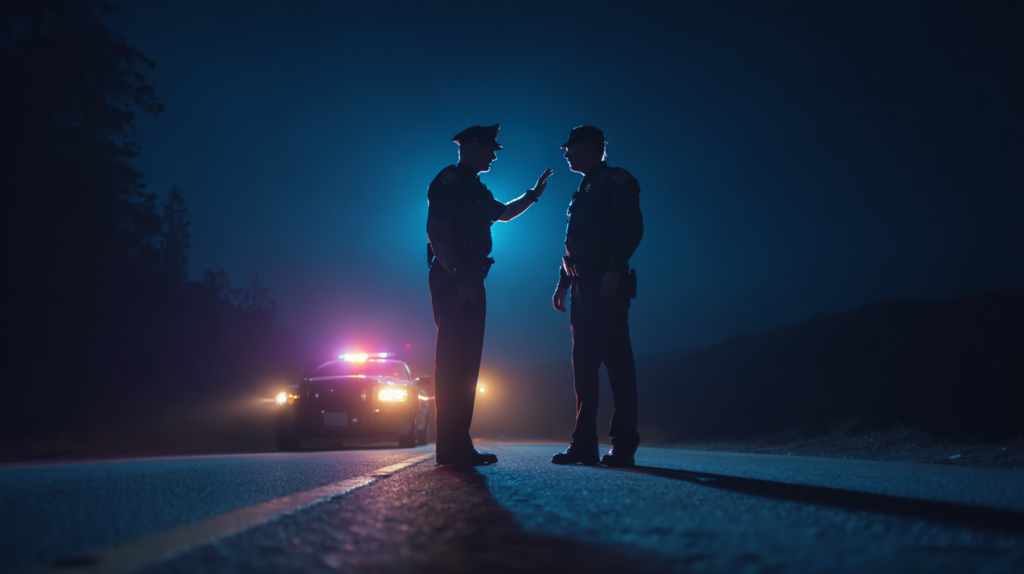
When a police officer pulls you over in Las Vegas on suspicion of driving under the influence, field sobriety tests are almost always the first tool they reach for. These tests are presented with an air of clinical objectivity, standardized procedures, trained observers, and documented scoring criteria, which makes them feel like definitive scientific measurements of impairment. They are not. Field sobriety tests in Nevada are subjective, error-prone, and vulnerable to challenge in ways that most defendants never learn because no one in the law enforcement apparatus is motivated to tell them.
Understanding the documented limitations of field sobriety tests is not about finding excuses or casting doubt on honest police work. It is about understanding what the evidence actually is and what it actually proves, which is substantially less than the prosecution would have a jury believe. Every DUI defense that involves FST evidence is an opportunity to examine how the tests were administered, what conditions existed at the scene, whether the officer’s scoring was accurate and consistent with NHTSA training standards, and what an objective recording of the encounter, a dashcam, a body camera, actually shows compared to what the police report says. These challenges are legitimate, they are regularly successful, and they are the product of the kind of thorough case investigation that an experienced Las Vegas DUI attorney begins the moment a client calls. The evidence in your DUI case may be far more vulnerable than you think.
The Three Standardized Field Sobriety Tests and Their Documented Weaknesses
The National Highway Traffic Safety Administration has studied and validated three specific field sobriety tests for use in DUI investigations: the Horizontal Gaze Nystagmus (HGN) test, the Walk and Turn test, and the One Leg Stand test. These are collectively called the NHTSA Standardized Field Sobriety Tests, or SFSTs, though officers and attorneys frequently use the shorthand FSTs. Only these three tests have undergone the research validation that forms the basis for their use as evidence in court, and even their validation has documented limitations that the prosecution rarely highlights at trial.
Officers in Nevada are trained to administer and score these tests according to NHTSA protocols that have not changed substantially since the original studies were conducted in the 1970s and 1980s. The accuracy rates cited in NHTSA literature, approximately 77 to 88 percent for the HGN test, 79 percent for the Walk and Turn, and 83 percent for the One Leg Stand when used together, come from controlled laboratory studies in which researchers compared clearly impaired subjects (with BACs above 0.10%) against clearly sober ones. They do not reflect the accuracy of the tests at the 0.08% BAC threshold that Nevada law uses, they do not account for the full range of drivers who might perform poorly for reasons unrelated to alcohol, and they assume near-perfect test administration under ideal conditions, conditions that are rarely present at the side of a Nevada road at night.
The Horizontal Gaze Nystagmus Test, Scientific Basis and Practical Limitations
The HGN test measures involuntary eye jerking that occurs when a person follows a moving stimulus, typically a pen or a finger, with their eyes. Alcohol at elevated levels affects the smooth pursuit of the eyes and increases the frequency and onset angle of the involuntary jerking called nystagmus. Because this response is involuntary, the HGN test is considered the most scientifically grounded of the three standardized tests, and courts in Nevada generally admit its results as evidence of impairment.
However, the scientific grounding of the HGN test depends entirely on the accuracy of the administration, and that is where the evidence frequently breaks down. The officer must move the stimulus at the correct speed, typically one to two seconds per pass, hold it at the correct distance from the subject’s face, and observe the correct angle at which nystagmus begins. If the stimulus is moved too quickly, the test is not sensitive enough to detect borderline impairment accurately; if it is moved too slowly, normal subjects may appear to exhibit clues. More significantly, nystagmus can be caused by factors entirely unrelated to alcohol: certain prescription medications, including anti-seizure drugs and muscle relaxants, inner ear disorders, certain neurological conditions, and even extreme fatigue. An officer who observes nystagmus cannot determine from the test alone whether alcohol, medication, or a medical condition is responsible.
Environmental and Physical Factors That Compromise FST Performance
The Walk and Turn and One Leg Stand tests are designed to measure divided attention, the ability to follow multi-step instructions while simultaneously performing a physical task. The research supporting these tests was conducted in controlled settings: level surfaces, adequate lighting, appropriate footwear, and research subjects who were otherwise healthy adults. The conditions under which these tests are administered in the real world are rarely controlled, and the factors that affect performance are rarely noted in the officer’s report.
Consider what field sobriety test administration actually looks like in Las Vegas. The stop occurs on a road shoulder or a parking lot, surfaces that are rarely perfectly level and often have debris, uneven asphalt, or gravel that affects balance and stepping accuracy. The lighting is whatever exists at the roadside at the time of the stop, which, at night in residential or commercial areas, may be significantly less than adequate for precise performance assessment. The defendant is wearing whatever they were wearing when they left for the evening, which may include heeled shoes, dress shoes with slick soles, or sandals, none of which are appropriate footwear for a balance-dependent physical test. And the defendant is doing all of this while standing at the side of a road with passing traffic, under the direct observation of a uniformed officer, in a situation that has just escalated from a routine drive to a potential arrest. The anxiety and heightened stress response generated by this situation affect physical performance in measurable ways that have nothing to do with blood alcohol content.
The Physical Conditions that Officers Are Required to Account For
NHTSA training standards require officers to account for certain physical conditions before administering the Walk and Turn and One Leg Stand tests, including weight exceeding 50 pounds over average for height, age over 65, back or leg injuries or conditions, and wearing heeled footwear. Officers are also trained to note the surface and lighting conditions under which the tests are administered. In practice, many officers note these factors incompletely or not at all, and a case investigation that identifies this failure becomes a basis for challenging the weight that should be given to the FST evidence at trial. A defendant who is 60 years old, wearing dress shoes, and standing on an uneven surface has a very different baseline for these tests than the average research subject in the NHTSA validation studies.
The Officer’s Scoring Discretion, and What the Dashcam Reveals
The Walk and Turn and One Leg Stand tests use specific “clue” systems to score performance. For the Walk and Turn, there are eight possible clues that the officer is trained to observe and record; two or more clues indicate probable impairment in the NHTSA framework. For the One Leg Stand, there are four possible clues; two or more suggest probable impairment. The HGN test uses six possible clues, and four or more is the threshold for a probable impairment determination.
What this system obscures is the degree of subjective judgment involved in identifying and recording each clue. Whether a step was “off the line” in the Walk and Turn is a judgment call made in real time by an officer who is simultaneously observing the subject, maintaining documentation in their memory, and managing the safety of a roadside scene. Whether a sway in the One Leg Stand was significant enough to constitute a clue is a judgment that varies between officers. Whether the subject started before instructions were complete is a judgment about timing that is rarely verifiable after the fact. All of this judgment is translated into a written report that is prepared after the arrest, sometimes hours later, by someone whose professional role and training incline them toward recording observations that support the arrest decision they have already made.
Why Dashcam and Body Camera Footage Are the Most Valuable Evidence
The single most valuable tool for challenging field sobriety test evidence in a Nevada DUI case is the objective recording of the stop and the test administration. Law enforcement vehicles in Clark County are equipped with dashcam systems that capture the traffic stop and often the FST administration, and most officers in Nevada carry body cameras that provide a closer-angle recording of the interaction. These recordings are the most objective evidence available about what actually occurred at the scene, and they frequently contradict the officer’s written account in ways that are meaningful to a jury.
A case investigation that includes early subpoena of all available recordings, before dashcam footage is overwritten by the department’s standard retention schedule, is the foundation of every FST challenge. Recordings that show a defendant who walks carefully, maintains balance, and follows instructions despite an officer’s report characterizing the performance as indicating impairment are powerful evidence in suppression hearings and at trial. An experienced criminal defense attorney who builds a DUI defense around objective video evidence gives the jury the most compelling version of the defendant’s story.
How an Attorney Challenges Field Sobriety Test Evidence in Nevada DUI Cases
A comprehensive challenge to field sobriety test evidence in Nevada operates on multiple levels simultaneously: challenging the administration of the tests, the conditions under which they were given, the accuracy of the scoring, the officer’s training and certification history, and the presence of alternative explanations for any observed performance issues. Each of these levels requires specific evidence and specific knowledge of how NHTSA standards and Nevada courts approach FST admissibility and weight.
The officer’s certification and training records are a frequently underutilized source of defense strategy in Nevada DUI cases. Every officer who administers SFSTs is required to have completed NHTSA-certified training and to maintain that certification through periodic recertification. Requesting the officer’s training records, when they were trained, whether they have been recertified on the required schedule, and whether any notes in their training file reflect performance issues, occasionally reveals that the officer was not properly certified at the time of the arrest, or that their certification had lapsed. This is not a common finding, but it is consequential when it occurs, and it is found only through systematic investigation.
The Value of a Forensic Expert in FST-Heavy Cases
In DUI cases where the prosecution’s evidence rests primarily on field sobriety test performance, often in situations where the chemical test result was borderline, or the breathalyzer accuracy is in dispute, the defense may retain a forensic expert who specializes in the NHTSA SFST validation studies and their limitations. These experts are typically former law enforcement trainers, forensic psychologists, or experimental psychologists with specific expertise in psychomotor testing. Their testimony at trial explains to the jury, in accessible terms, why the tests are less reliable than the prosecution presents them as being and why a specific defendant’s performance in specific conditions may have been affected by factors unrelated to impairment.
A plea negotiation that takes place in the shadow of a credible expert challenging the FST evidence is a negotiation that proceeds from a position of genuine strength. Prosecutors who know that a jury will hear substantive expert testimony about the limitations of their evidence are more willing to discuss reduced charges, including a wet reckless reduction, than prosecutors who are proceeding against a defendant without legal representation. This dynamic is one of the reasons why retaining an experienced Las Vegas DUI attorney as early as possible produces better outcomes across the full range of DUI cases.
FAQ
Are field sobriety tests mandatory under Nevada law?
No, FSTs are voluntary; you have the right to decline. This differs from chemical tests (breath or blood), where refusal triggers automatic penalties under implied consent law. Declining FSTs carries no automatic consequences, though an officer may note the refusal as part of their probable cause determination. If you have a medical condition or physical limitation that would affect your performance, declining may be advisable. An experienced attorney can still build a strong DUI defense around FST evidence that was collected.
Can a completely sober person fail a field sobriety test in Nevada?
Yes, more often than the prosecution’s use of FST evidence implies. Inner ear disorders, knee injuries, neurological conditions, certain medications, extreme fatigue, and even the stress of a traffic stop can all produce clues that mimic impairment. Identifying and documenting these alternative explanations is one of the most effective tools in a DUI defense, particularly when supported by expert testimony.
What happens if there is no dashcam footage of my field sobriety tests?
Without video, the FST evidence rests entirely on the officer’s written account, which is subject to challenge. If footage existed but was not preserved, a spoliation argument may be available depending on the department’s retention obligations. The absence of video is not fatal to a defense; it shifts the strategy toward cross-examination, documentation of any physical conditions, and witness testimony where available.
Conclusion
Officers present FST results as objective evidence of guilt. A skilled Las Vegas DUI attorney presents them as what they actually are: a set of subjective observations made under imperfect conditions, scored by someone whose professional role inclines them toward a particular conclusion, and documented in a report written after the fact. That reframing is not a trick; it is the accurate characterization of what field sobriety tests actually are and what they actually prove. When a jury hears that characterization from a credible expert, and when it is supported by the objective recording of what occurred, it changes outcomes.
Contact The Defense Firm for a free consultation with attorney K. Ryan Helmick. If field sobriety tests are part of your DUI case, there is a real defense strategy to be built, and it starts with a thorough case investigation that begins the day you call.