 English
 Spanish

A plea deal can involve one of the most important decisions in a Nevada criminal case because it may determine whether a person goes to trial, accepts a conviction, negotiates reduced charges, or resolves the case under specific court-approved terms. For someone facing criminal charges in Las Vegas, the process can feel overwhelming because the prosecution may present a plea offer before the accused fully understands the evidence, the risks of a jury trial, or the long-term consequences of a guilty plea.
In Clark County, Nevada, plea negotiations often happen within a busy criminal justice system where prosecutors handle a large volume of felony and misdemeanor cases. The Clark County District Attorney’s Criminal Division prosecutes more than 55,000 felony and misdemeanor cases each year, which means many Nevada criminal cases involve negotiation before trial. That does not mean a defendant should accept a plea quickly; it means the accused needs legal counsel who can evaluate the evidence, explain the risks, and protect the right to make an informed decision.
Understanding plea deals in Nevada requires more than knowing that a person may plead guilty in exchange for some form of negotiated resolution. A plea agreement may affect jail time, probation, fines, community service, immigration concerns for non-citizens, professional licensing, employment, housing, and future background checks. Because the final decision belongs to the defendant, the person should understand what rights are being waived, what the prosecution must prove, and what consequences may follow before entering a plea.
Why Plea Deals in Nevada Criminal Cases Require Careful Legal Counsel
A plea bargain is a negotiated resolution between the defense and the prosecution, but it should not be treated as a shortcut to “finish” a case. In many Nevada criminal cases, the defense must review police reports, witness statements, body camera footage, lab results, criminal history information, and the prosecution’s case theory before deciding whether negotiation is appropriate. A defense attorney may also compare the plea offer against the risks of trial, the strength of the evidence, and the possible consequences if the defendant is found guilty.
This matters because most defendants are under pressure when a plea offer appears. They may be worried about missing work, remaining in custody, paying bond, protecting family responsibilities, or avoiding a harsher sentence. Experienced defense attorneys help slow the process down so the accused can understand whether a plea deal offers a reasonable resolution, whether the government has sufficient evidence, and whether legal issues may create leverage for a better outcome.
How Plea Negotiations Begin After a Las Vegas Criminal Charge
Plea negotiations usually begin after formal charges are filed and both sides have enough information to evaluate the case. The district attorney may make an offer based on the charge, the alleged facts, the defendant’s criminal history, victim input, police reports, and the perceived strength of the evidence. In Las Vegas criminal defense, the first offer is not always the final offer, and it may not fully reflect weaknesses in the prosecution’s evidence.
A defense lawyer may respond by pointing out problems with proof, legal defenses, mitigation, treatment efforts, restitution issues, or circumstances that make the case less severe than the prosecution claims. If the prosecution believes it has strong evidence, negotiations may focus on sentencing exposure, probation terms, or charge reductions. If the evidence is weaker, the defense may argue for a more favorable resolution or prepare the case for litigation.
What a Plea Agreement Means Before the Defendant Enters Court
A plea agreement is the written or stated understanding of what the defendant will plead to and what the parties are recommending or agreeing to. Nevada law specifically addresses written guilty plea agreements and the content they should include under NRS 174.063. That matters because the court needs a clear record that the defendant understands the charge, the rights being waived, and the consequences of entering a plea.
Before a defendant enters a plea, the attorney should explain whether the agreement includes reduced charges, sentencing recommendations, probation terms, community service, treatment conditions, fines, restitution, no-contact provisions, or other requirements. A plea agreement should not be treated as routine paperwork. It can become the foundation for a criminal conviction, which is why every term should be reviewed before the defendant signs or speaks in court.

Pleading Guilty Means Waiving Important Constitutional Rights
When a person chooses to plead guilty, they give up major constitutional rights, including the right to remain silent, the right to a jury trial, the right to confront witnesses, and the right to require the prosecution to prove guilt beyond a reasonable doubt. Nevada law recognizes that a defendant may plead not guilty, guilty, guilty but mentally ill, or, with court consent, nolo contendere. The court may also refuse to accept a guilty plea in certain circumstances.
This is why a plea must be entered carefully and knowingly. A court generally must determine that the plea is voluntary and made with an understanding of the charge, the rights being waived, and the possible consequences. For the accused, this means the courtroom conversation is not just a formality; it is the moment when the defendant confirms that they understand the guilty plea, the rights being waived, and the effect of the conviction.
Why Reasonable Doubt Still Matters During Plea Bargaining
Reasonable doubt is usually discussed in the context of a trial, but it also plays a major role in plea bargaining. If the prosecution may struggle to prove guilt at trial, the defense may use that weakness to negotiate a more favorable plea offer or reject the offer altogether. The defense may argue that the evidence does not clearly show that the defendant committed the offense or that the evidence leaves open a reasonable alternative explanation.
This analysis is especially important when the case depends on witness credibility, unclear video, disputed intent, unreliable identification, or incomplete forensic work. A defendant should not assume that a plea is necessary just because charges were filed. The defense must evaluate whether the prosecution can prove each element of the offense and whether a trial verdict may carry more or less risk than the proposed agreement.
Evidence Strength Can Decide Whether a Plea Offer Is Worth Considering
The strength of the evidence often determines whether a plea offer is reasonable, too harsh, or strategically risky. A defense lawyer may evaluate whether the prosecution has admissible statements, reliable witnesses, physical evidence, digital records, test results, or other proof that connects the defendant to the allegation. The defense may also examine whether the police violated constitutional protections or whether key evidence may be excluded before trial.
In a Las Vegas DUI arrest, for example, the defense may review traffic stop facts, field sobriety observations, chemical testing procedures, body camera footage, and license consequences, including whether a restricted driver’s license issue may arise. In another criminal case, the focus may be on intent, alleged injury, ownership, self-defense, identity, or whether the prosecution can prove the required mental state. Evidence strength is not abstract; it directly affects whether a plea is prudent or whether litigation may be necessary.
Reduced Charges, Probation, and Sentencing Terms May Be Part of a Plea Deal
A plea deal may involve reduced charges, a sentencing recommendation, probation eligibility, treatment requirements, fines, restitution, community service, or an agreement about how the parties will argue at sentencing. In some cases, a plea may reduce the level of the offense from a felony to a gross misdemeanor or misdemeanor, depending on the charge, facts, and prosecutor’s position. However, no agreement should be evaluated only by the charge title; the actual consequences matter.
A person may accept a plea thinking it avoids trial, but still face jail time, probation conditions, no-contact orders, court fees, or collateral consequences. A defense attorney can explain whether the plea creates a criminal conviction, whether it affects future enhancement risks, and whether the sentence could be different from what the defendant expects. The goal is not simply to avoid trial; it is to pursue the most favorable resolution available under the facts and law.
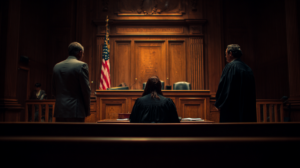
When a Judge Can Reject a Plea Agreement in Nevada Criminal Court
Even when the defense and prosecution reach an agreement, the judge must decide whether to accept the plea. In Nevada, the court is not a rubber stamp for every negotiated outcome. The judge may ask questions, review the factual basis, evaluate whether the defendant understands the agreement, and consider whether the proposed resolution is legally acceptable.
This is where the risk that a judge may reject a plea agreement becomes important. If the court rejects a plea agreement or refuses to accept the plea, the case may continue, negotiations may resume, or the defendant may need to reconsider the strategy with counsel. A defendant should understand that a plea bargain depends not only on negotiation with prosecutors but also on court approval and the judge’s independent role.
Collateral Consequences Can Matter as Much as the Sentence
A criminal conviction may affect far more than the sentence announced in court. Collateral consequences can include employment barriers, housing problems, professional licensing issues, immigration concerns for non-citizens, school or financial aid issues, reputation damage, and future sentencing exposure. These consequences can sometimes matter more to the accused than the immediate fine, probation term, or court condition.
This is why a defense lawyer should review the practical effects of a plea before the defendant makes a final decision. A plea that looks favorable on paper may create long-term problems if it triggers immigration risks, licensing consequences, future enhancement exposure, or restrictions that interfere with work or family life. A careful criminal defense strategy considers the legal sentence and the real-world impact.
Why Some Defendants Avoid Trial While Others Choose to Fight
Many cases settle through plea bargaining because a trial carries uncertainty, expense, stress, and potential exposure to harsher sentences if the defendant is convicted of more serious charges. For some defendants, a negotiated resolution may reduce risk and bring finality. For others, the evidence may be weak, the offer may be unreasonable, or the consequences of pleading guilty may be too severe to accept without litigation.
The decision to avoid trial should never be based only on fear. A jury trial may be appropriate when the defense has strong legal arguments, the prosecution’s proof is weak, or the defendant cannot accept the consequences of a plea. The attorney’s role is to explain the risks clearly, not to pressure the defendant into a choice that does not match the facts, goals, or legal posture of the case.
Defense Attorneys Negotiate by Testing the Prosecution’s Case
Effective defense attorneys do not negotiate by simply asking for leniency. They negotiate by identifying weaknesses in the prosecution’s case, challenging assumptions, presenting mitigation, and explaining why the government may face problems proving guilt at trial. This may involve legal motions, witness investigation, expert review, factual timelines, treatment records, employment history, or evidence that provides context for the accused person’s actions.
This approach can make a meaningful difference because prosecutors may be more willing to revise an offer when the defense shows that the case is more complicated than it first appeared. A defense lawyer may also protect the defendant from making statements that harm negotiation leverage. Strong negotiation is not passive; it is built on evidence review, legal analysis, and strategic communication.

FAQ
What is a plea deal in a Nevada criminal case?
A plea deal is a negotiated agreement where the defendant usually agrees to plead guilty or no contest in exchange for specific terms, such as reduced charges, a sentencing recommendation, or dismissal of other counts. The court must still review the plea before it becomes final. A defendant should understand the rights being waived and the possible consequences before accepting any agreement.
Can a judge reject a plea agreement in Nevada?
Yes. Even if the defense and prosecution agree, the judge may reject a plea agreement if the court has concerns about voluntariness, legal sufficiency, sentencing terms, or the factual basis. If the judge rejects the agreement, the case may continue, or the parties may return to negotiations. A defense lawyer can explain what options remain if that happens.
Should I plead guilty if the prosecutor offers reduced charges?
Not necessarily. Reduced charges may be helpful in some cases, but the defendant still needs to understand the conviction, sentence, probation terms, collateral consequences, and trial risks. A plea should be evaluated against the strength of the evidence and the client’s goals. Legal counsel can help determine whether the offer is fair or whether further negotiation is appropriate.
Conclusion
Understanding plea deals in Nevada means recognizing that a plea bargain is not just a negotiation; it is a legal decision that can affect freedom, record history, employment, immigration concerns, licensing, and future opportunities. A defendant should know what the prosecution can prove, what rights are being waived, whether the evidence is strong or weak, and whether the proposed agreement creates a better path than trial. In Las Vegas criminal defense, early evidence review and careful negotiation can help protect the accused from making a decision based only on pressure or fear.
This article provides general information and is not legal advice. Outcomes depend on the facts, charges, evidence, criminal history, court, prosecutor, and specific circumstances of each case. If you are facing criminal charges in Las Vegas, Henderson, or Clark County, Nevada, do not accept or reject a plea offer without understanding the risks. Contact The Defense Firm today for a free consultation with an experienced Nevada criminal defense attorney who can review the plea offer, evaluate the prosecution’s evidence, and help you make an informed decision about your case.