 English
 Spanish
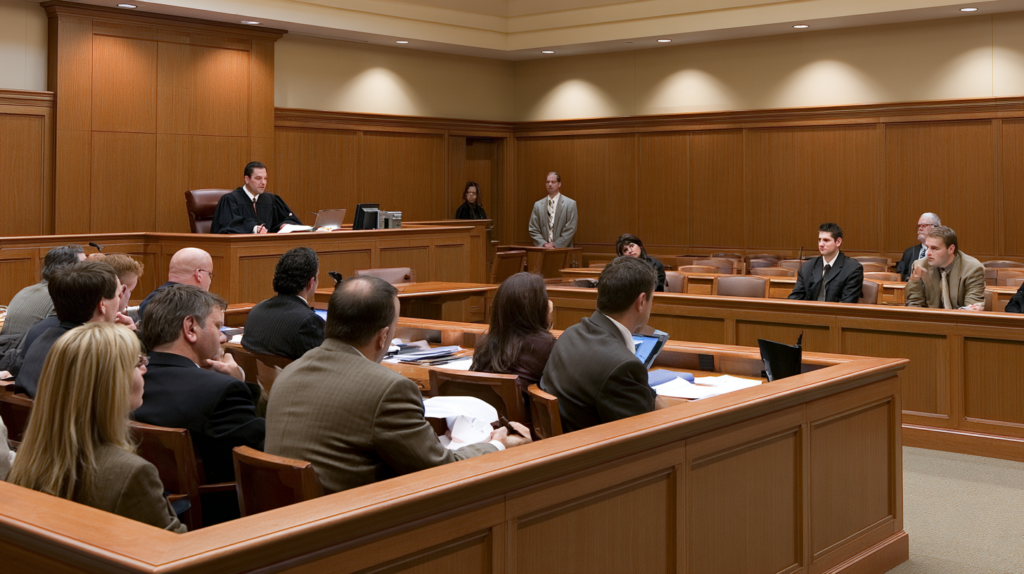
A hung jury can feel like the case is over because the trial has ended without a conviction. Legally, however, that is not what happened. A deadlocked jury has simply failed to reach a unanimous verdict, which usually leaves the case unresolved rather than finished.
That distinction matters because a mistrial after a hung jury is not an acquittal, and the prosecution may still have the option to retry the case. Understanding what Nevada law requires before a judge declares a deadlock, what double jeopardy does and does not prohibit, and what typically happens next can make the period after a mistrial much easier to navigate.
When can a Nevada judge declare a jury deadlocked?
Nevada does not allow a judge to discharge a jury simply because deliberations are difficult. Under NRS 175.461, the court generally waits until it is satisfied that there is no reasonable probability the jury can reach an agreement. The judge controls how long deliberations continue before reaching that conclusion, and jurors may be sent back to deliberate further before a mistrial is declared.
That standard exists because Nevada requires a unanimous criminal verdict. An 11-to-1 jury is still deadlocked, just like a 6-to-6 jury, because neither has reached a verdict. A hung jury therefore means there is no final determination of guilt or innocence.
Double jeopardy usually does not prevent a retrial after a hung jury
One of the most common misconceptions is that the Double Jeopardy Clause prevents the State from trying the defendant again after a jury deadlocks. Generally, it does not.
The U.S. Supreme Court has held that when a jury fails to reach a verdict, jeopardy has not terminated. An acquittal or conviction ends the first jeopardy, but a jury that cannot agree leaves the case unfinished. That is why the prosecution may generally retry the case after a mistrial caused by a hung jury.
A mistrial is not the same as an acquittal
An acquittal is a final verdict. Once a defendant is acquitted, the prosecution generally cannot retry the person for the same offense.
A mistrial caused by a hung jury is different because there is no verdict at all. The jury has not found the defendant guilty or not guilty. The prosecution may therefore still decide to retry the case, negotiate a resolution, or dismiss the charges.
Not every mistrial happens because the jury is deadlocked
A hung jury is one type of mistrial, but it is not the only one. Mistrials can also result from juror misconduct, outside information reaching the jury, serious procedural problems, or other circumstances that prevent a fair trial from continuing.
The reason for the mistrial matters because the rules governing retrial can differ depending on what caused it. An ordinary deadlock generally permits retrial, while a mistrial connected to deliberate prosecutorial misconduct or another unusual circumstance can raise a different legal question that should be evaluated by defense counsel.
What can the prosecution do after a hung jury?
After a deadlock, the prosecution typically has three realistic options. The first is to retry the case before a new jury. The second is to offer a different negotiated resolution, particularly if the first trial exposed weaknesses or uncertainty in the State’s evidence. The third is to dismiss the case and decline to proceed further.
Several factors can influence that choice, including the seriousness of the charges, the strength of the evidence, witness availability, and what is known about how the first jury was divided. A jury that was close to acquittal may create a very different strategic picture from one that was close to conviction.
Why a hung jury can still be a meaningful defense result
A hung jury is not an acquittal, but it can still be an important result for the defense. At least one juror was not convinced beyond a reasonable doubt, and that gives both sides information they did not have before trial.
The defense has also now seen the prosecution’s entire case presented in court, including how its witnesses perform under cross-examination. The State has had to reveal its evidence and theory in full, which can affect negotiations and strategy if the case is tried again.
A hung jury can change the negotiation posture
A deadlock tells the prosecution something about how a real jury reacted to the evidence. That can influence whether the State is willing to make a different plea offer after trial.
There is no guarantee that negotiations will improve, but the information gained from the first trial can materially change the parties’ positions. The jury’s split, the credibility of key witnesses, evidentiary weaknesses, and the likelihood of obtaining a different result at retrial can all affect what happens next.
Multiple defendants can receive different outcomes
When multiple defendants are tried together, a jury does not necessarily need to reach the same result for everyone.
Under NRS 175.491, jurors may return verdicts for the defendants they agree on while remaining deadlocked as to others. The defendants for whom the jury could not reach a verdict may then be tried again.
That means a multi-defendant case can end with acquittals, convictions, and hung counts or defendants all arising from the same trial.
Preparing for a retrial is not starting from zero
A retrial is a new trial with a new jury, but neither side is starting from scratch. Every witness who testified at the first trial is now on the record, which means prior testimony can be compared with what the witness says the second time.
The parties also know how the court handled major evidentiary issues, what exhibits were admitted, and how the case was presented. Those lessons can change the defense strategy significantly, even though rulings may still be reconsidered depending on the judge and circumstances.
Prior testimony can become important at the second trial
One of the biggest differences at retrial is that witness testimony is no longer unknown. If a witness changes part of the story, the defense may be able to use the prior transcript during cross-examination.
That can be especially important when credibility was already central to the first trial. The prosecution also has the same opportunity to adjust its presentation, so both sides tend to enter a second trial with a much clearer understanding of where the case is strong and weak.
Existing rulings may affect the retrial
Pretrial and evidentiary rulings from the first case do not simply disappear. Some may continue to govern, while others may be reconsidered depending on the circumstances.
That can include suppression rulings, evidentiary decisions, expert issues, and jury instructions. Defense counsel should review which rulings remain in place and which issues can be raised again before the second trial begins.
A mistrial creates immediate questions about custody and bail
If the defendant is in custody when the jury deadlocks, custody status and bail become immediate concerns.
A mistrial returns the case to a pretrial posture, and defense counsel may need to address whether the defendant remains detained, whether release conditions can be changed, and when the next court setting will occur.
Those questions are often more urgent than the new trial date itself.
A retrial is not always scheduled immediately
There is no universal timeline for a retrial after a hung jury. The court’s calendar, the parties’ preparation needs, witness availability, and ongoing negotiations can all affect when the case is set again.
The time between trials can also become an important negotiation period. The State may reassess the case, and the defense may use what happened during the first trial to refine the strategy or push for a different resolution.
Questions to ask your lawyer immediately after a hung jury
The period after a mistrial is when several important decisions may be made quickly.
Ask whether the jury’s numerical split is known, whether the prosecution has indicated that it intends to retry the case, and what happens to bail or release conditions in the meantime.
It is also worth asking which rulings from the first trial remain in effect, what the defense learned from the witnesses and evidence, and what would change if the case is tried again.
Frequently Asked Questions
Does the State have to retry my case after a hung jury?
No. A retrial is permitted, but it is not required. The prosecution may decide to retry the case, offer a different resolution, or dismiss the charges. That decision can depend on the strength of the evidence, seriousness of the charges, witness availability, and what the first trial revealed.
Can I find out how the jury was split?
Sometimes. The numerical split may become known during court proceedings or from jurors who voluntarily discuss the deliberations afterward. Jurors are generally not required to disclose that information, but when the split is known, it can be useful in evaluating what the prosecution may do next.
Is a second trial the same as the first one?
No. A retrial uses a new jury, but both sides now know much more about the case. Witnesses have already testified, transcripts exist, evidentiary issues have been litigated, and both sides have seen how the first jury reacted to the evidence. The second trial may therefore involve a different strategy even when the charges remain the same.
Conclusion
A hung jury in Nevada does not produce a conviction or an acquittal. It produces a mistrial, leaving the prosecution with a decision about whether to try the case again, negotiate a different resolution, or dismiss it.
The first trial also creates valuable information. The witnesses are on the record, the weaknesses in the evidence are clearer, and the prosecution has seen how a jury responded to its case.
If you or someone in your family is facing a retrial after a hung jury or mistrial, contact The Defense Firm for a free confidential consultation. A Las Vegas defense lawyer can review what happened at the first trial, what the jury’s deadlock may reveal, which rulings carry forward, and how the defense strategy should change before the case is tried again.