 English
 Spanish
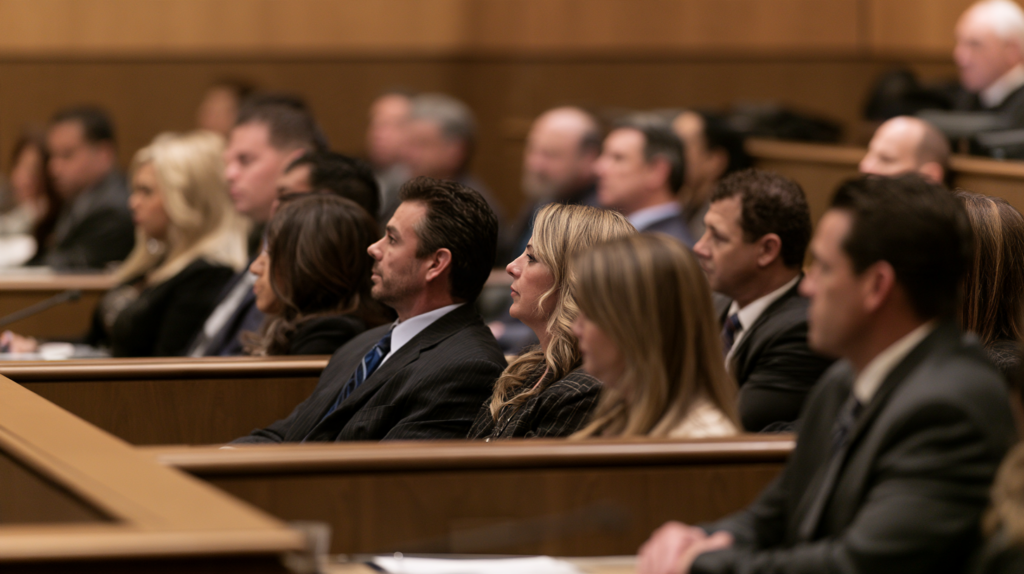
A bench trial is a criminal trial in which the judge decides the facts as well as the law, with no jury deciding guilt or innocence. Choosing that format can be one of the most consequential trial decisions a defendant makes because it changes who evaluates the evidence, credibility, and legal arguments.
In Nevada, however, the choice is not always entirely up to the defendant. The procedure depends on the court, and in district court a defendant generally cannot simply decide to replace a jury with a judge. Understanding those procedural rules comes before deciding whether a bench trial would actually be strategically better.
A defendant cannot always choose a bench trial alone
Under NRS 175.011, a case that must be tried by jury generally remains a jury case unless the defendant waives the jury in writing, the court approves that waiver, and the prosecuting attorney consents.
That means three separate requirements must be satisfied. The defendant must agree, the judge must approve, and the prosecution must consent. If the State refuses to consent, a defendant in district court generally cannot force the case to proceed as a bench trial. A defendant charged with a capital offense who pleads not guilty must be tried by jury.
Justice court uses a different jury rule
In justice court, the structure works differently. A case is generally tried by jury only if the defendant demands a jury in writing at least 30 days before trial.
That means a misdemeanor defendant who wants a jury must act before the deadline. If the written demand is not made in time, the case may proceed as a bench trial by operation of the rule rather than because the defendant affirmatively negotiated a jury waiver.
Some cases may be better suited to a judge
A bench trial can be attractive when the defense depends heavily on a technical legal distinction rather than emotional or factual persuasion. A judge routinely works with statutory elements, legal definitions, evidentiary standards, and complicated legal frameworks, which can make certain technical defenses easier to present directly.
Cases involving complex documentary evidence can also favor a bench trial. Financial records, lengthy transcripts, technical data, or detailed evidentiary disputes may be easier for a judge who regularly works with those materials to organize and evaluate against the specific legal elements the State must prove.
Emotionally difficult facts can affect the choice
Some cases involve facts that may provoke a strong emotional reaction even when the legal issue is much narrower. A jury may have difficulty separating its reaction to unpleasant allegations from the precise elements the prosecution must establish.
A judge regularly hears difficult criminal allegations and may be more accustomed to separating emotional reaction from the legal question. That does not mean a judge will automatically be more favorable, but it can become part of the strategic calculation when the defense depends on keeping the focus tightly on legal elements rather than the emotional character of the accusation.
A jury has one major strategic advantage
The strongest argument for a jury is often unanimity. In a Nevada criminal jury trial, the prosecution generally needs all jurors to agree on guilt.
That means persuading even one juror that reasonable doubt remains can prevent a conviction and produce a hung jury. A bench trial has no equivalent protection because a single judge is the sole fact-finder, so there is no possibility of one holdout juror preventing a guilty verdict.
Credibility disputes may favor a jury
Cases that turn heavily on whether jurors believe one witness over another can sometimes benefit from having multiple people evaluate credibility.
Twelve jurors bring different experiences and perspectives to testimony. A witness who seems credible to one person may appear unreliable to another, which can create reasonable doubt in a case where the outcome depends largely on competing versions of events.
Sympathy and human judgment can matter
A defendant with sympathetic circumstances may also benefit from a jury because jurors bring ordinary human experience into the courtroom.
Judges are trained to focus closely on legal standards and evidence. Jurors do that as well, but they may also respond differently to context, personal circumstances, or the human consequences of what they hear. Whether that is beneficial depends entirely on the facts and the defendant.
The bench trial decision interacts with whether you testify
Choosing between a judge and jury cannot always be separated from the question of whether the defendant will testify.
A judge evaluating the defendant’s credibility brings years of courtroom experience and may assess testimony differently from a jury seeing the defendant for the first time. Depending on the defendant, the nature of the testimony, and the defense theory, that difference can either help or hurt.
Speedy trial strategy can affect the decision too
The choice also interacts with whether the defense invokes Nevada’s speedy trial protections.
A compressed timeline may make it harder to prepare a complex technical defense, regardless of whether it will be presented to a judge or jury. A defendant and lawyer therefore need to consider audience, preparation time, witness strategy, and evidentiary issues together rather than treating each decision as independent.
Suppression rulings can change the entire calculation
The outcome of a motion to suppress can reshape the case before the judge-versus-jury decision becomes meaningful.
If important evidence is excluded, the prosecution’s case may become much weaker or fundamentally different. A trial strategy that appeared suitable for a jury before suppression may look different afterward, which is another reason not to make the waiver decision prematurely.
The specific judge matters in a bench trial
A bench trial does not involve an abstract idea of “a judge.” It involves one specific judge who will decide the facts and the law in that particular case.
Defense lawyers familiar with the courthouse may have experience with how a particular judge approaches evidentiary disputes, credibility questions, technical legal arguments, and criminal trials generally. That makes the analysis highly case-specific and difficult to reduce to a universal rule about whether judges or juries are better.
A bench trial removes jury selection
One of the most obvious procedural differences is that a bench trial has no jury selection.
That can shorten the proceeding substantially because there is no need to question prospective jurors, litigate challenges for cause, exercise peremptory challenges, or wait for a jury panel to be seated.
The presentation of evidence is usually more direct
Evidence in a bench trial is often presented in a more streamlined way because the judge already understands evidentiary rules and does not need the same kind of orientation a jury may require.
Objections can often be resolved more directly, and legal arguments can be addressed to the judge without the same concern that jurors will hear something they should not consider. Opening statements and closing arguments may also be shorter and more technical.
The burden of proof does not change
Choosing a bench trial does not reduce the prosecution’s burden.
The defendant remains presumed innocent, the State must still prove the charges beyond a reasonable doubt, and the ordinary rules of evidence continue to apply.
The defendant also retains the right to cross-examine witnesses, present a defense, challenge evidence, and decline to testify.
The primary change is who decides the facts.
A bench trial is not a lesser version of a criminal trial
A bench trial remains a full criminal trial with the same constitutional protections and evidentiary requirements.
The absence of a jury does not make the proceeding informal or easier for the prosecution. The judge must still evaluate whether the State has proven every required element under the same legal standard that would apply in a jury trial.
Timing matters in justice court
In justice court, a defendant who wants a jury generally must submit the written demand at least 30 days before trial.
Missing that deadline can effectively decide the issue by default. That makes early discussion with counsel important because waiting until the trial date approaches may eliminate an option the defendant would otherwise have preferred.
Timing matters differently in district court
In district court, a bench trial generally requires a written waiver, court approval, and prosecutorial consent.
Because that process involves more than simply filing a document, the issue should be raised early enough for counsel to determine whether the State will agree and whether the court will approve the waiver.
Waiting until immediately before trial may make the option less realistic even when it might otherwise have been strategically useful.

Frequently Asked Questions
Can I simply choose a bench trial instead of a jury trial in Nevada?
Not always. In district court, NRS 175.011 generally requires a written jury waiver, approval from the court, and consent from the prosecution. If the prosecutor does not agree, the defendant usually cannot compel a bench trial.
What happens if the prosecutor refuses to agree to a bench trial?
In district court, the case generally proceeds before a jury. Prosecutorial consent is part of the jury-waiver requirement, so a defendant cannot ordinarily force the State to accept a judge-only trial.
Is a bench trial faster than a jury trial?
Often, yes. A bench trial eliminates jury selection and may involve more streamlined presentation of evidence and legal argument. But speed alone is usually a poor reason to choose one because the far more important question is whether a judge or jury is the better decision-maker for the specific defense.
Conclusion
The real question in a bench trial vs. jury trial in Nevada is not which format is generally better. It is which decision-maker is better suited to the specific facts, evidence, legal issues, credibility disputes, and defense strategy in the case.
A technical legal defense may benefit from a judge, while a credibility dispute, sympathetic defendant, or realistic possibility of a holdout juror may favor a jury.
If you or someone in your family is approaching trial in Clark County, contact The Defense Firm for a free confidential consultation. A Las Vegas criminal defense lawyer can evaluate the court, the judge, the prosecution’s case, the testimony strategy, and the timing issues before a jury waiver or jury demand becomes a decision made by default.