 English
 Spanish
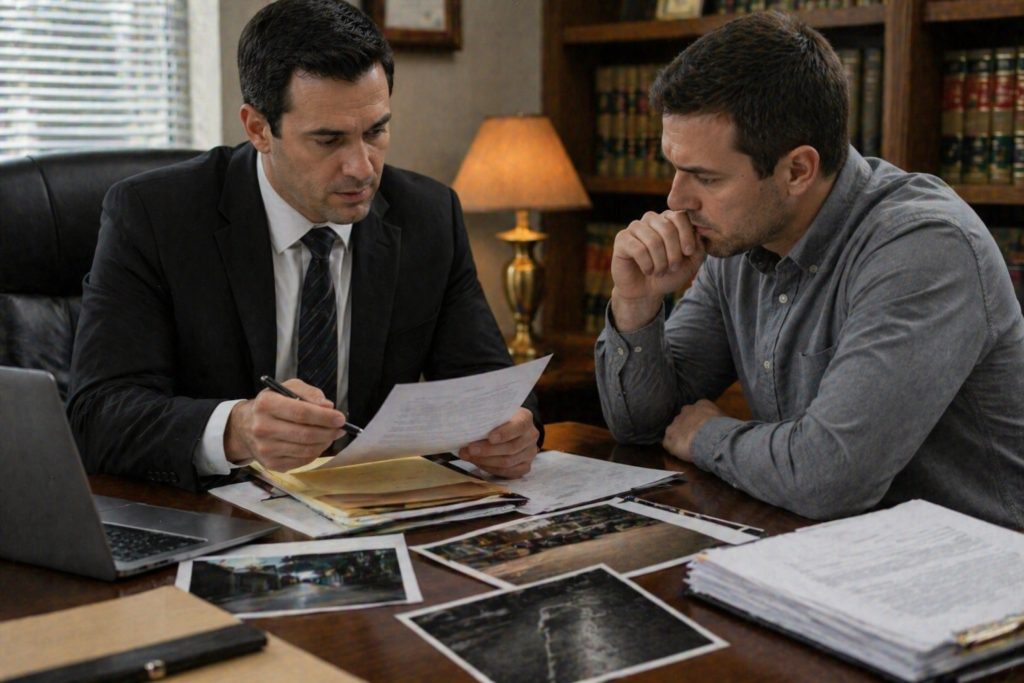
Murder charges in Nevada represent the most serious category of criminal accusation within the state’s criminal justice system, and the consequences of a conviction are severe enough to define the rest of a person’s life. Under Nevada law, a first-degree murder conviction can result in life imprisonment with or without the possibility of parole, and in cases involving specific aggravating factors — including the killing of a law enforcement officer or murders committed during certain felonies — the death penalty remains a potential outcome. Second-degree murder carries its own substantial sentencing range, and even a reduced outcome at the charge level still results in a criminal record that affects employment, housing, professional licensing, and family stability for years beyond release.
When the prosecution’s case rests on indirect evidence rather than live eyewitness testimony, many people assume the case is weak and that the defense has an automatic advantage. That assumption is dangerous. Nevada courts allow conviction on circumstantial evidence alone, provided the prosecution’s case establishes guilt beyond a reasonable doubt. This means that forensic reports, surveillance footage, cell phone location data, police reports, and digital records can collectively form a powerful case against a defendant even without a single person who claims to have witnessed the act. A skilled defense attorney who understands how these elements work together — and how each one can be individually challenged — is essential from the moment of arrest.
The first hours and days after murder charges are filed are not waiting time — they are the period during which critical evidence is preserved or lost, statements to police can help or hurt the defense, and the prosecution begins shaping its theory of the case. Criminal defense lawyers who engage at this stage can intervene in ways that are simply not available later: advising on how to exercise the right to remain silent, seeking bail conditions that allow the accused to assist in preparation, and beginning the process of gathering alternative evidence before it disappears. Contacting legal counsel immediately is not a signal of guilt — it is the most rational and self-protective decision a person facing these charges can make.
Nevada Law Distinguishes Between Murder Degrees in Ways That Define the Defense
First-Degree Murder Requires Proof of Premeditation and Criminal Intent
First-degree murder under Nevada law requires the prosecution to prove both that the defendant acted with criminal intent to kill and that the act was premeditated — meaning it was planned or deliberated before it occurred. This is a demanding standard, and defense attorneys focus intensely on the question of premeditation because successfully contesting it can mean the difference between a first-degree murder conviction and a significantly lesser charge. A criminal defense attorney examining a first-degree case will scrutinize the timeline of events leading up to the incident, looking for evidence that contradicts any narrative of advance planning. The absence of criminal intent or the presence of evidence showing an impulsive, unplanned act can provide the factual basis for attacking the prosecution’s theory at its foundation.
Expert witnesses are often central to this analysis. A forensic psychologist or behavioral expert can testify about the defendant’s state of mind, the circumstances of the incident, and whether the facts support a finding of premeditation. This testimony does not require admitting any wrongdoing — it addresses the mens rea element that the prosecution must prove independently. When the prosecution cannot establish that the defendant acted with deliberate, premeditated intent, the charge may not survive a pretrial motion or may be reduced through negotiating plea deals to a lesser homicide offense. In Nevada, the distinction between first and second-degree murder carries dramatically different sentencing consequences, making this challenge one of the most strategically valuable available to the defense.
Second-Degree Murder and Reduced Charge Strategies Under Nevada Law
Second-degree murder in Nevada involves intentional killing without premeditation — the defendant meant to cause death but did not plan it in advance. While still a serious felony with severe sentencing exposure, this charge creates different defensive opportunities than first-degree murder. Defense attorneys handling murder cases in Las Vegas and Clark County often focus on whether facts support reduction from first-degree to second-degree murder, or from second-degree murder to manslaughter, by targeting the specific elements the prosecution must prove at each tier. Manslaughter charges carry significantly lower maximum sentences, and achieving a charge reduction — whether through pretrial motions, plea deals, or trial — can represent a meaningful improvement in outcome for the accused.
The prosecution’s ability to prove criminal intent and premeditation depends entirely on the evidence presented at trial. When that evidence is largely indirect — based on forensic reports, cell phone data, or behavioral circumstantials — rather than grounded in witness accounts of the defendant’s stated intentions, the case for the higher charge becomes genuinely vulnerable. Skilled defense attorneys use the discovery process to examine every piece of collected evidence, identify inconsistencies in the prosecution’s theory of intent, and build a counter-narrative that is consistent with a lesser mental state. This is not a matter of denying that a death occurred — it is a matter of ensuring that the prosecution proves every required element to the legal standard Nevada courts demand.
Forensic and Physical Evidence Become the Foundation in No-Witness Murder Cases
Challenging Forensic Evidence Through Expert Analysis and Chain of Custody
When eyewitness testimony is absent, the prosecution in a murder case typically relies on forensic evidence to build its narrative. DNA profiles, fingerprint analysis, ballistics testing, blood spatter interpretation, and trace evidence recovered from crime scenes are all presented as objective and conclusive. The reality is that forensic evidence is subject to interpretation, to collection errors, and to the same chain of custody vulnerabilities as any other evidence. An experienced criminal defense lawyer will examine whether each piece of physical evidence was collected according to protocol, stored correctly, transferred without contamination, and analyzed by qualified professionals using validated methods. A failure at any of these points can render a piece of prosecution’s evidence legally vulnerable or scientifically challengeable.
Expert witnesses retained by the defense play a critical role in this process. A forensic scientist, DNA analyst, or crime scene reconstruction specialist can review the same evidence the prosecution relies on and offer an alternative interpretation — or identify outright errors in methodology — that raises reasonable doubt about the conclusions drawn. In criminal cases where the prosecution’s theory depends on the jury accepting forensic findings as definitive, the defense’s ability to challenge witness testimony from the prosecution’s own experts through rigorous cross-examination is equally important. Cross-examining witnesses — including forensic analysts — on matters of methodology, calibration, sample contamination, and interpretive assumptions is a skill that distinguishes a successful criminal defense attorney from one who merely accepts the prosecution’s framing.
Filing pretrial motions to suppress evidence is another powerful tool when forensic or physical evidence was obtained through unlawful means. Nevada courts take Fourth Amendment protections seriously, and evidence gathered without proper legal authority — whether through an improper search, a warrant obtained on insufficient grounds, or a seizure conducted outside the scope of a valid warrant — can be excluded before trial. When forensic evidence is the backbone of the prosecution’s case, a successful suppression motion can fundamentally destabilize the government’s theory. Defense attorneys who conduct thorough pre-trial investigation and file well-supported suppression motions early in the process often change the trajectory of a case long before a jury is ever seated.
Indirect Evidence and Alternative Theories Build Reasonable Doubt in No-Witness Cases
The absence of witness testimony in a murder case means the prosecution must ask the jury to draw inferences from indirect evidence — to reason from circumstantial facts to the conclusion of guilt. Beyond a reasonable doubt is the highest evidentiary standard in the criminal justice system, and it is not satisfied merely because the prosecution’s theory is plausible. Defense attorneys in these cases work to construct equally plausible alternative theories of the events, presenting the jury with an interpretation of the same evidence that is consistent with innocence or with a lesser act. When two competing narratives both fit the available facts, the jury cannot convict under the reasonable doubt standard, and an experienced skilled attorney knows how to build and present that alternative explanation compellingly.
Surveillance footage is a common form of indirect evidence in Nevada murder cases, particularly in Las Vegas, where cameras are dense in commercial, residential, and public spaces. Footage can place a person at or near a location at a particular time — but it rarely answers the essential questions about what that person knew, intended, or did in moments the camera did not capture. Defense lawyers challenge video evidence by examining resolution, timestamp accuracy, camera angles, and the inferences the prosecution draws from incomplete images. In cases involving mistaken identity, footage that appears to show the defendant may actually depict someone else — a claim that becomes far more credible when supported by expert witnesses in forensic video analysis and by alibi evidence that presents evidence of the defendant’s actual location.
Gathering evidence that supports an alternative account is not passive work — it requires active investigation in the period immediately following charges being filed. Cell phone records, credit card transactions, digital communications, and character witnesses who can speak to the defendant’s presence, state of mind, or behavior on the relevant date may all provide alternative evidence that does not appear in the prosecution’s case file. A successful defense in a murder case without witnesses often depends on how thoroughly the defense has assembled its own factual record before trial, and on whether that record can be effectively presented to a jury in a way that holds together against the prosecution’s cross-examination. This preparation requires time, resources, and an attorney who takes the investigative work as seriously as the legal arguments.
Self-Defense and Criminal Intent as Complete Defenses in Nevada Murder Cases
Nevada law recognizes self-defense as a complete legal justification for the use of deadly force under specific circumstances. For a self-defense claim to succeed, the defendant must have reasonably believed they faced an immediate threat of death or serious bodily harm, that the use of force was necessary to prevent that harm, and that the level of force used was proportionate to the threat. When no witness survived to corroborate the defendant’s account, the defense must rely on physical evidence from the scene — injuries to the defendant, forensic reconstruction of the confrontation’s dynamics, medical records, and prior documented threats from the alleged victim — to establish that the defensive force was justified. Defense attorneys build these cases through forensic analysis and expert reconstruction, creating a factual record that supports the defendant’s version of events without relying on third-party accounts.
Criminal intent is an element the prosecution must prove independently in most murder charges, and when no witness exists to testify about what the defendant said or did before the incident, establishing that intent is significantly more difficult. Defense strategies that target the intent element include presenting evidence of accident, emotional disruption, or reasonable misunderstanding of circumstances that is inconsistent with deliberate homicidal purpose. The insanity defense is also available in Nevada under defined standards — though it is rarely pursued — for cases where a qualified mental health expert can establish that the defendant lacked the legal capacity to appreciate the nature or wrongfulness of the act. Each of these defenses requires a thorough factual investigation, expert involvement, and careful strategic planning that begins well before trial.
FAQ
What happens immediately after a murder arrest in Nevada?
After arrest, the accused is booked — typically at a Clark County detention facility for Las Vegas-area cases — and a bail hearing is scheduled, often within 24 to 48 hours. Murder charges frequently result in high bail or bail denial based on the severity of the alleged offense. An experienced criminal defense lawyer present at the bail hearing can advocate for the defendant’s release and begin building the defense record from the first court appearance. Every stage from this point forward has strategic implications, which is why legal counsel should be engaged before any statements are made to police.
What mistakes do defendants most commonly make in no-witness murder cases?
The most damaging mistake is speaking to law enforcement without an attorney present. Police investigating murder cases are trained to gather information, and even well-intentioned explanations can create inconsistencies that the prosecution exploits later. Gathering evidence in the defendant’s favor — alibi documentation, digital records, communications — is equally critical and must happen quickly before data is deleted or overwritten. Finally, assuming that the absence of witnesses makes a conviction unlikely is a serious miscalculation: prosecution’s evidence built from forensics and digital trails can be highly persuasive to a jury without a single live witness.
How do defense attorneys challenge forensic evidence in murder cases?
Defense attorneys challenge forensic evidence by examining the chain of custody for every item collected, scrutinizing the collection and analysis methodology for compliance with scientific and procedural standards, and retaining expert witnesses who can provide alternative interpretations or identify errors in the prosecution’s forensic conclusions. Filing pretrial motions to suppress evidence is also available when evidence was obtained through unlawful search or seizure. In murder cases where forensic analysis is the prosecution’s primary tool, the defense’s ability to undermine that analysis through expert challenge and procedural attack is often the single most important strategic factor.
Conclusion
Murder charges in Nevada — with or without witnesses — represent some of the most consequential legal situations a person can face. The burden of proof remains with the prosecution, and reasonable doubt is a real and meaningful legal standard that a skilled defense can actively create through forensic challenges, expert witnesses, suppression of improperly obtained evidence, and the construction of credible alternative accounts. The absence of eyewitness testimony does not make a defense impossible — it changes where the battleground is, and an experienced criminal defense attorney knows precisely how to fight on that terrain.
You do not have to face murder charges alone, and you do not have to accept the prosecution’s initial framing of the facts as permanent. Defendants across Nevada — in Las Vegas, Clark County, Henderson, and beyond — have the right to a rigorous, evidence-based defense, and exercising that right begins with one step: getting informed early enough to protect your options. The decisions made in the first hours and days after an arrest are among the most consequential in the entire legal process.
If you or someone you care about is facing murder charges in Nevada, contacting The Defense Firm for a consultation is a calm, practical, and important first step. Our criminal defense lawyers handle serious homicide cases across Nevada and are ready to evaluate the evidence, explain your rights, and build the strongest defense the facts will support.