 English
 Spanish
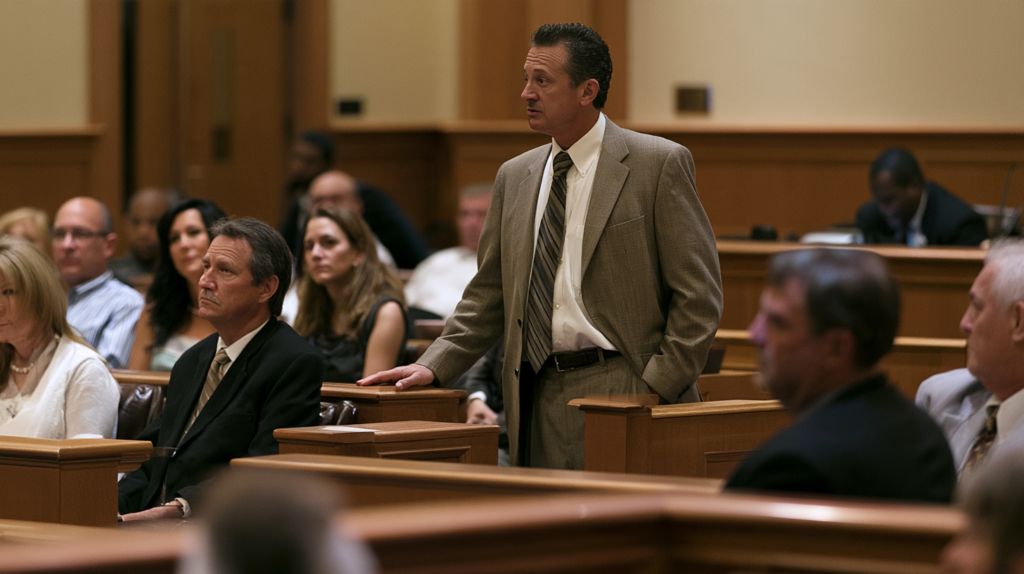
Jury selection is one of the most important parts of a Nevada criminal trial, but it can look deceptively informal from the outside. What seems like a conversation between lawyers, the judge, and prospective jurors is actually a structured process governed by specific rules about questioning, challenges, timing, and who ultimately remains on the jury.
Those rules matter because the defense is not simply trying to find jurors who seem favorable. The process is designed to identify people who cannot fairly decide the case, determine when a juror can be removed for cause, and strategically use a limited number of peremptory challenges before the final jury is seated.
Nevada provides two different ways to remove a prospective juror
A prospective juror can generally be removed through either a challenge for cause or a peremptory challenge, and the two operate very differently. Under NRS 175.036, either side may challenge a juror who is disqualified or whose bias, experience, beliefs, or other circumstances would prevent that person from fairly deciding the facts. Challenges for cause are not limited to a fixed number because each one must be supported by a specific reason.
The judge decides whether a challenge for cause should be granted. The prospective juror, and potentially other people, may be questioned about the issue before the court rules. A peremptory challenge, by contrast, generally does not require the same showing of cause, but the number available to each side is strictly limited.

The number of peremptory challenges depends on the charge
Nevada determines the number of peremptory challenges based on the seriousness of the offense. Under NRS 175.051, each side generally receives eight peremptory challenges when the offense is punishable by death or life imprisonment.
For offenses punishable by another term of imprisonment, a fine, or both, each side generally receives four peremptory challenges. The allocation applies to each side rather than automatically multiplying for every defendant, which can become important when multiple defendants are being tried together.
Nevada requires peremptory challenges to be used in a specific order
Peremptory challenges are not simply saved and used whenever a lawyer chooses. Nevada law provides that the prosecution and defense exercise their challenges alternately, with the prosecution going first.
The statute also provides that a challenge not exercised in the proper order is waived. That makes the sequence strategically important. A lawyer who passes may lose the opportunity to use that particular challenge later rather than being able to save every unused strike for a prospective juror who appears further down the panel.
Voir dire is designed to uncover bias and disqualification
The questioning process is commonly called voir dire. Its purpose is to learn enough about prospective jurors to determine whether they can fairly apply the law and evaluate the evidence.
Questions may address prior experiences with similar crimes, relationships with law enforcement, exposure to publicity, strong beliefs about the criminal justice system, or personal experiences that could affect how a juror views the allegations. The purpose is not to argue the case before testimony begins but to identify attitudes and experiences that matter to jury service.
A juror’s view of the burden of proof can be especially important
One of the most important subjects during voir dire is whether a prospective juror can follow the presumption of innocence and burden of proof. A person who believes a defendant should have to prove innocence may be unable to apply the law correctly.
That type of answer gives defense counsel something concrete to address through further questioning or a challenge for cause. In that sense, a prospective juror who openly expresses a concerning belief may be easier to evaluate than someone who says very little and gives counsel no meaningful information about how they think.
Nevada criminal juries generally consist of 12 jurors
A Nevada criminal jury generally consists of 12 jurors. Before jury selection begins, however, the parties may agree in writing, with court approval, to use a smaller jury of no fewer than six.
That reduction requires agreement. Neither side can simply impose a smaller jury on the other. Because a criminal verdict must still be unanimous, reducing the number of jurors also reduces the number of people who must all agree before a verdict can be returned.
Alternate jurors can also be selected
Courts may also seat alternate jurors in addition to the primary jury. Alternates attend the proceedings and hear the evidence so they can replace a juror who becomes unable to continue.
That helps prevent a lengthy trial from collapsing because one juror becomes sick, is disqualified, or otherwise cannot finish serving. Nevada law provides procedures governing when alternate jurors may replace seated jurors and when they are discharged.
The defendant has a role during jury selection
The lawyers exercise the formal challenges, but the defendant’s observations can still be useful. A defendant may notice how a prospective juror reacts to a name, allegation, witness, or question in ways that counsel cannot fully observe while managing the selection process.
If the defendant recognizes a juror, notices a possible workplace or neighborhood connection, or observes a reaction that seems significant, that information should be communicated quietly to defense counsel. The lawyer can then determine whether additional questioning or a challenge is appropriate.
Jurors begin observing the defendant before the trial evidence starts
Prospective jurors can see the defendant throughout the selection process, which means courtroom presentation matters before opening statements ever begin.
Facial expressions, reactions, posture, interactions with counsel, and general behavior may all contribute to early impressions. Defense counsel may therefore give specific guidance about how the defendant should conduct themselves while the panel is being questioned.
Jury selection disappears entirely in a bench trial
If a defendant proceeds through a bench trial, where the judge rather than a jury decides the facts, there is no jury-selection phase.
That difference can matter strategically. A defendant whose defense may resonate strongly with even one juror gives up the possibility of a holdout juror by choosing a bench trial, while a case built around technical legal issues may present different considerations.
Speedy trial strategy can affect preparation for voir dire
Jury selection also interacts with the decision to invoke Nevada’s speedy trial protections.
A shorter trial timeline gives the defense less time to investigate the prospective themes of the case, prepare questions, evaluate publicity, research evidentiary issues, and determine which attitudes among jurors may be most significant. Speed therefore affects jury preparation just as it affects every other part of trial strategy.
Whether the defendant will testify can affect jury selection
If the defendant is considering testifying, counsel may use voir dire to evaluate how prospective jurors react to issues that could become important during that testimony.
The panel’s attitudes toward credibility, criminal defendants, prior experiences, self-defense, police testimony, or other case-specific themes can provide useful information when deciding how the defense should ultimately be presented.
Peremptory challenges have constitutional limits
Although a peremptory challenge generally does not require the lawyer to state a traditional cause for removing a juror, that does not mean the challenge can be used for any reason.
A peremptory strike cannot constitutionally be used to remove a juror solely because of race, and constitutional restrictions extend to other protected classifications recognized by law. When the opposing party believes the pattern or circumstances of strikes suggest an impermissible purpose, an objection may be raised.
A lawyer may have to explain a peremptory strike
When a proper constitutional objection is made, the party exercising the challenge may be required to provide a neutral explanation for the strike.
That is why defendants sometimes see an unexpected exchange in which lawyers begin explaining decisions that ordinarily require no explanation. The court is determining whether the strike was based on a permissible reason or whether it violated constitutional limits on jury selection.
Most prospective jurors will not ultimately serve
A jury panel begins with more people than the final number needed for the trial. Prospective jurors may be excused for hardship, removed for cause, or eliminated through peremptory challenges until enough qualified jurors remain.
Being excused does not necessarily mean a prospective juror did anything wrong. A scheduling conflict, medical issue, inability to remain impartial, strong preexisting belief, or strategic peremptory challenge can all result in someone leaving the panel.
Larger or more difficult cases may require larger jury panels
The number of prospective jurors initially brought into the courtroom varies depending on the case.
A case involving substantial publicity, emotionally difficult allegations, or a subject that may cause many people to disclose strong views often requires a larger starting panel because more prospective jurors may be excused before 12 qualified jurors and any alternates remain.
Nevada jurors are summoned from the community
Prospective jurors are summoned, not selected in advance specifically for the defendant’s case. They are drawn through the jury system from lists designed to provide a cross-section of the community and are then assigned to courtrooms and cases.
That means the panel is not constructed to help or hurt either side. Voir dire exists precisely because the attorneys initially know very little about the people who have been summoned and need an opportunity to identify experiences, beliefs, biases, and practical limitations relevant to the case.
Hardship questions usually come before substantive jury questioning
Before counsel reaches the most case-specific questions, the court may address practical issues such as employment, caregiving obligations, medical needs, travel, or other hardships that could prevent a prospective juror from serving.
Those questions can make the beginning of jury selection feel disconnected from the criminal case itself. Once those logistical issues are resolved, the focus generally shifts toward whether the remaining jurors can evaluate the evidence fairly and follow the court’s instructions.
Frequently Asked Questions
How many jurors can each side remove without giving a traditional reason in Nevada?
Under NRS 175.051, each side generally receives eight peremptory challenges when the charged offense is punishable by death or life imprisonment and four peremptory challenges for other offenses covered by the statute. Challenges for cause are separate and are not limited to the same fixed number, but each requires a reason the court accepts.
How long does jury selection take in a Nevada criminal trial?
It depends on the case. A relatively straightforward trial may complete jury selection in part of a day, while a case involving substantial publicity, complicated issues, or emotionally difficult allegations may require significantly more time because more prospective jurors need to be questioned before a fair jury can be seated.
Does the defendant personally choose which jurors are removed?
Not directly. Defense counsel exercises the formal challenges, but the defendant’s observations can provide useful information during the process. If the defendant notices a reaction, recognizes someone, or identifies a possible connection that counsel may not have seen, that information should be communicated quietly so the lawyer can decide whether further questioning or a challenge is appropriate.
Conclusion
Jury selection in a Nevada criminal trial is not simply an administrative step before the evidence begins. It determines which people will evaluate the witnesses, apply the reasonable-doubt standard, and ultimately decide whether the prosecution has proven its case.
The process requires careful attention to bias, credibility, the order and number of available challenges, and how prospective jurors react to the issues that will define the trial.
If you or someone in your family is preparing for a criminal jury trial in Clark County, contact The Defense Firm for a free confidential consultation. A Las Vegas criminal defense lawyer can evaluate the evidence, identify the themes that matter during voir dire, and prepare for jury selection as a substantive part of the defense rather than treating it as a formality.