 English
 Spanish
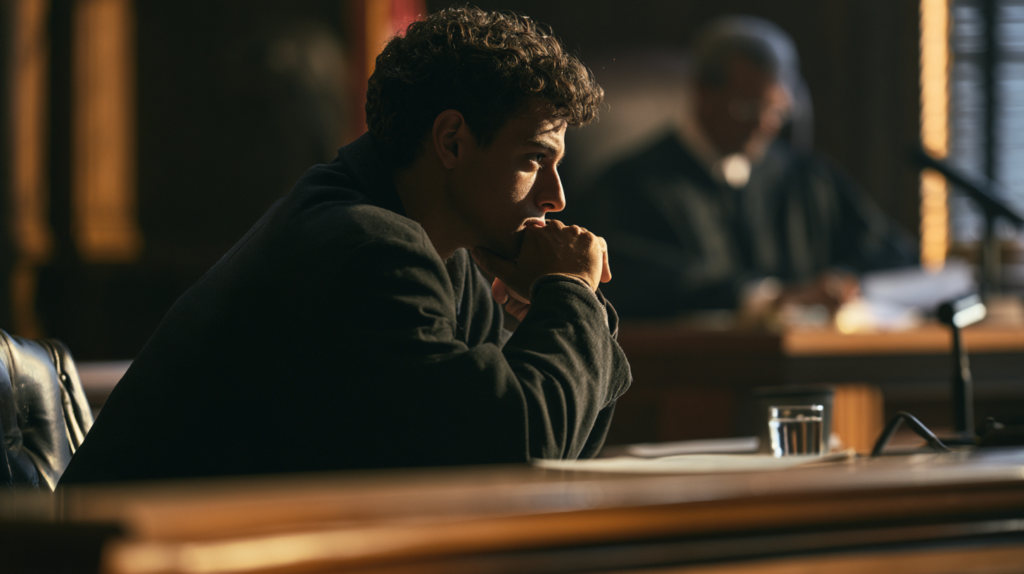
You know where you were that night, and you assume that fact will protect you. It won’t, not by itself. A murder defense strategy built around an alibi in Nevada has to clear a procedural deadline before a jury ever hears a word of it, and it has to survive a prosecutor who will spend weeks trying to break it before trial starts. We at The Defense Firm have watched families treat an alibi as a fact that speaks for itself. It doesn’t. It has to be filed, tested, and defended like every other piece of evidence in the case.
This guide covers what happens between the moment you tell your attorney “I wasn’t there” and the moment a jury decides whether to believe it. That includes the 10-day disclosure deadline under Nevada law, what a prosecutor’s investigators do to your timeline before trial, and the specific traits that make one alibi witness credible while another gets dismantled on cross-examination. None of this appears in the general “what is an alibi” guide you’ll find searching this topic, because none of them are written for a Nevada murder charge.
The Stakes a Murder Charge Puts on the Line Before an Alibi Comes Up
NRS 200.010 defines murder in Nevada as the unlawful killing of a human being committed with malice aforethought, whether that malice is expressed or implied. The statute also reaches a narrower category of deaths connected to controlled substances made available in violation of Nevada’s drug laws. Malice does not require a written confession or a witness who heard you plan the killing. Nevada law allows a jury to infer it from the circumstances themselves.
NRS 200.030 splits the charge into two degrees, and the gap between them is the difference between decades and the rest of your life. First-degree murder covers killings by poison, lying in wait, or torture, any willful and premeditated killing, and killings that happen during certain other felonies. A conviction carries a category A felony sentence: death, if the state proves an aggravating circumstance a jury finds isn’t outweighed by mitigation. Short of that, the sentence is life without parole, life with parole eligibility after 20 years served, or a fixed 50-year term with the same 20-year eligibility floor. Second-degree murder covers everything else the first-degree definition doesn’t reach, and it still carries a category A felony sentence of life with parole eligibility after 10 years, or a fixed 25-year term with that same 10-year floor.
Every one of those numbers assumes the state proves you were the person who did it. That’s where an alibi defense does its work, and getting the mechanics right matters more here than in almost any other criminal charge Nevada prosecutes.

The Alibi Notice Deadline That Can Decide a Case Before Trial Starts
NRS 174.233 governs how an alibi defense enters a Nevada criminal case, and the rule surprises people who assume they can testify to their whereabouts once trial begins. A defendant who intends to rely on an alibi must file and serve a written notice of alibi to the prosecutor no less than 10 days before trial, unless the court sets a different schedule. That notice has to state the specific place you claim to have been and name every alibi witness who can support the claim, along with each witness’s last known address.
The prosecution then has its own 10-day clock. Once it receives your witness list, the state must disclose the names and addresses of any rebuttal witnesses it plans to call to contradict the alibi. Both sides carry a continuing duty to disclose if a new witness turns up later, and a court can waive the deadlines for good cause. A court will not overlook silence on this point. If the defense misses the notice deadline, the judge can exclude the alibi witnesses from testifying, with one exception: your own testimony about your own whereabouts stays admissible even if the notice never went out. Everyone else you’d planned to call can be barred from the stand.
That exclusion sanction is the detail most people researching this topic never encounter, because most alibi guides are written for jurisdictions in general rather than for Nevada’s specific 10-day rule. An alibi that would have won the case doesn’t help if the witnesses who could prove it are sitting in the hallway, barred from the courtroom, because the notice went out late or not at all.
Investigators Test an Alibi Before It Reaches a Jury
Once notice is filed, the case doesn’t pause. Prosecutors use the 10 days, and often the weeks before it, to take the claimed timeline apart. Investigators cross-check every witness statement against the others, looking for the small inconsistencies that separate a rehearsed story from a loved one. They compare the claimed location and timeframe against whatever physical or digital record exists: cell tower data, GPS logs, credit card receipts, surveillance footage, key-card access records. Prosecutors sometimes retain a forensic analyst to check whether central video or digital files have been altered before the state accepts them at face value. The firm’s guide to expert witnesses in Las Vegas murder trials covers how that same forensic review plays out on the defense side of the case.
Cell phone location data has become one of the most contested pieces of this puzzle. A phone pinging off a cell tower miles from the scene at the relevant hour can support a defense timeline on its own, but that same data can also be read another way by an expert witness working for the state, most often when tower coverage overlaps or the phone changed hands. Nevada prosecutors know this and will push on the technical limits of that data before conceding it proves anything.
The Corroboration That Separates a Strong Alibi From a Weak One
Your own account of where you were carries less weight than the same account backed by something you didn’t create yourself. Courts and juries look for independent corroboration: surveillance footage that happened to capture you, a receipt with a timestamp, a key-card access log from a building entrance, a rideshare record, a friend’s text message sent and received at the relevant hour. The firm’s guide to how prior statements and texts affect Nevada murder cases covers how those same digital records cut both ways, helping and hurting a defendant depending on what they show. An alibi defense resting on testimony alone, with nothing independent behind it, is the version prosecutors are most confident about attacking.

Alibi Witness Credibility in Front of a Nevada Jury
A jury weighs an alibi witness the way it weighs any other witness, which means the relationship between that witness and the defendant matters as much as what the witness says. A prosecutor cross-examining your sister, your girlfriend, or your closest friend will lean hard on that closeness, suggesting to the jury that love or loyalty, not memory, produced the testimony. That doesn’t make family and friends bad witnesses. It means their account needs the same independent backup described above, because the jury is primed to discount it on relationship grounds alone.
Specificity matters just as much as who’s testifying. A witness who remembers the sequence of the evening, who arrived when, what was said, what was on television, reads as someone who lived through the night rather than someone who memorized a script for court. Vague, rounded answers, “sometime around then,” “I think it was that night,” give a prosecutor room to suggest the witness isn’t sure at all. The firm’s breakdown of proven tactics for winning murder cases without eyewitnesses covers the flip side of this same dynamic: cases where the defense has to succeed with limited witness testimony of any kind, alibi or otherwise.
Consistency across every telling of the story also carries weight. A witness who told police one version the week of the arrest and a different version on the stand hands the state a gift, regardless of which version is closer to true. Nevada’s guide to using an alibi against a burglary charge walks through the same credibility mechanics in a lower-stakes setting, and the lessons transfer to a murder charge, where the jury’s tolerance for inconsistency is even lower.
Building an Alibi Defense Strategy That Holds Up at Trial
None of this works if it starts late. The 10-day notice clock under NRS 174.233 runs from the trial date, not from the day you were arrested, but building a credible alibi defense takes far longer than 10 days. Cell tower records and surveillance footage get overwritten or deleted on ordinary retention schedules that don’t wait for a case timeline. A witness’s memory of a specific evening sharpens or fades depending on how soon someone sits down with them and writes it out. Every week that passes between an arrest and a serious conversation with a defense attorney is a week where corroborating evidence can disappear.
A Nevada murder charge also raises the cost of getting any of this wrong past what it would be in almost any other case, because the penalties under NRS 200.030 leave little room to recover from an alibi that collapses under cross-examination. That cost climbs further in a capital murder case, where the same alibi mechanics carry the highest possible stakes. The same is true when the state leans on circumstantial evidence to fill gaps an alibi should close, or brings in forensic evidence meant to place you at the scene despite it. An attorney who understands both halves of this, the defense strategy that actually works at trial and the procedural deadlines that decide whether a jury hears it at all, is the difference between an alibi defense that protects you and one that never gets past the courthouse door.
Readers researching how these cases unfold after an overdose death gets charged as murder rather than a drug offense may also want our companion piece on drug-induced homicide charges in Nevada, which covers a different Nevada murder statute but the same pattern of a charge that moves fast and rewards early defense involvement.

FAQ
Does an alibi have to include physical evidence, or is testimony enough?
Testimony alone can support an alibi, but Nevada juries give far more weight to an alibi backed by independent evidence, such as cell tower data, receipts, or surveillance footage. Courts don’t require corroboration as a legal matter, but a prosecutor will highlight its absence at trial.
What happens if you remember new alibi witnesses after the notice deadline passes?
NRS 174.233 imposes a continuing duty to disclose on both sides. A witness discovered later can still be added after the initial 10-day notice, but the court decides whether late disclosure prejudices the other side, and delay increases the risk that the witness gets excluded.
Can the prosecution use your silence about an alibi against you at trial?
No. The notice-of-alibi rule requires disclosure once you intend to use the defense, nothing more. It doesn’t create an obligation to speak to police or explain your whereabouts before an attorney is involved, and choosing to stay silent early in an investigation carries no penalty at trial.
Conclusion
An alibi can be one of the strongest defenses to a Nevada murder charge, but only when it is supported by evidence the jury can trust. Witness memories fade, surveillance footage is overwritten, digital records can disappear, and delays can make it harder to satisfy the disclosure requirements under NRS 174.233. A credible defense requires more than stating where you were. It requires a precise timeline, consistent witness accounts, independent corroboration, and preparation for the prosecution’s efforts to challenge every part of the story.
If you believe you were somewhere else when the alleged crime occurred, do not wait until the trial date approaches to begin documenting it. The attorneys at The Defense Firm can identify and preserve surveillance footage, location data, receipts, messages, access records, and witness testimony before that evidence is lost. Contact The Defense Firm for a free confidential consultation to begin building an alibi defense that is properly disclosed, independently supported, and prepared to withstand cross-examination.