 English
 Spanish
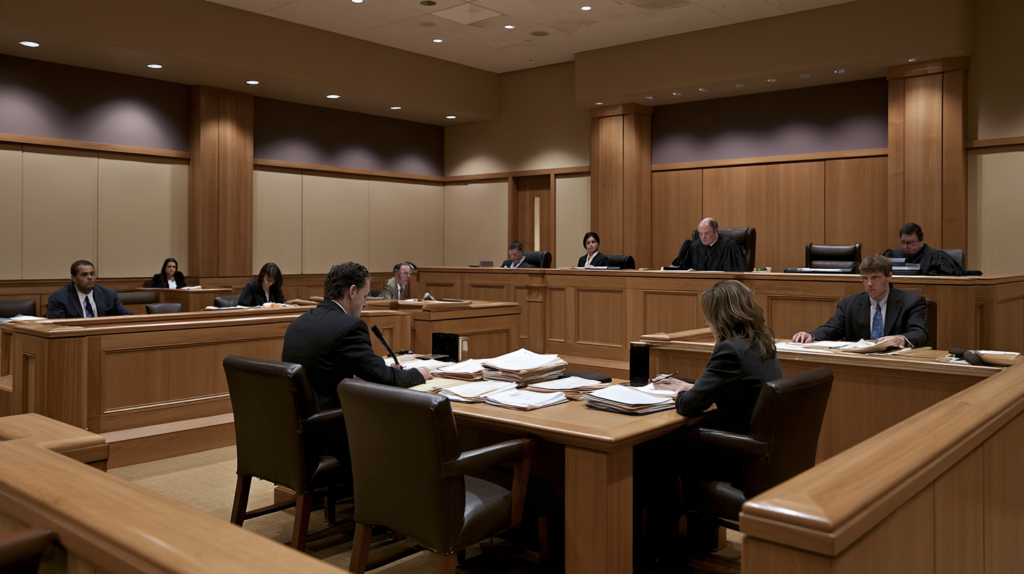
Sentencing is where most Nevada criminal cases actually end, and it is also one of the stages defendants tend to understand least. The charge sets the outer limits of what a court can impose, but the actual outcome depends on the felony category, the statutory sentencing range, the defendant’s history, the presentence report, mitigation, and the arguments made before the judge.
Nevada also uses a minimum-and-maximum sentencing structure that can be confusing if someone focuses only on the largest number announced in court. Understanding the felony categories, the 40 percent rule, probation eligibility, and what happens before the sentencing hearing gives a much more accurate picture of the exposure a defendant actually faces.
Nevada divides felonies into five categories
Nevada organizes felony offenses into five categories, and NRS 193.130 establishes the general sentencing structure. A category A felony can carry death or life imprisonment with or without the possibility of parole, depending on the specific offense. A category B felony can carry a minimum term of at least one year and a maximum term of up to 20 years, although the exact range depends on the statute defining the particular crime.
A category C felony generally carries one to five years and a possible fine of up to $10,000, while a category D felony generally carries one to four years and a possible fine of up to $5,000. A category E felony uses the same one-to-four-year general range and $5,000 fine ceiling, but it is treated differently because Nevada law generally favors probation for that category, subject to statutory exceptions.

Gross misdemeanors fall outside the felony category system
A gross misdemeanor is not part of the category A through E felony structure. Under NRS 193.140, a gross misdemeanor can generally be punished by up to 364 days in county jail, a fine, or both.
That 364-day maximum can matter for reasons beyond the immediate criminal sentence, including potential immigration consequences for non-citizens. The offense level also affects which court handles the case, making it important to understand whether the charge is a misdemeanor, gross misdemeanor, or felony before evaluating sentencing exposure.
Nevada felony sentences use a minimum and a maximum
Outside category A, Nevada felony sentences are generally expressed as a minimum term and a maximum term rather than one fixed number. Under NRS 193.130, the minimum term imposed generally cannot exceed 40 percent of the maximum term.
For example, a 10-year maximum cannot carry a minimum greater than four years, while a five-year maximum cannot carry a minimum greater than two years. That relationship is important because hearing only the maximum can create a misleading impression of how the sentence actually operates.
Why the 40 percent rule matters
The minimum term is particularly important because it generally affects when a person becomes eligible for release consideration, while the maximum represents the outer end of the sentence.
That is why a sentence described casually as “20 years” may not tell the whole story. The minimum and maximum need to be considered together because they represent different points in the sentence and can produce very different practical outcomes.
Category E felonies generally favor probation
Category E felonies are treated differently from the other felony categories. Under NRS 193.130, the court generally must suspend execution of the sentence and grant probation, subject to statutory exceptions.
The court may also impose conditions, including a period of confinement in county jail of up to one year. This makes category E particularly important during plea negotiations because reducing a charge into that category can materially change the likely sentencing structure.
Presumptive probation does not mean automatic freedom from conditions
The statutory preference for probation in a category E case does not mean the defendant faces no consequences. Probation can include supervision, treatment, testing, restrictions, community obligations, and other conditions imposed by the court.
There are also exceptions in Nevada law that can affect whether probation is available. The specific offense and defendant’s circumstances therefore still matter, even when the conviction falls within category E.
The time between conviction and sentencing should be used for preparation
Sentencing usually does not happen at the same hearing as the conviction or plea. The period between those events should be treated as working time, not simply waiting time.
A presentence investigation may be completed during this interval, and the resulting report can influence the judge. Defense counsel can also use the time to gather mitigation, review factual errors, prepare supporting documentation, and determine how the sentencing argument should be structured.

Mitigation is built before the hearing
Effective sentencing mitigation is usually assembled over time rather than created in the courtroom. Relevant material may include treatment records, employment history, education, family responsibilities, letters of support, community involvement, and documented steps taken after the offense.
The purpose is to give the judge specific information that helps explain why a particular sentence is appropriate. General statements that a defendant is a good person are usually less useful than concrete evidence showing stability, rehabilitation, accountability, or circumstances relevant to the sentencing decision.
Victim input may also be part of sentencing
Victims may have an opportunity to provide information or statements to the court before a sentence is imposed.
That input can affect how the judge views the harm caused by the offense and the appropriate response. Defense preparation should therefore consider not only the prosecution’s recommendation and the presentence report but also the impact that victim statements may have at the hearing.
The sentencing hearing is usually short but highly consequential
The sentencing hearing itself can be much shorter than defendants expect. The judge may already have reviewed the presentence report, sentencing memoranda, and other submitted material before taking the bench.
The prosecution and defense then make their recommendations, victim statements may be presented, and the defendant has an opportunity to address the court personally. The judge ultimately imposes the sentence within the limits permitted by the relevant statutes.
Allocution gives the defendant a chance to speak directly to the judge
The defendant’s personal statement to the court is commonly called allocution. It is different from testifying at trial and generally does not involve cross-examination.
Allocution should be prepared rather than improvised. A defendant who uses the opportunity to minimize the offense, blame others, or relitigate the case can undermine the defense’s sentencing argument, while a focused statement addressing accountability, rehabilitation, impact, or future plans may be much more useful.
The judge weighs more than the offense itself
The sentencing decision can reflect the nature of the offense, the defendant’s criminal history, the presentence investigation, mitigation, victim input, and the arguments made by both sides.
Those considerations operate within the sentencing range established by the offense category and any more specific statute that applies. That is why two defendants convicted of offenses in the same general category can still receive very different outcomes.
Financial obligations are part of the sentence too
The jail or prison term receives most of the attention, but sentencing can also create significant financial obligations.
Depending on the offense, the court may impose fines, restitution, assessments, and other fees. Category C felonies can carry fines of up to $10,000, while categories D and E can carry fines of up to $5,000, where authorized by the applicable statute.
Restitution is different from a criminal fine
A fine is a monetary penalty imposed as part of the criminal sentence. Restitution, by contrast, is generally intended to compensate a victim for documented losses connected to the offense.
The amount of restitution can itself become contested. Defense counsel may need to review the records supporting the claimed loss rather than assuming every figure requested by the prosecution or victim is automatically accurate.
Probation and prison lead to very different paths
If the court grants probation, the underlying sentence is suspended while the defendant remains in the community subject to court-ordered conditions. Violating those conditions can place the suspended sentence back at issue.
If the court imposes prison, the sentence is executed and the Nevada Department of Corrections becomes responsible for classification and incarceration. Questions involving credits, parole eligibility, and release then become important parts of how the sentence operates in practice.
Multiple counts create the concurrent-versus-consecutive question
When a defendant is sentenced on multiple counts or cases, the court may need to determine whether the sentences run concurrently or consecutively.
Concurrent sentences run at the same time. Consecutive sentences run one after another. That distinction can matter more than the length of any individual sentence because two similar sentences can produce dramatically different total exposure depending on how they are structured.
Some statutes require consecutive sentences
Not every concurrent-or-consecutive decision is entirely discretionary.
Certain Nevada statutes require consecutive sentencing in defined circumstances, including some sentence enhancements. When that happens, the additional term may have to be served after the underlying sentence rather than at the same time.
For that reason, defendants facing multiple counts should ask early how many separately punishable offenses or enhancements are involved and whether any mandatory consecutive provisions apply.
The charge itself is one of the biggest sentencing leverage points
One of the most significant sentencing decisions often occurs before the sentencing hearing through negotiation over the actual charge.
Changing the offense can change the felony category, statutory range, probation eligibility, and potential fine. That is why realistic sentencing exposure should be part of plea negotiations rather than something analyzed only after a conviction has already occurred.
Mitigation and sentence structure can change the practical outcome
The quality of the mitigation package can influence what happens within the available sentencing range. Treatment progress, stable employment, family responsibilities, rehabilitation, and other documented facts can help counsel argue for a less severe sentence when the law allows discretion.
In multi-count cases, the argument over concurrent versus consecutive sentences may be equally or even more important. A favorable ruling on sentence structure can dramatically reduce the total amount of time involved even when the individual counts remain unchanged.

Frequently Asked Questions
What does it mean when a Nevada sentence has two numbers?
Nevada felony sentences outside category A generally include a minimum and maximum term. Under NRS 193.130, the minimum generally cannot exceed 40 percent of the maximum. The minimum is especially important because it can affect when the defendant becomes eligible for parole consideration.
Can I receive probation for a felony conviction in Nevada?
It depends on the felony category, the specific offense, and any statutory restrictions. Category E felonies generally carry presumptive probation under NRS 193.130, subject to exceptions. Other felony categories may also permit probation depending on the offense and circumstances.
What happens between conviction and sentencing?
There is often an interval during which a presentence investigation is completed and sentencing materials are prepared. This period should be used to gather mitigation, review the presentence report, prepare allocution, examine restitution claims, and build the defense’s sentencing recommendation.
Conclusion
Understanding how sentencing works in Nevada means looking beyond the maximum penalty listed for an offense. The felony category establishes the range, but the actual result can depend on the minimum term, probation eligibility, the presentence report, mitigation, restitution, multiple counts, and whether sentences run concurrently or consecutively.
Many of the most important opportunities arise before the judge announces the sentence. Charge negotiations, correction of presentence information, mitigation preparation, and arguments about sentence structure can all affect the practical outcome.
If you or someone in your family is approaching sentencing in a Nevada criminal case, contact The Defense Firm for a free confidential consultation. A Las Vegas criminal defense lawyer can review the applicable sentencing range, probation eligibility, presentence report, mitigation, financial exposure, and potential concurrent or consecutive terms before the sentencing hearing.