 English
 Spanish
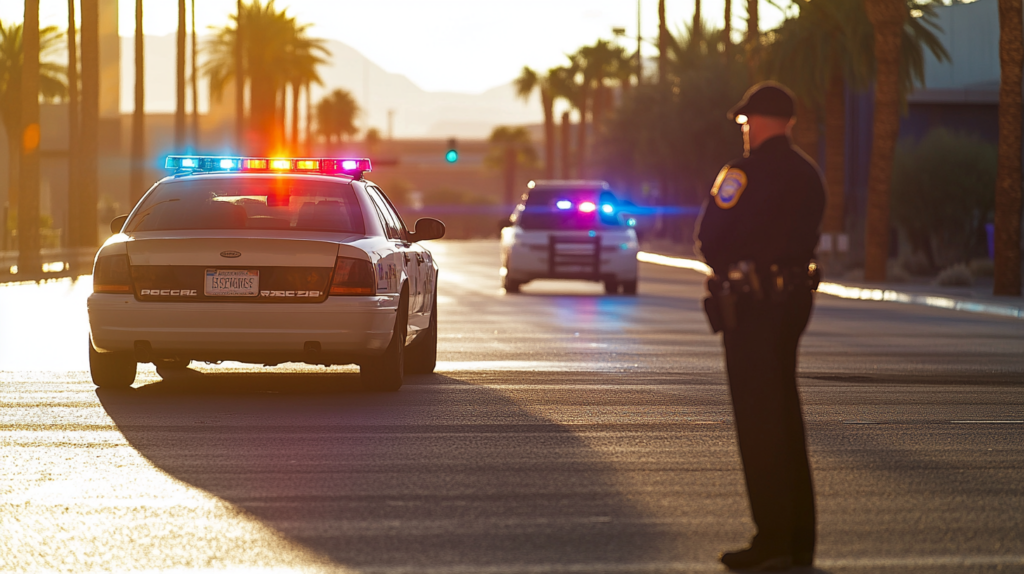
Marijuana is legal in Nevada, but driving after using it can still lead to a serious DUI charge. Many drivers assume that legal cannabis possession protects them from prosecution, but Nevada law treats marijuana DUI as a separate issue from lawful use. The real question is not whether the driver had legal access to marijuana. The question is whether prosecutors can prove that marijuana impairment affected the person’s ability to drive safely.
That distinction matters because THC testing is not as straightforward as alcohol BAC testing. A driver with alcohol in their system can be measured against a widely understood BAC standard. A driver with THC in the blood presents a more complicated scientific and legal problem because THC does not move through the body like alcohol. A person may test positive after the impairing effects are gone, while another person may show signs of impairment at a lower measurable level.
We at The Defense Firm defend marijuana DUI cases across Clark County and understand how prosecutors build these cases. In 2026, a strong defense requires looking closely at the stop, the officer’s observations, the blood test, the lab work, and the science behind the accusation.
Marijuana DUI law in Nevada after legalization
Legal recreational marijuana does not make it legal to drive while impaired. Nevada allows adults to possess cannabis within legal limits, but that right does not extend to operating a vehicle when marijuana affects driving ability. Prosecutors may still pursue a DUI case when they believe the driver was under the influence of cannabis to a degree that made safe driving impossible.
This is where many drivers get confused. A person can legally buy, possess, and consume marijuana in Nevada, but still face a DUI arrest if an officer claims that cannabis affected their driving, reaction time, attention, or coordination. The state may use driving behavior, body camera footage, officer testimony, field observations, and chemical testing to support the charge.
Unlike a simple possession issue, a marijuana DUI case focuses on impairment. That means the defense should not stop at whether THC appeared in a test. The more important issue is whether the evidence actually proves unsafe driving beyond a reasonable doubt.
THC testing is different from alcohol testing
The science behind THC blood testing creates major problems for prosecutors. Alcohol levels usually have a clearer relationship to impairment, which is why BAC testing is commonly used in DUI prosecutions. THC does not work the same way.
THC is fat-soluble, meaning it can remain stored in the body and appear in test results after the person is no longer impaired. Regular cannabis users may show detectable THC for an extended period of time, even if they have not used marijuana recently. Occasional users may metabolize THC differently, and tolerance can vary significantly from one person to another.
That makes a positive THC test less reliable as proof of active impairment. A blood test may show prior marijuana use, but it does not automatically show that the person was unsafe behind the wheel at the time of the stop. This gap between the test result and actual driving ability is one of the most important issues in a marijuana DUI defense.
Police observations during a marijuana DUI stop
Most marijuana DUI arrests begin with a traffic stop. The officer may claim that the driver was speeding, drifting, making an unsafe turn, stopping late, or violating another traffic rule. After the stop, the officer may look for signs they associate with cannabis impairment, such as red eyes, slow speech, delayed responses, the smell of marijuana, or confusion.
Those observations are not always reliable. Red eyes can come from allergies, fatigue, dry air, or contact lenses. Nervous behavior can happen during any police encounter. Slow responses may reflect stress, fear, medical issues, or confusion about the officer’s instructions. The smell of marijuana may suggest possession or prior use, but it does not prove that the driver was impaired while driving.
This is why body camera footage matters. The video may show that the driver spoke clearly, followed instructions, walked normally, and did not appear impaired. It may also reveal inconsistencies between the officer’s report and what actually happened during the stop.
Field sobriety tests and marijuana impairment
Police often use field sobriety tests during DUI investigations, but these tests were originally designed around alcohol impairment. They are not always reliable indicators of marijuana impairment.
A driver may perform poorly because of uneven pavement, bad lighting, anxiety, footwear, age, injury, balance issues, or unclear instructions. Some tests also depend heavily on the officer’s interpretation. When the state relies on field sobriety testing in a cannabis DUI case, the defense can challenge whether the tests were properly explained, properly demonstrated, and properly scored.
Pre-arrest field sobriety tests are also voluntary in many situations. A driver is not required to help the officer build the case by performing roadside exercises. If the officer used poor testing methods or exaggerated the results, that evidence can become a key point of attack.
Blood draws and implied consent in Nevada.
After a DUI arrest, officers may seek a blood draw under Nevada’s implied consent law. A blood test may be used to detect delta-9 THC, metabolites, alcohol, prescription medication, or other substances.
The timing of the blood draw is critical. In many cases, the test happens long after the traffic stop. A delay of 60 to 90 minutes can create questions about what the driver’s THC level actually was while driving. Because THC metabolism is complex, a later blood result does not always tell the full story.
The defense should also examine the chain of custody, lab procedures, technician qualifications, sample storage, testing equipment, and whether the lab followed proper protocols. A blood sample that was mishandled, delayed, mislabeled, or tested by an unreliable process may not be strong evidence. In some cases, the defense may use a toxicology expert to explain why the test does not prove impairment.
Marijuana DUI penalties in Nevada
A marijuana DUI conviction can carry the same type of consequences as an alcohol-related DUI. A first offense may involve jail exposure, community service, fines, DUI school, a victim impact panel, license consequences, and court supervision. A second offense can bring harsher penalties, and a third offense within the statutory period can become a felony.
The consequences become much more serious when a DUI with injury is alleged. If prosecutors claim that marijuana impairment caused a crash that seriously injured another person, the case may be charged as a felony DUI with injury. These cases can carry prison exposure and long-term consequences that go far beyond a misdemeanor DUI.
A combined substance DUI can also create problems. If a driver has alcohol and marijuana in their system, prosecutors may argue that the substances worked together to impair driving, even when the alcohol level is below the standard 0.08 BAC threshold. These cases require careful review because the presence of multiple substances does not automatically prove unsafe driving.
Defense strategies in marijuana DUI cases
A strong marijuana DUI defense usually starts with the traffic stop. Officers need a lawful basis to stop a vehicle. If the stop was based on weak observations, vague suspicion, or the smell of marijuana alone, the defense may challenge whether there was reasonable suspicion. If the stop violated the Fourth Amendment, the defense may seek to have evidence suppressed.
The next issue is probable cause for arrest. An officer cannot arrest someone for DUI simply because marijuana is present or because the driver admits to legal cannabis use. The officer must have facts supporting impairment. If the driver’s speech, balance, coordination, and behavior were normal, probable cause may be weaker than the report suggests.
The defense may also challenge the blood test results. A toxicology expert can explain that THC levels do not always match impairment and that marijuana can remain detectable after the impairing effects have faded. This is especially important for regular users, medical users, and drivers whose blood draw occurred long after the stop.
Finally, the defense should test the state’s full narrative. Prosecutors often try to combine several weak facts into one stronger story: odor, red eyes, admission of prior use, field test performance, and a blood result. Each piece must be examined separately. If several parts of the case are unreliable, the prosecution may not be able to prove guilt beyond a reasonable doubt.
Protecting yourself as a legal cannabis user
The safest choice is to avoid driving after using marijuana, even when the use is legal. There is no universal number of hours that guarantees a person is safe to drive because THC metabolism varies by body type, frequency of use, potency, method of consumption, and individual tolerance.
Drivers should also understand their rights during a stop. You do not have to answer detailed questions about when you used cannabis, how much you used, where you bought it, or whether you use it regularly. Statements about marijuana use can become evidence against you, even if you believed you were being honest or helpful.
If you are arrested, refusing a required chemical test can trigger separate license consequences. Officers may also seek a warrant for a blood draw. The best way to protect oneself is to remain calm, avoid unnecessary statements, comply with lawful instructions, and contact a DUI defense attorney as soon as possible.
FAQ
Can I get a DUI for marijuana in Nevada if I have a medical card?
Yes, a medical marijuana card does not protect you from a DUI charge. Nevada may still prosecute if the state claims cannabis impaired your ability to drive safely.
Does a positive THC test automatically prove marijuana DUI?
No. A positive THC test may show cannabis use, but it does not always prove active impairment. The defense can challenge the timing, reliability, and meaning of the test.
Can I refuse a blood test in a marijuana DUI case?
Refusal can create separate license consequences under Nevada’s implied consent law. In some cases, officers may also request a warrant for a blood draw.
Conclusion
Nevada marijuana DUI laws can put legal cannabis users at risk of serious criminal, license, and long-term consequences. These cases often depend on officer observations, field sobriety testing, blood results, lab procedures, and assumptions about THC that may not accurately prove impairment at the time of driving.
At The Defense Firm, we understand how to challenge weak marijuana DUI evidence, question unreliable testing, and push back when the state relies on assumptions instead of proof. If you were arrested for a marijuana-related DUI in Nevada, contact us today for a free, confidential consultation. We can review the facts of your case, explain your defense options, and help you protect your future.