 English
 Spanish
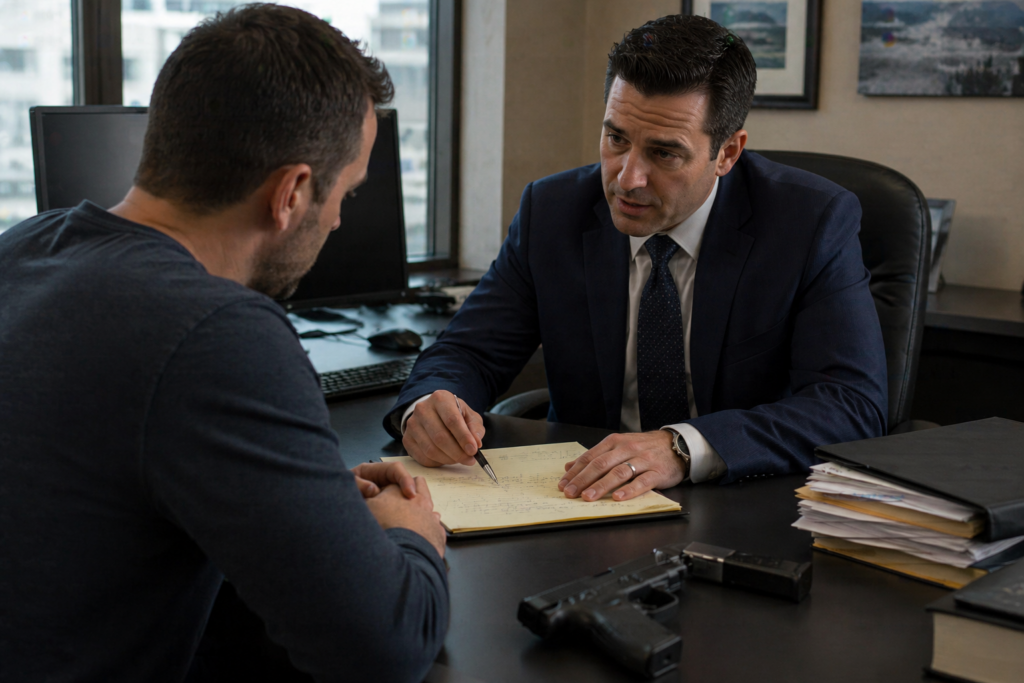
When law enforcement officers arrest someone on gun possession charges in Las Vegas or anywhere across Clark County, Nevada, the immediate feeling is often one of panic and helplessness. The consequences of a gun possession conviction can include prison time, a permanent criminal record, devastating effects on your career, and the permanent loss of your Second Amendment right to carry firearms. Understanding that you are not without options and that a knowledgeable criminal defense attorney can make a profound difference is the first step toward protecting your future.
Gun charges in Nevada are governed by a complex web of state laws and federal statutes that interact in ways most people never anticipate. Whether you are facing unlawful possession of a concealed weapon, charges tied to prior felony convictions, or allegations connected to gun crime and gun violence, the specific circumstances surrounding your arrest matter enormously to the outcome of your case. Research shows that defendants who retain experienced legal counsel early in the process consistently achieve more favorable outcomes than those who navigate the system alone.
Understanding Unlawful Possession and Who It Applies To in Nevada
Gun possession under Nevada law is far more nuanced than most people realize at the time of their arrest. Under NRS 202.360, unlawful possession of a firearm by a prohibited person is a serious felony charge, covering individuals with felony convictions, certain domestic violence offenses, specific court orders, and documented mental health adjudications. The prosecution must prove each legal element beyond a reasonable doubt, including that the defendant knowingly had possession of the weapon and that it alls within a prohibited category under Nevada state laws. If even one of those elements cannot be established, the gun charges may not survive, and a skilled defense attorney knows exactly where to attack.
Gun carrying laws in Nevada also intersect with concealed carry permit requirements, creating additional grounds for a strong defense. Nevada is an open-carry state in most circumstances, but concealed weapon carry requires a valid permit under NRS 202.3653, and many gun possession arrests arise from precisely this ambiguity. A thorough review of the circumstances surrounding the stop, the law enforcement officer’s observations, and the physical positioning of the firearm can reveal critical weaknesses in the prosecution’s case. Understanding where legal open carry ends and unlawful possession begins is often the difference between a conviction and a dismissed charge.
Strategy 1: Challenge the Legality of the Search and Seizure
The Fourth Amendment to the United States Constitution, and its Nevada counterpart, protects every person from unreasonable searches and seizures by police officers and other law enforcement agents. In gun possession cases, this protection is frequently the single most powerful tool a criminal defense attorney possesses. If law enforcement officers searched a vehicle, home, or person without a valid warrant and without a recognized exception to the warrant requirement, any evidence they discovered, including the firearm itself, may be subject to exclusion from court. This is the “exclusionary rule,” and when successfully applied, it can result in the outright dismissal of gun charges.
Challenging a search requires a careful and detailed factual investigation into exactly how the stop or encounter began, what legal justification the officer articulated for the initial contact, and whether the scope of the search exceeded what the law permits. Common violations include vehicle stops initiated without reasonable articulable suspicion, pat-down searches expanded beyond what is necessary for officer safety, and warrantless home searches conducted without valid consent. Your defense attorney should be scrutinizing every police report, body camera recording, and dispatch log for inconsistencies or constitutional violations that could protect your rights under the Fourth Amendment.
Research shows that a small number of well-litigated suppression motions in Nevada gun cases result in complete charge dismissals because, without the physical weapon, the prosecution literally cannot prove its case. Even where suppression is only partially successful, for example, where certain statements made during the stop are excluded but the firearm itself is not, the practical effect can dramatically weaken the prosecution’s position and create leverage for a more favorable plea bargain or sentencing outcome. Filing a suppression motion is not a long-shot strategy; it is a fundamental component of a competent gun possession defense.
Strategy 2: Contest the Element of Knowing and Intentional Possession
One of the most misunderstood aspects of gun possession law is that physical proximity to a firearm does not automatically constitute legal possession under Nevada statutes. The prosecution must prove that the defendant had either actual possession, meaning the weapon was physically on their person, or constructive possession, meaning they exercised dominion and control over the firearm with knowledge of its presence. In cases involving shared vehicles, rental properties, or common areas, the distinction between actual and constructive possession becomes legally significant and strategically important for the defense.
Constructive possession requires the prosecution to establish both knowledge and control, and this is where many gun cases become genuinely contested. If a firearm was found under the seat of a car with multiple occupants, in a shared bedroom, or in a storage area accessed by several individuals, the defense attorney can argue that the prosecution cannot establish beyond a reasonable doubt that the defendant, as opposed to someone else, had knowing dominion over the weapon. The mens rea element of the offense, meaning the mental state required to prove criminal culpability, must be established independently through the evidence, not simply assumed from proximity.
Joint occupancy cases and cases involving family members or roommates create particularly rich opportunities for this defense. Police officers often arrest everyone present and allow the prosecution to sort out individual culpability afterward. A skilled defense attorney can force the prosecution to confront the weakness of their constructive possession argument through pretrial motions, cross-examination at trial, and targeted jury instructions that focus the jury’s attention on the distinction between being near a gun and legally possessing firearms. This is a nuanced legal argument that requires careful preparation and a thorough understanding of Nevada case law on possession.
Strategy 3: Invoke and Assert Your Second Amendment Rights
The Second Amendment of the United States Constitution, which affirms that the Constitution protects individuals’right to bear arms, has generated substantial and evolving litigation in the years following the Supreme Court’s landmark decisions in Heller and Bruen. In gun cases across Nevada and the country, defense attorneys have increasingly used Second Amendment arguments to challenge the constitutionality of specific gun possession statutes as applied to particular defendants. While these arguments do not succeed in every case, they represent a serious and developing area of defense law that a knowledgeable criminal defense attorney should be evaluating.
The Bruen decision fundamentally changed the constitutional analysis for firearms regulations by requiring courts to assess whether a particular restriction is consistent with this nation’s historical tradition of firearm regulation. This standard has opened new challenges to a range of gun charges, including certain categorical prohibitions that previously appeared unassailable. Defense attorneys in Nevada are actively litigating whether specific applications of unlawful possession statutes to certain classes of defendants, particularly those whose prior convictions are nonviolent, survive scrutiny under the Bruen framework. This is cutting-edge constitutional defense work that can lead to a charge dismissal or significant reduction.
It is critical to understand the boundaries of Second Amendment protections with precision and honesty. The Second Amendment does not protect everyone’s right to carry firearms under all circumstances; state laws and federal statutes impose categorical prohibitions on possessing firearms for those with certain felony convictions, domestic violence histories, and mental health adjudications, and most of those restrictions remain constitutional after Bruen. A defense attorney who raises Second Amendment arguments without thoroughly analyzing the specific legal and factual landscape does the client a disservice. The value is in targeted, well-researched constitutional challenges, not blanket assertions that the Second Amendment makes every gun possession charge invalid.
Strategy 4: Negotiate a Favorable Plea Bargain
In the vast majority of gun possession cases in Nevada, a negotiated resolution through a plea bargain is ultimately where the case is decided. This is not a concession to weakness; it is a strategic recognition that many states, including Nevada, routinely offer defendants significantly reduced charges or sentencing recommendations in exchange for a guilty plea, and that a skilled criminal defense attorney can leverage the weaknesses in the prosecution’s case to secure the most favorable outcomes possible through negotiation. Understanding how to approach a plea bargain strategically, rather than simply accepting the first offer, is a critical component of effective defense.
Successful plea bargain negotiations in gun cases often involve reducing a Category B felony charge to a gross misdemeanor, or negotiating for a suspended sentence with probation instead of mandatory incarceration. In Nevada, probation may be available in gun possession cases for first-time offenders or in cases where mitigating circumstances surrounding the offense are compelling. A criminal defense attorney who has an established professional relationship with the Clark County District Attorney’s office and who can present a coherent, factually supported narrative of mitigation, including substance abuse treatment history, mental health evaluation, community ties, and absence of any prior gun crime, is dramatically more effective at securing reduced outcomes than an unrepresented defendant.
The timing of a plea bargain negotiation matters significantly. Ideally, your defense attorney begins engaging the prosecution on potential resolutions before charges are formally filed, while still thoroughly preparing for trial as leverage. Research shows that prosecutors are more willing to offer favorable terms when they believe the defense is prepared to contest every element of the case at trial. This strategic posture, simultaneously pursuing negotiations while developing a full trial defense, is the hallmark of an experienced criminal defense lawyer who understands how gun cases are resolved in Clark County, Nevada.

Strategy 5: Pursue Diversion Programs and Alternative Sentencing Options
Nevada’s criminal justice system has increasingly recognized that incarceration alone does not address the underlying factors that contribute to gun crime and gun violence. For eligible defendants, especially those who are first-time offenders, young people, or individuals whose gun possession offense was not connected to other crime or violence, diversion programs and alternative sentencing options represent genuinely transformative legal opportunities. These programs can allow a defendant to resolve their case without a permanent felony on their criminal record, which fundamentally changes the trajectory of their life.
Diversion programs in Clark County may require participation in substance abuse treatment, counseling, community service, gun safety education, and regular check-ins with a probation officer. When completed successfully, the original gun possession charge may be reduced, dismissed, or expunged, depending on the program structure and the defendant’s compliance. For young people in the juvenile justice system facing gun charges, diversion programs have shown particular effectiveness at reducing recidivism and breaking cycles of involvement with gun violence, findings supported by data from the National Center for Juvenile Justice and disease control research on youth violence prevention, including studies drawn from the Youth Risk Behavior Survey.
Alternative sentencing options beyond formal diversion programs may also include suspended sentences with monitored probation, house arrest, electronic monitoring, or structured rehabilitation programming as a condition of avoiding incarceration. Whether any of these options are available depends heavily on the defendant’s criminal history, the severity of the charge, the specific circumstances of the offense, and the persuasiveness of the mitigation presented by the defense attorney. Identifying and aggressively pursuing every alternative sentencing avenue is not optional; it is a core responsibility of competent legal representation in any gun possession case.
Strategy 6: Challenge the Prosecution’s Evidence at Every Stage
The prosecution in a gun possession case relies on physical evidence, the firearm itself, as well as forensic analysis, officer testimony, and documentation connecting the defendant to the weapon. Each link in that evidentiary chain is a potential point of attack for a skilled defense attorney. Chain of custody issues, mishandling of physical evidence, improper storage of the firearm between the time of seizure and trial, and failures in forensic protocol can all compromise the admissibility and reliability of the prosecution’s key evidence, sometimes fatally undermining the entire gun case.
Forensic challenges in gun cases may involve contesting fingerprint analysis, challenging ballistics testimony, or disputing the prosecution’s expert witnesses on technical questions about the operability or configuration of the firearm. Nevada court rules require that expert testimony meet established standards of scientific reliability, and a defense attorney who retains qualified independent experts to evaluate the prosecution’s forensic conclusions can neutralize critical elements of the case. Research shows that juries are meaningfully influenced by competing expert testimony, and introducing legitimate scientific doubt about forensic conclusions can be the difference between conviction and acquittal.
Witness credibility is another central battleground in gun possession trials. The testimony of law enforcement officers who conducted the stop, search, and arrest is typically the foundation of the prosecution’s case. Cross-examination of those police officers, exploring inconsistencies between their reports and testimony, prior disciplinary history, departures from proper procedure, and any motivation to misrepresent what occurred, is one of the most powerful tools available to the defense. A thorough criminal defense attorney will obtain all relevant records, body camera footage, and officer background information long before trial to ensure that cross-examination is as effective and factually grounded as possible.
Strategy 7: Retain an Experienced Criminal Defense Attorney Immediately
Of all the seven strategies for gun possession charge reduction discussed in this article, none is more consequential than the decision to retain a qualified, experienced criminal defense attorney as quickly as possible after your arrest. The early stages of a gun possession case, the first hours and days following an arrest, are when critical decisions are made about statements to police officers, bail hearings, arraignment pleas, and the initial framing of the case. Defendants who attempt to navigate these stages without legal counsel routinely make statements or decisions that significantly harm their defense at every subsequent stage.
An experienced criminal defense lawyer in Nevada brings not only legal knowledge but also specific familiarity with the Clark County courts, the judges who will preside over the case, the tendencies of individual prosecutors, and the strategic landscape of gun cases in this jurisdiction. That local knowledge is not peripheral; it is often decisive. Understanding how a particular judge views Fourth Amendment suppression motions, or how a specific prosecutor weighs mitigation in plea bargain negotiations, allows your attorney to make smarter, better-targeted strategic decisions throughout the case. This is the kind of advantage that cannot be replicated by self-representation or by counsel who lacks specific Nevada criminal defense experience.
The risks posed by proceeding without qualified legal counsel in a gun possession case are severe and irreversible. Felony convictions on gun charges carry consequences, a criminal record, probation conditions, immigration consequences, loss of the right to bear arms, and employment barriers that persist for a lifetime. The best possible outcome in any gun case almost always depends on the quality and timeliness of the legal defense mounted on the defendant’s behalf. Early retention of counsel also gives your attorney maximum time to investigate the circumstances surrounding the arrest, identify constitutional violations, retain experts, and develop a comprehensive defense strategy before deadlines begin to narrow your options.

FAQ
Can a Gun Possession Charge in Nevada Be Reduced to a Misdemeanor?
Yes, in certain circumstances, a gun possession charge in Nevada can be reduced from a felony to a misdemeanor through negotiation, diversion programs, or the specific application of Nevada state laws to the facts of a case. Whether a reduction is available depends heavily on the defendant’s prior criminal record, the nature of the charge, and the strength of the defense argument. Diversion programs and deferred adjudication agreements in Clark County can allow certain defendants to avoid a permanent felony conviction entirely by completing supervised programming. A skilled criminal defense attorney should explore every avenue for reduction or diversion from the very outset of your case.
What Is the Difference Between Actual and Constructive Possession of a Firearm?
Actual possession means the firearm was physically on your person at the time of your arrest, in your hand, in your waistband, or otherwise directly within your physical control. Constructive possession is a legal doctrine that allows the prosecution to charge someone with gun possession even when the weapon was not physically on them, provided they can prove the defendant knew about it and could exercise control over it. This distinction is critical in gun cases involving shared vehicles, rental properties, or situations with multiple people present. A skilled defense attorney who challenges constructive possession by highlighting ambiguities in the evidence can create genuine reasonable doubt in the jury’s mind.
What Should I Do Immediately After Being Arrested on Gun Possession Charges in Nevada?
The single most important thing you should do immediately after a gun possession arrest in Nevada is exercise your right to remain silent and your right to a criminal defense attorney, and then stop talking entirely. Police officers are experienced at eliciting incriminating statements during the period following an arrest, and anything you say can and will be used against you in court. Contact an experienced criminal defense attorney in Las Vegas as quickly as possible, ideally within hours, so they can appear at your bail hearing, begin preserving evidence, and evaluate whether any constitutional violations occurred during the stop and arrest. The decisions made in the first 24 to 72 hours after a gun possession arrest often have lasting effects on the best possible outcome of your case.
Conclusion
Gun possession charges in Nevada carry consequences that can permanently alter the course of your life, from felony convictions and probation to the permanent loss of your right to bear arms and the devastating impact of a criminal record on your career, housing, and family members. The seven strategies for gun possession charge reduction outlined in this article, challenging the legality of the search under the Fourth Amendment, contesting knowing possession, asserting Second Amendment rights, negotiating a plea bargain, pursuing diversion programs, attacking the prosecution’s evidence, and retaining experienced counsel immediately, represent the full spectrum of tools a skilled criminal defense attorney should deploy on your behalf. No single strategy works in every case, but a thoughtful, thorough defense that evaluates each of these avenues gives you the best possible chance at a favorable outcome. Understanding this legal landscape is not merely academic; it is the foundation of every decision that determines whether you protect your future.
Every day that passes after a gun possession arrest is a day during which evidence may be lost, legal deadlines may pass, and strategic opportunities may close permanently. The Defense Firm is an experienced Nevada criminal defense practice serving clients throughout Las Vegas, Henderson, and Clark County, with deep experience handling gun cases, felony charges, and complex firearms matters in Nevada courts. The time to act is right now; do not wait until the prosecution has built its case against you. Contact The Defense Firm today for a free confidential consultation with an experienced Nevada criminal defense attorney who will evaluate your case, explain your options, and fight to protect your rights, your record, and your future.