 English
 Spanish
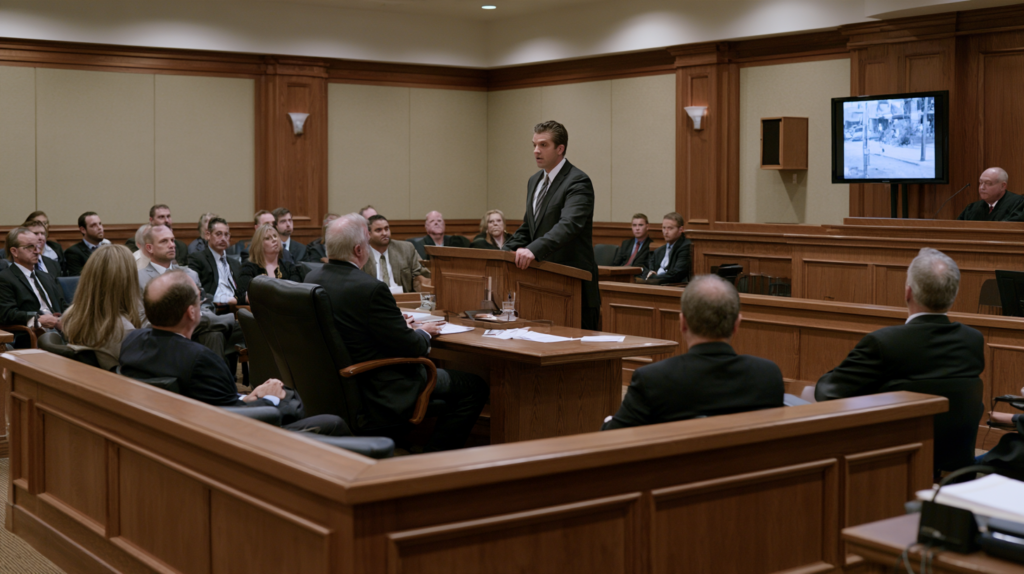
Almost every defendant wants to tell their side of the story. Whether to testify, however, is one of the few major trial decisions that belongs personally to the defendant. A defense lawyer can advise strongly for or against it, but cannot make the choice for the client.
The decision is often complicated by the fear that remaining silent will look like an admission of guilt. Legally, that is not how the process works. The State still carries the entire burden of proof, and choosing not to testify does not mean conceding anything.
You have the right not to testify
A defendant has a constitutional right not to testify, and the prosecution must still prove every required element beyond a reasonable doubt. The jury is instructed about the presumption of innocence, and a defendant’s silence does not shift the burden or create an obligation to explain the prosecution’s evidence.
That makes not testifying the starting position rather than something that needs to be justified. The real question is whether the defense gains enough from the defendant’s testimony to justify the additional risks created by taking the stand.
Testifying makes the defendant a witness
Once a defendant testifies, that person becomes a witness and can be cross-examined like other witnesses. Under NRS 50.095, certain prior convictions may also become admissible to attack credibility when the offense was punishable by death or by more than one year of imprisonment.
That means taking the stand can expose the jury to information that might otherwise remain outside the trial. The decision therefore involves more than whether the defendant wants to explain what happened; counsel must also evaluate what additional evidence or impeachment material testimony may open the door to.
Not every prior conviction can be used
Nevada law places significant limits on which convictions may be used for impeachment. The conviction generally must have carried punishment of more than one year, so misdemeanor convictions do not automatically become admissible simply because the defendant decides to testify.
There is also a 10-year limitation, measured from release from confinement or the expiration of parole, probation, or sentence, whichever occurred later. Because that calculation may extend well beyond the original conviction date, defense counsel should review the complete sentencing timeline rather than assume an older case is automatically outside the statute.
Pardons and juvenile adjudications are treated differently
A conviction that has been the subject of a pardon is excluded under NRS 50.095, and juvenile adjudications are also expressly excluded. A pending appeal, however, does not necessarily prevent an otherwise qualifying conviction from being used, although the existence of the appeal may itself be admissible.
These distinctions make it important to establish exactly what appears in the defendant’s history before deciding whether testimony is worth the risk. The relevant question is not simply whether the defendant has a record, but whether any part of that record legally qualifies for impeachment if the defendant becomes a witness.
Why prior convictions can dominate the decision
For a defendant with a qualifying prior felony, testifying can create a serious strategic cost. Remaining silent may keep that conviction away from the jury, while taking the stand can allow the prosecution to use it to challenge credibility, even though jurors may be instructed not to treat the prior conviction as evidence of guilt in the current case.
For a defendant with no qualifying prior conviction, that particular risk disappears and the calculation changes significantly. That is why a blanket rule such as “never testify” is not useful; the correct decision depends heavily on the defendant’s record and the evidence already presented at trial.
Cross-examination creates risks even when the defendant is truthful
Cross-examination is adversarial by design, and a prosecutor can use tightly structured questions to highlight inconsistencies, restrict explanations, and challenge credibility. A defendant can be telling the truth and still appear evasive, argumentative, uncertain, or defensive under the pressure of trial.
Nervousness can also be misunderstood by jurors. Hesitation, difficulty recalling minor details, or frustration with the questioning may be interpreted as dishonesty, which means counsel must evaluate not only what the defendant intends to say but how effectively the defendant can communicate it under hostile questioning.
Testifying fixes the defendant’s version of events on the record
Once a defendant testifies, the account becomes part of the official record. Any inconsistency between that testimony and police interviews, prior hearings, bodycam footage, text messages, recorded calls, physical evidence, or other witness testimony can become material for cross-examination and closing argument.
That record can also matter beyond the current trial. If the case ends in a mistrial and is tried again, the defendant’s first testimony can be compared with later testimony, making inconsistencies available for impeachment in a second proceeding.
Testifying can change the question the jury is asking
When the defendant does not testify, the central question remains whether the State proved the charges beyond a reasonable doubt. The defense does not have to establish innocence or provide a competing explanation for every piece of evidence.
Once the defendant takes the stand, however, the case can begin to feel like a contest over whether jurors personally believe the defendant. That shift can be strategically dangerous because it moves attention away from deficiencies in the State’s proof and toward the defendant’s credibility.
Some cases genuinely benefit from the defendant’s testimony
There are cases where testimony may provide information the defense cannot realistically present any other way. That is especially true when the defense depends on the defendant’s state of mind, including intent, knowledge, mistake, or a good-faith belief that only the defendant can describe directly.
Self-defense can create a similar situation because the defendant’s perception of the threat may be central to explaining why force was used. When those facts cannot be established adequately through other witnesses or evidence, testimony may provide substantial value despite the risks of cross-examination.
Firsthand contradiction can also make testimony important
Sometimes the prosecution presents a version of events that the defendant is uniquely positioned to contradict from firsthand knowledge. If the defendant can explain those events clearly and consistently, and is likely to withstand cross-examination, taking the stand may materially strengthen the defense.
That calculation becomes more favorable when the defendant has no qualifying prior conviction and no significant inconsistency in previous statements. Even then, counsel must weigh what the testimony adds against the possibility that cross-examination will create new problems the prosecution did not previously have.
The decision belongs to the defendant
Whether to testify is ultimately the defendant’s decision. Defense counsel can explain the risks, prepare the defendant, and make a strong recommendation, but cannot force testimony or prevent a defendant from exercising the right to take the stand.
The decision should therefore be based on the actual evidence and defense strategy rather than the fear that silence will automatically appear suspicious. Understanding that the burden remains entirely on the prosecution helps keep the choice focused on whether testimony genuinely improves the defense.
The decision is usually made late in the trial
Although defendants often begin thinking about testimony early, the final decision is commonly made after the State has presented its case. By that point, defense counsel has seen which witnesses were convincing, what evidence was actually admitted, what weaknesses developed, and whether the prosecution proved as much as expected.
A defendant who originally intended to testify may discover that the State’s case does not justify taking the additional risk. Conversely, unexpected testimony may make the defendant’s explanation more important, which is why the option is often kept open until the prosecution rests.
Other trial decisions can affect whether testimony is necessary
The decision to testify does not exist in isolation. Whether the case is tried before a judge or jury, how much preparation time is available, and what evidence survives pretrial challenges can all affect whether defendant testimony adds anything useful to the case.
A successful suppression motion, for example, may remove the evidence that originally made testimony seem necessary. Waiting until major evidentiary and procedural issues are resolved allows the defendant and counsel to make the decision with more complete information.
Preparing to testify is not the same as memorizing answers
If the defendant decides to testify, preparation is essential. Preparation for direct examination helps organize the account so the relevant facts are presented clearly and logically without forcing the defendant to construct the story for the first time under courtroom pressure.
That preparation should not become a memorized script. The testimony must remain truthful and natural, while preparation ensures the defendant understands the sequence of questions, the important facts that must be addressed, and how to communicate those facts without unnecessary confusion.
Cross-examination preparation is especially important
Cross-examination preparation focuses on the type of questioning the prosecutor is likely to use and the temptation to argue rather than answer. One of the most common problems is over-explaining, which can provide the prosecutor with additional material and create inconsistencies that would not otherwise exist.
Effective preparation teaches the defendant to listen carefully, answer the question actually asked, remain composed, and avoid speculation. It also helps identify areas where the defendant may become emotional, confused, or defensive so those risks can be evaluated before the decision to testify becomes final.
Every prior statement should be reviewed before testimony
Defense counsel should review the defendant’s prior statements before testimony, including police interviews, bodycam recordings, recorded calls, text messages, written statements, and testimony from earlier hearings. Any inconsistency between those records and what the defendant plans to say at trial can become a significant cross-examination issue.
Finding those problems in advance allows counsel to determine whether they can be explained or whether they make testimony too risky. Preparation is valuable even when it ultimately leads to the conclusion that the defendant should remain silent because the testimony would create more problems than it solves.
Old convictions require careful date calculations
A prior conviction may fall outside the 10-year limitation in NRS 50.095, but the calculation is not necessarily based on the conviction date itself. The relevant period may begin from release from confinement or the expiration of parole, probation, or sentence, whichever occurred later.
That means a conviction entered more than 10 years ago may still fall within the statutory window if supervision ended more recently. Defense counsel should therefore verify the sentence, release date, probation or parole termination, and any other relevant dates before deciding whether testimony could expose the conviction to the jury.
Sealed records require separate analysis
A pardoned conviction is expressly excluded under NRS 50.095, while a sealed Nevada conviction presents a different legal question. Record sealing has its own statutory consequences, and the interaction between a particular sealed conviction and impeachment at trial should be analyzed rather than assumed.
The practical step is to determine exactly what the defendant’s record contains, what has been sealed or pardoned, and when each sentence or supervision period ended. That review should happen before the testimony decision becomes immediate so the defendant understands exactly what information could potentially reach the jury.

Frequently Asked Questions
Can the jury hold it against me if I do not testify?
Jurors are instructed that a defendant has the right not to testify and that the State carries the entire burden of proof. Choosing not to testify does not shift that burden or require the defendant to explain the evidence. Fear that silence automatically looks like guilt is therefore not a good reason by itself to take the stand.
Can an old conviction be used against me if I testify?
Not necessarily. Under NRS 50.095, the conviction generally must have been punishable by more than one year of imprisonment, and there is also a 10-year limitation measured from release or the end of parole, probation, or sentence, whichever is later. Pardoned convictions and juvenile adjudications are excluded.
Can I change my mind about testifying during the trial?
Yes. The final decision is often made after the State finishes presenting its case, when the defendant and lawyer have seen how the evidence actually developed in court. Because the decision belongs to the defendant, it can remain open until the point when the defense must decide whether to present testimony.
Decide Whether Testifying Helps the Defense, Not Whether Silence Feels Uncomfortable
The question is not simply whether you want the jury to hear your side. The real question is whether taking the stand improves the defense after considering your criminal record, the evidence already presented, the risk of cross-examination, and what your testimony would add.
In some cases, testimony is essential. In others, it can introduce risks that the prosecution could not otherwise place before the jury.
If you or someone in your family is preparing for a Nevada criminal trial and deciding whether to testify, contact The Defense Firm for a free confidential consultation. A Las Vegas defense lawyer can review the evidence, criminal history, prior statements, and likely cross-examination issues so that the decision is made strategically rather than in the pressure of the courtroom.