 English
 Spanish
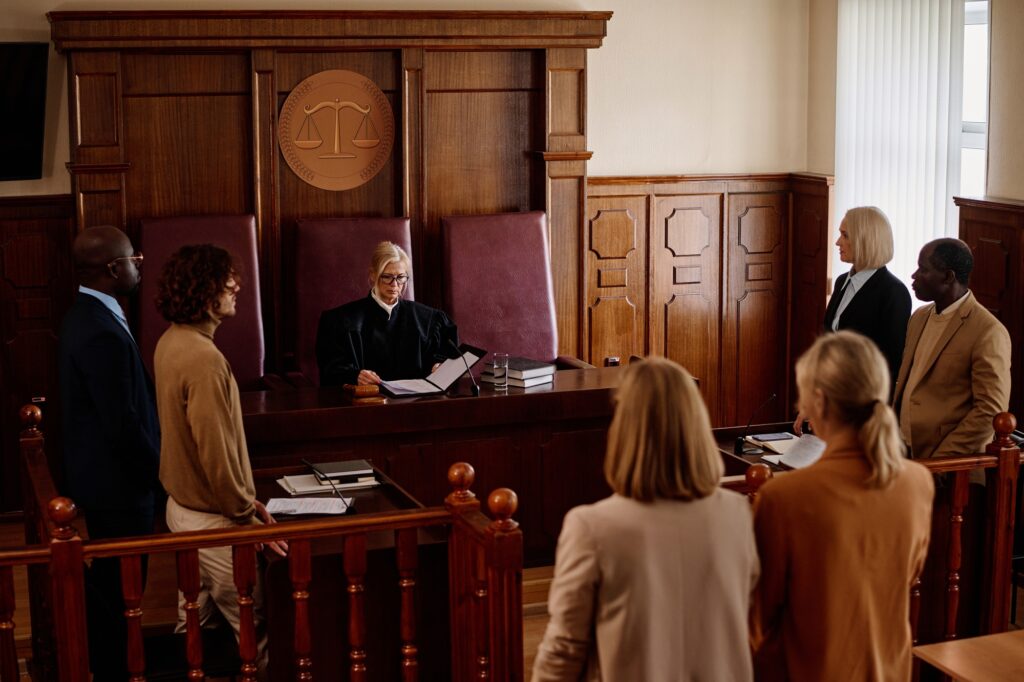
Understanding the intricacies of jury psychology in criminal trials is essential in modern legal systems. Behind closed courtroom doors, the interplay of personal experiences, cognitive shortcuts, and group dynamics steers the outcome of high-stakes criminal cases. This article explores the impact of jury psychology in criminal trials by delving into key areas from juror bias to decision-making heuristics.
Modern legal research increasingly acknowledges that the human element in juror decision making—shaped by cognitive psychology and social factors—plays a pivotal role in determining whether a jury reaches a fair verdict. By examining how jurors with diverse backgrounds interpret evidence and testimony, this discussion unpacks the underlying psychological mechanisms that influence trial outcomes.
It is important to note that while these insights are supported by academic research and observations from various jurisdictions, including Nevada, courtroom procedures and guidelines (such as voir dire and jury selection) can differ slightly based on local rules and case law. The intent here is to provide an informed perspective on jury psychology without substituting for legal advice.
Ultimately, this article serves as a resource for legal professionals, law students, and criminal justice researchers, offering a comprehensive exploration of the factors affecting jury psychology. Through the integration of legal protocols with psychological insights, there is potential to enhance fairness, reduce bias, and ensure that trial outcomes rest on transparent, reasoned evaluations.
Jury Psychology in Criminal Trials: The Role of Personal Experiences and Juror Bias
Introduction to Jury Trials
Jury trials stand as a fundamental pillar of the criminal justice system, entrusting ordinary citizens with the profound responsibility of determining the outcomes of complex legal cases. At the heart of this process is the expectation that jurors will impartially evaluate evidence, assess the credibility of witnesses, and render a verdict based on the standard of reasonable doubt. The psychology of jury trials is therefore critical, as it shapes how juror decision-making unfolds within the courtroom.
The journey toward a fair trial begins with the jury selection process, where voir dire is employed to identify and address potential biases among prospective jurors. Legal experts and attorneys use this phase to ensure that those chosen can objectively weigh the facts, free from preconceived notions that might influence their judgment. Despite these safeguards, research consistently reveals that juror bias—whether conscious or implicit—can still affect jury decisions, sometimes resulting in inconsistent verdicts even in similar cases.

To better understand the factors that influence how juries reach their conclusions, scholars have turned to both mock jurors in controlled studies and analyses of real-world trials. These investigations draw on insights from cognitive psychology and social psychology, highlighting the impact of individual differences, group dynamics, and the subtle ways in which evidence is perceived and interpreted. The credibility of witnesses, the persuasiveness of attorneys, and the emotional weight of testimony all play roles in shaping the final verdict.
Given the complexity of human psychology and the ever-present risk of bias, the legal system continually seeks to refine its processes. The ultimate goal is to ensure that every trial is fair, that potential biases are minimized, and that justice is served for both defendants and victims. For legal professionals, understanding the psychology of jury trials is not just an academic exercise—it is essential for navigating the realities of the courtroom and upholding the integrity of the justice system.
The Impact of Personal Histories
Every juror enters the courtroom with a unique personal history and set of life experiences that shape their perceptions. These backgrounds and life experiences significantly impact how evidence is processed and interpreted. For instance, a juror with personal experiences of victimization may approach testimony on violent crimes with heightened emotional sensitivity, potentially impacting their judgment regarding reasonable doubt. Such personal histories become intricately linked with the task of evaluating complex evidence during a trial.
Moreover, these experiences serve as cognitive shortcuts, enabling jurors to quickly relate to—or dismiss—certain pieces of evidence. However, while these heuristics can be beneficial in processing information rapidly, they also risk distorting impartial judgment by making jurors more biased and infusing personal bias into the evaluation of legal arguments.
Jurors’ predispositions, influenced by community, culture, and media portrayals of crime, further complicate their roles. Conviction proneness, as an individual difference, can also affect verdict tendencies, with some jurors more likely to favor a conviction due to their personality traits. Whether interpreting visual evidence or testimony, personal narratives invariably intersect with legal assessments, underscoring the multifaceted nature of juror bias in criminal trials.
The influence of personal histories is thus not a peripheral concern; it is central to understanding how bias can inadvertently shape trial outcomes. The extent to which these personal influences affect juror decision-making highlights the importance of recognizing and addressing them as a first step towards mitigating their impact in the pursuit of justice.
Recognizing Implicit Biases
Implicit biases, often operating beneath conscious awareness, play a critical role in shaping juror decisions. These biases can make jurors biased without their awareness, predisposing individuals to favor certain interpretations of evidence without deliberate intent. Within the framework of jury psychology, acknowledging and addressing these implicit leanings is essential for fair adjudication.
Legal experts increasingly advocate for training programs and expert testimony on implicit bias. Such initiatives help jurors—and the judicial system—recognize underlying predispositions, promoting impartial evaluation of evidence. It is also important to examine implicit biases during jury selection, using voir dire and other methods to detect and reduce prejudice. This is particularly vital in high-profile cases where strong media narratives or personal experiences might otherwise lead to a predisposition toward guilt.
Enhanced voir dire and varied jury selection strategies are among the methods employed to counteract implicit bias. By identifying and addressing these leanings early in the trial process, the judicial system can uphold the integrity of the verdict and safeguard the principle of unbiased justice. If left unaddressed, the extent to which implicit biases can influence verdicts may undermine the fairness of the trial.
Cognitive Heuristics in Juror Decision Making
Understanding Cognitive Heuristics
Cognitive heuristics are mental shortcuts that aid in processing complex information swiftly. In a courtroom setting, these heuristics enable jurors to navigate voluminous evidence and intricate testimonies, helping them make sense of complex evidence and organize it into a coherent framework. However, reliance on such shortcuts can sometimes lead to systematic errors and unintentional bias in evaluating the facts.
In high-stakes cases, jurors must sift through layers of evidence, often under time constraints. Heuristics, while reducing cognitive overload, may cause jurors to overemphasize emotionally charged or familiar details at the expense of a balanced analysis of all evidence presented.
The prevalence of heuristics such as the availability and representativeness shortcuts underscores the role of automatic thinking in legal decision-making. Understanding these psychological patterns is key to reinforcing measures that promote impartial verdicts in the criminal justice system.
Availability Heuristic and Emotional Evidence
The availability heuristic leads jurors to judge the likelihood of an event based on the ease with which examples come to mind. In criminal trials, emotionally charged evidence, such as graphic imagery or impassioned testimony, tends to be more memorable, thereby gaining disproportionate weight in the jury’s deliberations. Jurors perceive such emotionally charged evidence as more significant or memorable than neutral information, which can influence their overall assessment of the case.
For example, in a trial involving violent crime, jurors might focus intensely on vivid, emotionally-laden details, while downplaying statistical or circumstantial evidence that suggests reasonable doubt. Courts, including those in Nevada, are increasingly aware of this dynamic and work to ensure that emotional evidence is carefully balanced against objective facts.
Attorneys may strategically frame their presentation of evidence, either highlighting or mitigating its emotional impact, to sway juror perception. Effective cross-examination, along with clear judicial instructions, can help refocus attention on the substantive merits of the evidence.
Confirmation Bias and Its Consequences
Confirmation bias, the tendency to favor information that confirms preexisting beliefs, poses another significant challenge in jury deliberations. Once a juror forms an initial opinion, they may selectively seek affirming details while dismissing contradictory evidence, undermining the impartiality required for a fair trial.
This bias is especially problematic in cases that attract significant media attention, where jurors’ initial impressions—shaped in part by external narratives—can become self-reinforcing. The danger lies in forming a premature consensus that prioritizes confirmation over a comprehensive evaluation of all evidence.
To counteract confirmation bias, courts introduce mechanisms such as directed instructions to consider all evidence, as well as fostering diverse group deliberations. Legal scholars claim that deliberation can serve as a corrective mechanism for bias, helping jurors to challenge their assumptions and reduce the influence of preexisting beliefs. Such measures are designed to prompt jurors to revisit their assumptions and engage in deeper, more balanced analysis before reaching a verdict.
The Dynamics of Group Deliberations
Group Interactions and Social Influence
Once individual evaluations of evidence are complete, jurors enter the stage of group deliberation. In this setting, social dynamics and the influence of group behavior become pivotal in shaping the final decision. While collaboration can enrich the deliberative process, it can also amplify individual biases if certain voices dominate the discussion, potentially resulting in a biased group outcome.
Group deliberation not only aggregates individual perspectives but can also transform them, as jurors negotiate differing opinions and arrive at a collective judgment. However, if strong personalities or persuasive figures exert undue influence, there is a risk that minority opinions—and the nuance they offer—may be marginalized.
Recognizing this, many courts have implemented structured deliberation protocols designed to ensure that every juror’s view is heard and considered. This is vital for preserving the foundational principle that verdicts should emerge from a reasoned evaluation of all evidence, rather than from conformity or dominance.
Group Polarization in Jury Trials
Group polarization refers to the phenomenon where deliberations drive jurors toward more extreme positions than they initially held. The extent to which group deliberations can shift juror positions varies, but this shift can be particularly problematic in criminal trials, where the stakes are high and the emotional undercurrents run deep.
The dynamics of group polarization often stem from an inherent desire for consensus, where moderate views are pushed towards more radical extremes through mutual reinforcement. In such environments, the collective decision may become disproportionately influenced by heightened emotions rather than balanced scrutiny of the evidence.
Legal systems address this challenge by encouraging independent analysis before group discussions and, in some cases, by employing neutral moderators to oversee deliberations. These measures help curtail the extremity of group polarization and reinforce the principle of adjudicating based solely on the merits of the case.
Mitigating Groupthink
Groupthink occurs when the drive for unanimity eclipses the critical evaluation of alternative perspectives. In the context of jury deliberations, this phenomenon can stifle diverse opinions and suppress necessary debate, thereby compromising the fairness of the verdict. It is crucial to examine group dynamics during deliberations to identify and prevent the onset of groupthink.
To combat groupthink, some courts have introduced procedures such as secret ballots or instituting a designated “devil’s advocate” to challenge prevailing opinions. Encouraging dissent and ensuring a rigorously pluralistic discussion environment are key to securing a verdict that reflects a thorough and unbiased review of all evidence.
By systematically addressing groupthink, the integrity of the deliberative process is preserved, ensuring that verdicts are the result of comprehensive, critical engagement rather than mere consensus.
The Jury Selection Process and Voir Dire
Ensuring a Fair Jury Selection Process
A fair criminal trial is built upon the bedrock of an impartial jury. The jury selection process is designed to screen for biases, ensuring that potential jurors can evaluate evidence without predetermined prejudice. In Nevada, as in other jurisdictions, this process is a critical element in upholding the constitutional guarantee of an unbiased tribunal.
Through rigorous voir dire—a pretrial examination of potential jurors—both the prosecution and defense seek to examine and uncover any predispositions or biases that might impede a fair appraisal of the case. This practice, steeped in tradition and refined through ongoing research, ensures that the jury is as representative and impartial as possible.
Legal practitioners employ targeted questioning to elicit insights into each juror’s background, beliefs, and previous experiences. This methodical approach is essential not only for the integrity of the trial but also for bolstering public confidence in the judicial process.
Strategies in Voir Dire
Voir dire is the cornerstone of jury selection, serving as both a screening mechanism and an opportunity to shape the composition of the jury. Attorneys on both sides use this phase to ask probing questions that reveal potential biases related to personal history, media influence, politics or political beliefs, or preconceived notions about the criminal justice system.
Questions may explore previous interactions with law enforcement, personal experiences with the legal system, or even exposure to high-profile cases. The objective is clear: identify and exclude those whose biases could compromise a fair deliberation of the evidence.
Nuanced questioning during voir dire is instrumental in revealing underlying heuristics or emotional triggers that might color a juror’s interpretation of the case. In Nevada—and indeed in many jurisdictions—this process is continually refined, incorporating insights from both legal practice and cognitive psychology.
Utilizing Mock Jurors and Real World Trials
Innovative practices such as employing mock jurors and simulation techniques have become increasingly common in refining jury selection strategies. In using these methods, legal professionals can observe how a representative panel might react to key pieces of evidence or pivotal arguments before the actual trial begins. These practices contribute to greater knowledge about jury psychology, including how jurors’ understanding and potential biases may affect their decision-making.
The feedback obtained from mock juror evaluations provides valuable data, enabling attorneys to tailor their voir dire strategies and anticipate potential biases. This iterative process, which blends empirical research with practical courtroom experience, helps in constructing a jury that is better prepared to assess evidence objectively.
The integration of these techniques represents a significant advancement in jury selection and underscores the symbiotic relationship between legal practice and psychological research in fostering fair trial outcomes.
Practical Implications and Future Directions
Implications for the Criminal Justice System
The confluence of psychology and law has significant implications for the broader criminal justice system. Research into jury psychology provides a roadmap for reducing bias, enhancing evidence evaluation, and ultimately securing verdicts that reflect justice rather than prejudice. In Nevada, efforts to educate jurors and refine courtroom procedures are ongoing, aligning with a nationwide trend toward more transparent and accountable legal processes.
Enhanced training for legal professionals, along with more systematic jury instructions, has already begun to reshape how trials are conducted. These improvements not only protect the rights of the defendant, ensuring fair treatment regardless of the defendant’s attributes or pre-trial perceptions, but also reinforce public confidence in a system that strives for equity and impartiality.
Innovations in Jury Selection and Deliberations
Recent innovations—ranging from advanced data analytics in jury selection to the systematic use of mock trial feedback—are transforming traditional approaches to assembling and guiding juries. Such techniques provide a more nuanced understanding of potential biases and enable legal professionals to craft strategies that mitigate their impact.
Technological advancements further complement these methods by offering real-time analysis of deliberative dynamics. In addition, technology now plays a crucial role in the investigation of juror backgrounds, including digital inquiries into online activities and psychological assessments, helping to uncover personal biases and digital footprints. This multifaceted approach ensures that jury deliberations remain as objective as possible, thereby enhancing the overall fairness of the trial process.
Conclusion
This article has delved into the complex interplay between psychology and legal protocols within jury trials. From the influence of personal experiences and cognitive shortcuts to the dynamics of group deliberations and the rigorous standards of voir dire, the discussion illuminates how varied factors can shape trial outcomes, especially in serious criminal cases such as murder, where the process of reaching a guilty verdict requires jurors to weigh evidence beyond a reasonable doubt.
In summary, the convergence of legal expertise and cognitive science offers a promising path forward for jury trials—one that balances time-honored legal principles with modern insights into human behavior. This integration serves as both a challenge and an opportunity: to refine the processes of jury selection and deliberation so that every verdict, including those in murder cases, stands as a testament to systematic, impartial justice and the careful determination of a guilty verdict.
With continued collaboration and reform, the future of jury trials holds the promise of being both scientifically informed and steadfast in the pursuit of true fairness.