 English
 Spanish
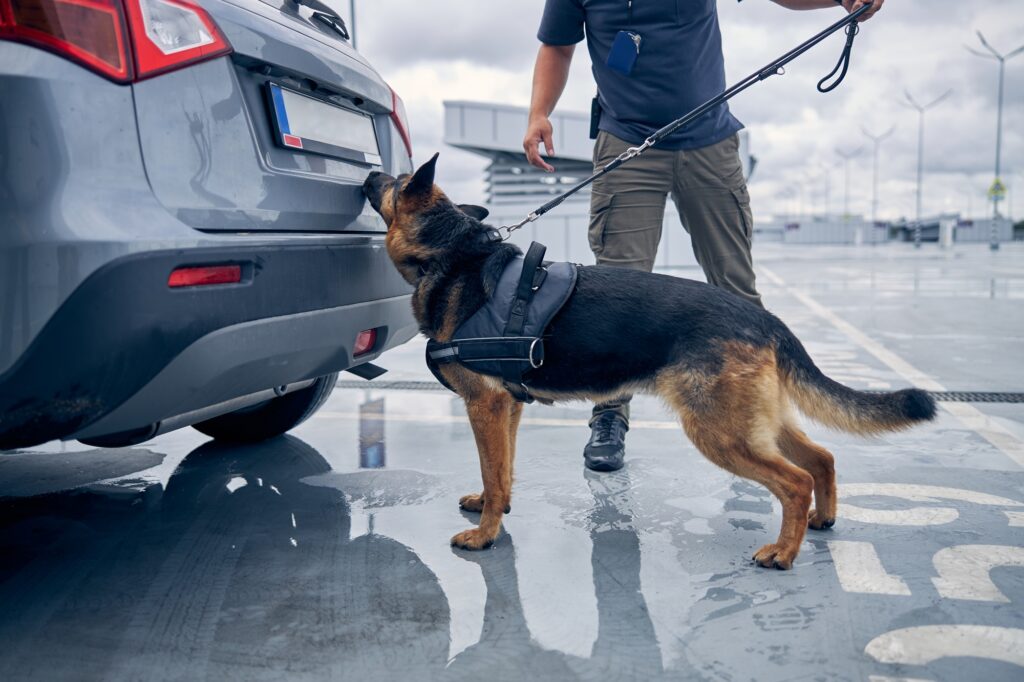
Imagine cruising down the highway with friends, your favorite tunes on the radio, when suddenly, flashing red and blue lights appear in your rearview mirror.
A seemingly routine traffic stop quickly escalates when a police officer finds illegal substances in the vehicle. In that tense moment, you may ask: who is responsible if drugs are found in a car?
Whether the drugs belonged to you or someone else, understanding drug possession laws is essential. This article explores the differences between actual possession and constructive possession, explains how law enforcement determines liability, and outlines key legal defenses that can protect your rights.

Understanding Drug Possession in Vehicles
When drugs are found in a vehicle, the legal concept of possession becomes crucial. Not every presence in a car results in criminal liability. The law distinguishes between actual possession and constructive possession—two terms that often confuse defendants.
Actual vs. Constructive Possession
- Actual Possession: This refers to situations where illegal drugs are physically on a person, such as in their pockets or bags. The court evaluates whether the defendant knew about the drugs and had control over them.
- Constructive Possession: Even if the drugs are not on a person, an individual may still be charged if prosecutors can prove they knew about the drugs and had the ability and intent to control them. Mere proximity to drugs, such as being in the same car, is not enough for a conviction under Nevada law, as clarified by Nevada case law interpreting NRS 453.336
Joint Possession and Shared Responsibility
In cases where more than one person is present in the vehicle, joint possession may be applied. This means that all occupants could potentially face drug possession charges if there is evidence that they shared access to or were aware of the illegal drugs. Critical factors include:
- Proximity to the drugs
- Behavior during the traffic stop
- Prior knowledge of the substances
Mere presence in a car does not automatically equate to guilt. However, if a police officer finds drugs, each occupant’s level of control and the evidence gathered can play a significant role in determining who is criminally responsible.
How Law Enforcement Handles Drugs Found in a Car
The procedures followed by law enforcement during a traffic stop can significantly impact the outcome of a drug possession charge. Understanding these protocols is crucial for anyone facing such allegations.
Police Procedures During a Traffic Stop
Under the Fourth Amendment and Nevada law, officers must have probable cause, consent, or a valid warrant to search a vehicle. However, Under the automobile exception, law enforcement may lawfully search a car without a warrant only if they have probable cause to believe it contains illegal substances or evidence of a crime. During a routine stop, if the police find drugs, they will:
- Assess statements and behavior
- Evaluate the evidence PRESENTED (such as fingerprints or forensic tests)
- Determine whether the search was lawful
Any violation of constitutional rights or procedural rules during this process can provide grounds for challenging the case.
Determining Responsibility Among Multiple Occupants
When multiple passengers are present, it becomes challenging to assign responsibility. Law enforcement will often consider:
- Ownership of the car: The person who owns or drives the vehicle may face increased scrutiny.
- Location of the drugs: If the drugs are in an area accessible to all, such as the driver’s seat or central console, all occupants might be implicated.
- Statements made during the stop: Admissions or evasive behavior can influence the outcome.
Understanding these various factors can help determine whether the defendant knew about the drugs or if the mere presence in the vehicle is the only link.
Key Legal Factors in Drug Possession Cases
The outcome of a drug possession charge often hinges on the quality of the evidence gathered and how it is interpreted in court.
Evidence and Its Role in Convictions
Evidence presented in these cases can range from physical items to witness testimony. Key considerations include:
- Forensic evidence: Such as fingerprints on packaging.
- Testimonies: Statements by passengers or bystanders.
- Police report: Detailing the circumstances of the traffic stop.
Even circumstantial evidence can lead to a guilty verdict if it convinces the court beyond a reasonable doubt. A skilled attorney can often challenge weak or circumstantial evidence to safeguard the defendant’s rights.
The Importance of Intent and Knowledge
For a conviction, prosecutors must prove that the defendant knew about the drugs. This includes:
- Statements made to officers
- Prior drug history
- Physical evidence of control
If there is insufficient proof that the defendant knew about the presence of illegal drugs, then a robust defense can lead to a dismissal of charges.
Legal Defenses Against Drug Charges

Facing drug charges requires a strong legal defense. There are several strategies an experienced criminal defense attorney might use.
Challenging Unlawful Searches and Seizures
One effective defense is to argue that the search was unlawful. Under the Fourth Amendment, if the police conducted an illegal search, any evidence of drug possession might be deemed inadmissible. Defense strategies include:
- Filing motions to suppress evidence
- Highlighting procedural errors
Disputing Constructive Possession Charges
Constructive possession is often more difficult to prove since it involves shared access. An attorney can:
- Question whether the defendant had actual control over the drugs.
- Present testimonies and forensic analyses that cast doubt on the joint possession theory.
- Argue that the defendant’s connection to the drugs was circumstantial and insufficient for conviction.
Potential Consequences of a Drug Possession Charge
The implications of a drug possession charge extend far beyond a simple court appearance. Drug crimes can carry severe penalties that affect many aspects of life.
- Criminal Record: A conviction can hinder future employment opportunities, impact professional licensing, and affect background checks.
- Sentencing: Penalties vary widely, and most drug possession charges under NRS 453.336 are classified as felonies (with some exceptions), while trafficking charges under NRS 453.3385 or NRS 453.339 can lead to even more severe felony penalties, depending on the type and quantity of the controlled substance.
- Long-Term Ramifications: Beyond incarceration, a conviction may impose fines, mandatory rehabilitation programs, or probation.
Understanding these legal ramifications is crucial for anyone facing drug-related charges.
The Importance of Hiring an Experienced Criminal Defense Attorney
If you or someone you know is facing drug charges, securing an experienced criminal defense attorney is vital. Here’s why:
- Expertise in Criminal Law: Attorneys specializing in drug offenses understand the nuances of actual or constructive possession and the strategies needed to challenge the evidence.
- Navigating Complex Procedures: A skilled attorney can navigate the legal system, ensuring that your rights under the United States Constitution are protected.
- Free Case Evaluations: Many law firms offer a free consultation or free case evaluation to assess the circumstances of your arrest and outline potential defenses.
Consulting with a professional can make all the difference in securing a favorable outcome, whether through a dismissal of charges or a reduced sentence.

Conclusion
Being found in a car with illegal substances can lead to serious legal challenges. Whether you are dealing with actual possession or constructive possession, the stakes are high, and the consequences can be life-altering. From the intricacies of joint possession to the critical role of evidence gathered during a traffic stop, understanding the legal landscape is essential.
Key takeaways include:
- Not every occupant is automatically guilty.
- Legal defenses exist to challenge both the evidence and the methods used by law enforcement.
- The importance of legal representation cannot be overstated—consulting an experienced criminal defense attorney is a critical step in protecting your future.
If you find yourself facing drug charges or are unsure about who is responsible if drugs are found in a car, do not hesitate to seek legal advice. A knowledgeable attorney can help navigate the complexities of drug possession laws, ensuring that your rights are upheld and that you receive a fair evaluation of your case.
By understanding the law and your rights, you can better prepare for the challenges ahead and potentially avoid the life-altering consequences of a drug possession charge.
Contact The Defense Firm for more information!