 English
 Spanish
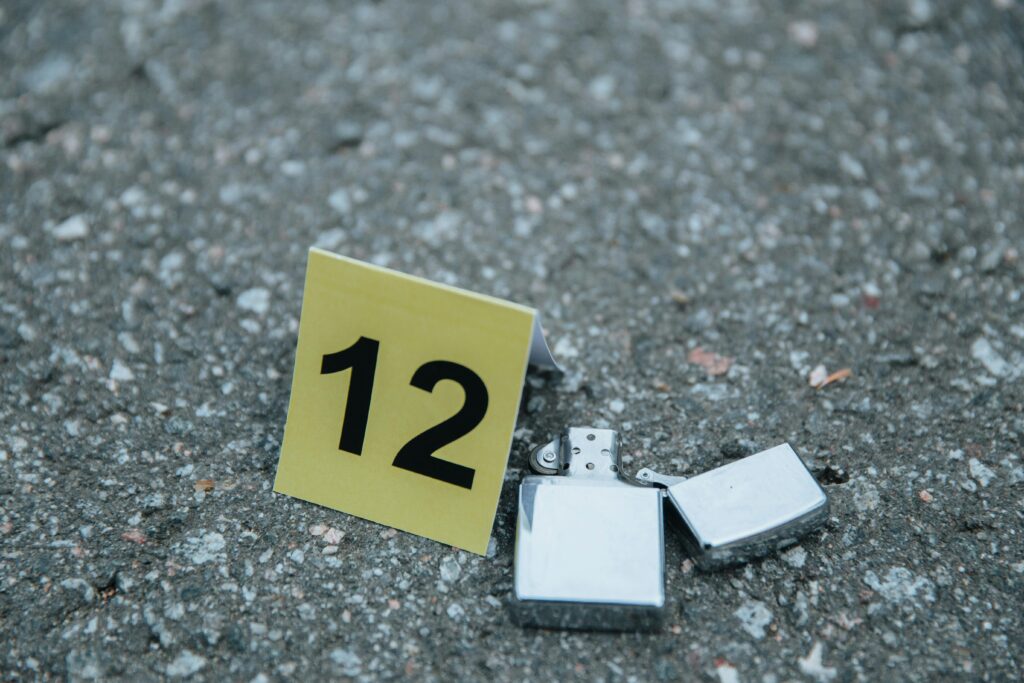
Murder charges in Las Vegas often carry a sense of finality—usually tied to a victim’s body, medical reports, and clear physical evidence. But Nevada law does not require a body for prosecutors to pursue first-degree murder, second-degree murder, or certain types of manslaughter. In fact, “no-body homicide cases” are more common than most people realize, and Nevada courts have repeatedly upheld murder convictions without the recovery of the victim’s remains.
For individuals under investigation or already facing charges, the idea of being accused of an unlawful killing without a body is overwhelming and confusing. The stakes include life imprisonment, category A felony exposure, and, in severe cases, even the death penalty. Yet law enforcement and the district attorney may still move forward when they believe circumstantial evidence strongly indicates a murder occurred.
Understanding how prosecutors attempt to prove a homicide without a body, how Nevada Revised Statutes interpret homicide, and the defense strategies available in such cases is essential for anyone navigating this terrifying and high-risk situation. At The Defense Firm, we know that assumptions can be deadly, and we fight aggressively to expose insufficient evidence, wrongful accusations, and speculative theories built on emotion instead of fact.
Why Nevada Allows Murder Charges Without a Body: Understanding the Legal Standard
Nevada courts have long held that a body is not required to file or sustain murder charges. Although many people believe that a dead body is essential to prove death, the law only requires proof that a human being was unlawfully killed.
That proof can come from forensic evidence, eyewitness accounts, behavioral patterns, digital communications, or circumstantial evidence indicating the victim is deceased. Prosecutors may rely on the absence of contact, financial activity, or physical presence to argue that a supposed victim is no longer alive due to foul play.
Under Nevada Revised Statutes, the crime of murder focuses on the mental state, intent, and circumstances surrounding the killing—not the physical remains of the victim.
What Prosecutors Must Prove in a No-Body Murder Case in Las Vegas
To secure a conviction in a body homicide case, the prosecution must still prove guilt beyond a reasonable doubt. Without a body, this burden becomes far more difficult, which is why prosecutors rely on multiple layers of inference that attempt to tie the defendant to the victim’s disappearance.
They must show:
• A human being is dead
• The death resulted from a criminal act
• The defendant caused or contributed to that death
• The act met the statutory elements of murder
Proving a murder without a body requires a compelling story—a combination of missing person evidence, digital data, alleged motive, and any physical evidence suggesting foul play. Unfortunately, this opens the door to speculation, mistaken assumptions, and wrongful charges.

How Circumstantial Evidence Becomes the Centerpiece of a No-Body Murder Case
In no-body homicide cases, circumstantial evidence often replaces direct proof. This type of evidence relies on inferences rather than direct observation. Prosecutors argue that such evidence, when combined, points to the unavoidable conclusion that the supposed victim is dead and the defendant killed them.
This may include:
• Digital footprints
• Sudden disappearance
• Suspicious financial activity
• DNA evidence found in unusual locations
• Indications of a struggle
• Eyewitness accounts of threats or violence
While circumstantial evidence is legally acceptable, it is also prone to misinterpretation. Innocent behavior can be twisted into a narrative of guilt, especially when law enforcement starts with a mistaken view or predetermined theory about the case.
The Challenge of Proving Death Without Physical Evidence
One of the biggest hurdles prosecutors face is proving the victim is actually dead. Nevada courts require more than a simple disappearance—they must connect the absence to a criminal act rather than voluntary separation or emotional disturbance.
People leave without warning for many reasons:
• Fear
• Domestic conflict
• Financial trouble
• Substance struggles
• Privacy concerns
• Immigration consequences
Without a body, proving death instead of voluntary disappearance becomes a major challenge. Defense attorneys often highlight these alternative explanations to cast doubt on the prosecution’s narrative.
First-Degree Murder in Las Vegas: How Prosecutors Pursue the Most Serious Charge
First-degree murder in Nevada involves deliberate intention, premeditated killing, lying in wait, or the use of torture. Even without a body, the district attorney may attempt to argue premeditation based on relationship history, messages, or alleged motive.
A first-degree murder conviction is a category A felony, carrying:
• Life imprisonment with or without the possibility of parole
• Or even the death penalty in aggravated circumstances
Without physical evidence, prosecutors attempt to use motive, opportunity, and alleged planning to bridge the evidentiary gap. Strong defense counsel is essential to dismantle these speculative arguments.

Second-Degree Murder: Charges Based on Extreme Recklessness
Second-degree murder does not require premeditation. It applies when someone acts with malice aforethought but without deliberate planning.
In a no-body situation, prosecutors may argue that the disappearance resulted from:
• Dangerous conduct
• Extreme disregard for human life
• Domestic violence escalation
• Use of a deadly weapon
Second-degree murder also carries category A felony consequences, including life imprisonment, making any speculative prosecution extraordinarily high-risk for the accused.
Felony Murder: When a Separate Crime Becomes the Basis of a Murder Charge
Nevada’s felony murder rule allows prosecutors to charge someone with murder if a death occurs during the commission of a felony—such as robbery, sexual assault, or burglary—even if the defendant never intended to kill anyone.
In a no-body homicide case, this rule becomes dangerous. Prosecutors may argue the supposed victim died during a related felony, even without recovering remains. Defense strategies often focus on exposing the lack of forensic evidence or the speculative nature of the prosecution’s theory.
Manslaughter Charges Without a Body: How They Work
Nevada recognizes several forms of manslaughter:
Voluntary Manslaughter
This applies when an intentional killing occurs in the heat of passion or while experiencing intense emotional disturbance. Without a body, prosecutors attempt to prove sudden violence using digital evidence, eyewitness statements, or claims about a turbulent relationship.
Involuntary Manslaughter
This covers unintentional killing due to reckless actions. In no-body cases, prosecutors may argue the disappearance shows the person died accidentally and the defendant tried to conceal the body, despite having no physical proof.
Manslaughter charges still carry serious penalties, potential prison sentences, and significant immigration consequences.
How Forensic Evidence Influences No-Body Murder Investigations
Investigations often rely on forensic evidence found at a crime scene or a suspect’s property, including:
• DNA evidence
• Suspect’s fingerprints
• Blood trace analysis
• Soil samples
• Clothing fibers
However, the absence of a body makes forensic interpretation speculative. Trace evidence may come from innocent contact, prior visits, or shared environments. Defense attorneys challenge the reliability, handling, and assumptions tied to forensic conclusions.
How Motive and Behavioral Evidence Can Lead to Wrongful Charges
Prosecutors often overemphasize motive. Arguments, jealousy, financial stress, or relationship breakdowns can be twisted into claims of malice. But motive alone is never enough for a murder conviction.
In no case, behavioral patterns aarticularly unreliable. Absence of grief or inconsistent statements may be used unfairly against a defendant—even when emotional reactions vary significantly among reasonable people.
When Eyewitness Accounts Become Dangerous in Homicide Cases
Eyewitness testimony is notoriously flawed. Memory distortion, stress, suggestion, and bias can lead to inaccurate statements. In no-body murder cases, where physical evidence is thin, eyewitness accounts often become overvalued and misleading.
A skilled defense attorney exposes inconsistencies, challenges witness credibility, and presents alternative explanations that create reasonable doubt.
The Role of Law Enforcement Assumptions in Building a No-Body Case
Once investigators believe foul play occurred, every action is viewed through a lens of suspicion. Innocent behavior becomes evidence of guilt. Normal delays in communication become signs of concealment.
Defense attorneys counter these assumptions by providing alternative narratives, reconstructing timelines, and highlighting gaps in the investigation.
How the Defense Challenges No-Body Murder Charges in Nevada
A powerful defense strategy includes:
• Demonstrating alternative explanations for the disappearance
• Highlighting the lack of physical evidence
• Challenging forensic assumptions
• Attacking the reliability of digital evidence
• Presenting alibi evidence
• Filing motions to suppress unlawfully obtained evidence
• Undermining motive arguments
• Introducing evidence of voluntary departure
The goal is to show that the prosecution’s case is built on speculation—not certainty.
Why Reasonable Doubt Is Especially Powerful Without a Body
Nevada courts require prosecutors to prove guilt beyond a reasonable doubt, and without a body, meeting this standard becomes extraordinarily difficult. When there is no medical examination, no confirmed death, no established cause or manner of death, no murder weapon, no physical remains, and no identifiable crime scene, the prosecution’s theory begins to rely heavily on speculation.
Defense attorneys highlight each of these missing elements to demonstrate that the state’s evidence is incomplete and unreliable. In no-body murder cases, the absence of concrete proof creates significant uncertainty, making jurors far more likely to question whether a crime actually occurred—and whether the defendant can be found guilty based solely on circumstantial evidence.
The Immigration Consequences of No-Body Murder Charges
Even an accusation—not just a conviction—can have severe immigration consequences. Murder, attempted murder, and certain manslaughter charges are considered aggravated felonies, impacting:
• Permanent resident status
• Asylum possibilities
• Deportation risk
A skilled defense lawyer is essential to minimize immigration damage.
FAQ
Can Nevada convict someone of murder without a body?
Yes. Nevada courts allow murder convictions without a recovered body, as long as prosecutors prove death and criminal responsibility beyond a reasonable doubt. However, these cases are extremely difficult to prove and highly vulnerable to challenge by skilled defense counsel.
What evidence does the prosecution rely on in a no-body case?
Prosecutors use circumstantial evidence, digital data, forensic tests, alleged motive, eyewitness accounts, and relationship history. Defense attorneys challenge each layer to expose reasonable doubt.
What are the penalties if convicted of murder without a body?
Penalties are the same as any murder case: life imprisonment, the possibility of parole after a minimum term, or the death penalty in aggravated circumstances. Category A felony exposure applies.
Conclusion
Being charged with murder in Las Vegas without a body is one of the most frightening experiences a person can face. Without physical evidence or a confirmed death, the prosecution will rely heavily on circumstantial evidence, digital data, and speculative interpretations that can easily point to the wrong person.
But a lack of a body also creates powerful opportunities for the defense. By highlighting insufficient evidence, exposing flawed forensic assumptions, and presenting alternative explanations for the disappearance, a skilled attorney can dismantle the state’s theory and protect your freedom.
If you’re facing homicide accusations or if investigators have contacted you about a missing person, do not wait. Contact The Defense Firm today for a free and confidential consultation with an experienced Las Vegas murder defense lawyer who will fight for your future and protect your constitutional rights at every stage.