 English
 Spanish
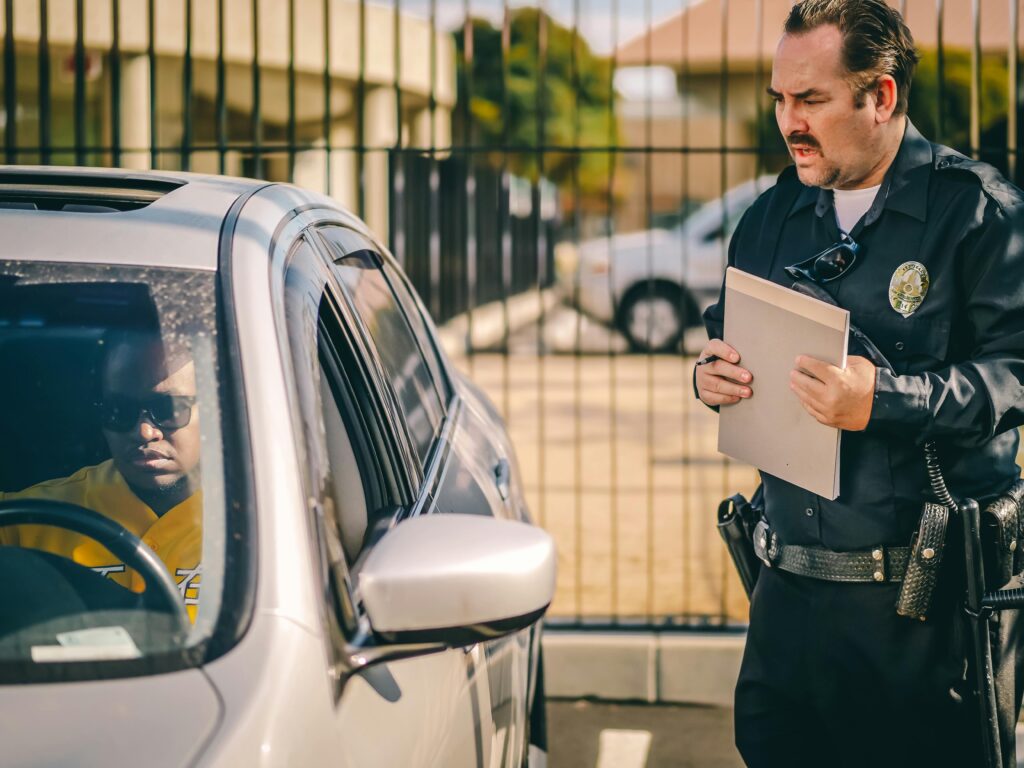
When drivers in Las Vegas or Clark County face a DUI investigation, one of their first concerns is whether the arrest can legally rest entirely on an officer’s personal judgment. Many drivers assume that without a breath test, blood test, or hard chemical evidence, a prosecutor cannot move forward. But Nevada law complicates this assumption, because officer observation plays a major role in many DUI cases, sometimes even serving as the foundation of the arrest.
Understanding when police officers, field sobriety tests, and behavioral observations become enough to justify a charge is essential for anyone navigating this process. A single moment during a traffic stop—a misstep, slurred speech, or difficulty following instructions—can be interpreted as impairment. That interpretation can lead to a DUI arrest, even before any chemical test occurs.
This guide explains how Nevada courts treat officer observations, how prosecutors build cases around them, and how a defense attorney can challenge weak or unreliable assessments in pursuit of a favorable outcome.
How Police in Las Vegas Use Officer Observation to Justify a DUI Stop
A DUI case begins long before a test is conducted. The first question is whether the officer had reasonable suspicion to stop the vehicle. Under Nevada law, an officer may initiate a stop based on observable driving behavior, even without a clear violation of traffic signals.
Many DUI arrests start with reports of erratic driving, weaving within a lane, stopping without an apparent reason, or drifting over the center line. These behaviors often trigger a roadside evaluation, where law enforcement officers claim they observed signs of intoxication, such as slurred speech, glassy eyes, or the smell of alcohol. Even if these observations are subjective, they often shape the entire DUI investigation.
Because Nevada emphasizes road safety, officers are trained to detect impaired drivers quickly. The problem arises when these subjective interpretations are mistaken for intoxication. Drowsiness, medical conditions, and even nervousness can mimic signs of impairment, yet these factors are rarely considered during the initial stop.
Why Law Enforcement Relies Heavily on Field Sobriety Tests During a DUI Investigation
After the initial stop, officers typically proceed with standard field sobriety tests (FSTs). These include the horizontal gaze nystagmus test, the walk and turn, and the one-leg stand. Officers often treat these as objective evidence of impairment, but in reality, the tests depend heavily on the officer’s interpretation and ability to administer them correctly.
The walk-and-turn test, for example, requires a person to walk in a straight line, pivot, and return without losing balance. Even sober individuals may struggle with this test on uneven pavement, in high heels, or while anxious. Yet officers frequently describe any misstep, hesitation, or balance shift as indicators of intoxication.
Similarly, the one-leg stand test demands physical balance and focus for an extended period. Weather, fatigue, physical limitations, and roadside conditions can influence performance. Despite these challenges, officers often cite “difficulty performing” the task as evidence of impairment.
Because these assessments rely almost entirely on officers’ observations, their accuracy becomes a central issue for a skilled attorney building a defense.
Can a Nevada DUI Be Based Solely on Officer Observation Without Chemical Tests?
Technically, yes—but with limitations. Nevada law allows prosecutors to pursue DUI charges even when no breathalyzer test, preliminary breath test, or chemical evidence is available. The legal question becomes whether the officer’s observations constitute probable cause to arrest and whether those observations create enough proof for a conviction.
This situation typically arises when:
- A driver refuses a breath or blood test;
• The officer fails to properly administer chemical tests;
• The breath machine malfunctions;
• No chemical test results exist due to medical or procedural issues.
While the prosecution may attempt to build its case around observation alone, courts remain skeptical of entirely subjective evidence. Jurors often expect more than officer notes describing slurred speech, maximum deviation in eye movement, or balance issues.
Still, many DUI arrests begin and end with field sobriety tests, meaning drivers must understand how vulnerable this type of evidence can be.

Understanding Probable Cause in Las Vegas DUI Cases Based on Observation
Probable cause is the legal threshold officers must meet to justify an arrest. In the context of a DUI stop, prosecutors argue that an officer’s training and professional judgment allow them to identify visible signs of intoxication. If an officer reports erratic driving, poor performance on the walk-and-turn test, or confusion during instructions, they may claim that these cues alone establish probable cause.
But probable cause is not proof. It merely opens the door for an arrest. A prosecutor still must demonstrate guilt beyond a reasonable doubt—a far higher standard.
A dedicated and experienced attorney examines whether the officer relied on outdated training, rushed procedures, or personal bias when forming their conclusion. If the officer’s conclusions contradict the video footage, weather conditions, or the driver’s medical history, the defense may argue that the arrest violated the Fourth Amendment and constituted unreasonable searches or seizures.
How Nevada’s Implied Consent Laws Interact With Officer Observation
Drivers in Las Vegas are often surprised to learn that Nevada’s implied consent laws require submission to a breath test or blood test after a lawful arrest. Refusing a test does not stop the prosecution; instead, it leads to automatic license suspension and, in some cases, officers may obtain a warrant for a forced blood draw.
When chemical tests are absent or incomplete, the state may attempt to rely on officer testimony about driving behavior, demeanor, or performance on field sobriety tests to argue that the driver’s blood alcohol concentration was above the legal limit.
However, without a chemical test, prosecutors face a significant burden. Observation-based cases are much harder to prove, especially when the defense can highlight contradictions or alternative explanations for what the officer saw.
Why Prosecutors Depend on Direct Evidence, Even When They Claim They Don’t Need It
Although Nevada law permits convictions without a chemical test, prosecutors prefer direct evidence such as breath or blood results. Without it, the case weakens considerably.
Many DUI cases fail when prosecutors attempt to rely exclusively on:
- The officer’s memory at the police station;
• Notes about the driver’s appearance;
• Subjective descriptions of walking phase errors or “inability to walk a straight line.”
When these elements stand alone, a strong defense can reframe the narrative, arguing that the officer misinterpreted behavior, exaggerated impairment, or lacked an adequate foundation for their conclusions. This challenge often leads to reduced charges or even dismissals in Clark County.
How a Defense Attorney Challenges Officer Observation in Las Vegas DUI Cases
A strategic defense focuses on exposing weaknesses in the prosecution’s reliance on observation. This includes examining whether the officer:
- Failed to follow standard field sobriety test protocols;
• Ignored environmental or medical limitations;
• Improperly conducted the horizontal gaze nystagmus test;
• Misjudged timing, counting, or physical cues;
• Used subjective language instead of factual descriptions.
Video recordings often reveal disparities between what the driver actually did and what the officer wrote in the report. When inconsistencies arise, the prosecution’s case can collapse.
A defense lawyer may also challenge the legality of the initial stop. If the officer misinterpreted traffic signals, overreacted to minor weaving, or lacked reasonable suspicion, then every step of the DUI enforcement becomes invalid.

Why Chemical Tests Still Matter Even When Observation Drives the Arrest
Even if the arrest is based entirely on observation, the prosecution usually attempts to secure some form of chemical evidence later in the process. A chemical test conducted at the station may still become central to the case.
But when there is no reliable breath or blood sample—or when the officer fails to obtain one—the defense can attack the state’s reliance on judgment alone. Jurors understand that many drivers could fail field sobriety tests for non-alcohol-related reasons.
This recognition creates doubt, and reasonable doubt is the strongest ally a defendant has.
How Observation-Only DUI Cases Often Lead to Reduced Charges
Because observation-only cases rely on officer interpretation rather than scientific evidence, they are far more vulnerable to negotiation. Prosecutors in Las Vegas and Clark County frequently agree to reduced charges when the evidence lacks chemical support.
This is especially true when:
- The roadway was uneven or unsafe;
• The driver had a physical condition affecting balance;
• The traffic stop lacked strong justification.
• The officer exaggerated performance on tests;
• Video fails to support the officer’s report.
In these situations, an experienced attorney can leverage weaknesses to secure a more favorable outcome, whether through charge reduction, dismissal, or excluding the arrest entirely.
Protecting Your Rights After an Observation-Based DUI Arrest in Las Vegas
Facing DUI charges built on officer testimony is overwhelming, but you are not powerless. The law requires the state to prove impairment—not suspicion. When a defense attorney challenges flawed testing procedures, unreliable assessments, or constitutional violations, the balance shifts.
Drivers should never assume that “the officer said so” is enough to guarantee conviction. With strong legal guidance, even the most complex DUI cases built on subjective observation can be successfully defended.

FAQ
Can I be convicted of a DUI in Nevada without taking a breath or blood test?
Yes, Nevada allows convictions based solely on officer observation, but these cases are significantly harder for prosecutors to prove. A defense attorney can often challenge the reliability of the officer’s interpretation.
Are field sobriety tests required during a DUI stop?
No, you are not legally required to perform field sobriety tests such as the walk-and-turn or one-leg stand, though refusing may prompt further investigation. These tests are subjective and often misinterpreted.
What happens if I refuse a preliminary breath test in Las Vegas?
Refusing a preliminary breath test at the scene can lead to arrest, but it does not automatically mean conviction. Nevada’s implied consent laws apply only after a lawful arrest, not before.
Conclusion
A DUI in Nevada can begin with a simple observation, but it does not have to end in a conviction. While officers rely on their training and field sobriety tests to justify arrests, a courtroom requires much more. Every detail—from the legality of the stop to how the tests were administered—matters. And when those details crumble, so does the prosecution’s case.
If you or someone you love is facing DUI charges in Las Vegas or Clark County, the most important step is securing experienced legal representation immediately. A skilled defense lawyer can challenge flawed observations, protect your driving privileges, and build a strategy aimed at achieving the best possible result.
If you’re facing a DUI in Nevada based on an officer’s observation, act quickly. Contact The Defense Firm today for a free consultation with a dedicated and experienced attorney who will protect your rights and fight for your future.