 English
 Spanish
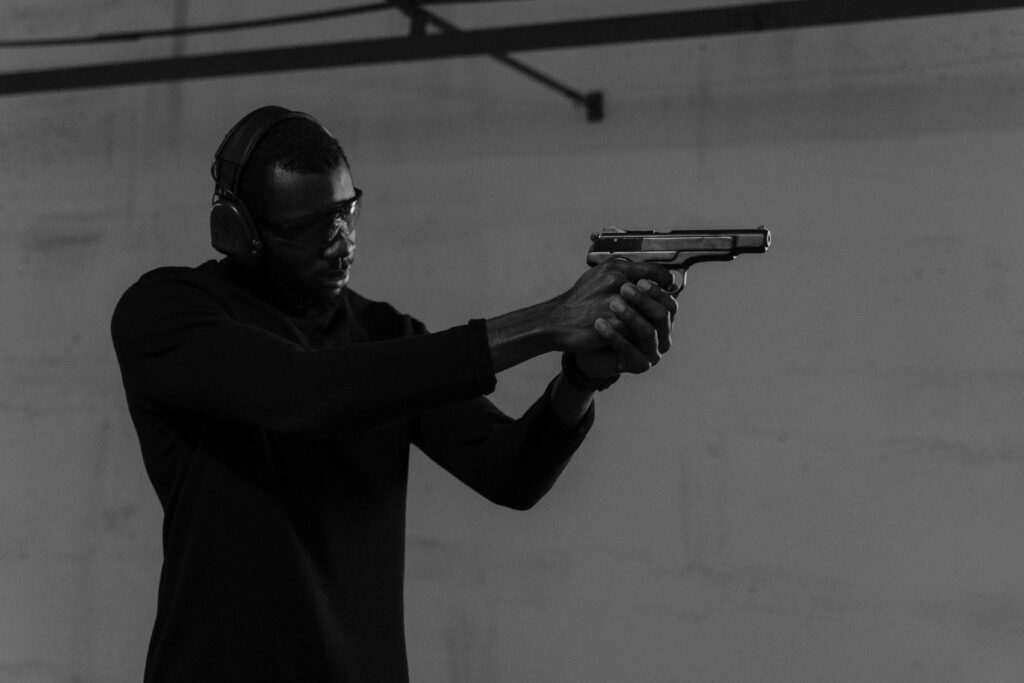
Using a firearm in self-defense can feel like the only option when you believe you’re facing an imminent threat. But in Las Vegas and Clark County, what seems legally justified in the moment can quickly become a criminal investigation where Nevada law is applied against you. When police arrive, they may treat the shooter as a suspect, and the case may shift from a protection narrative to a prosecution narrative—especially if the state believes the force used was unnecessary, premature, or excessive.
If you’re searching for self-defense with a firearm when Nevada law turns against you, you’re likely worried about whether the law will recognize your self-defense claim or whether you’ll face criminal charges for a serious crime. Nevada recognizes self-defense laws, including stand your ground principles and the castle doctrine, but those protections are not automatic. A successful legal defense depends on facts, timing, and how the evidence is framed from the earliest stage of the legal process, which is why early legal representation can be decisive.
What Happens After a Firearm self-defense Incident in Las Vegas?
After a self-defense incident, the first official decisions are often made on the street. Police interviews, scene processing, and early assumptions can shape the narrative of a criminal case long before anyone sees a courtroom. Investigators will look for whether there was an immediate danger, whether the threat was still active, and whether you used reasonable force or crossed into excessive force. That early framing can determine whether you go home or face arrest.
This matters because even a person who acted to prevent serious bodily harm can be treated as the accused if the state believes the situation was avoidable or the threat wasn’t imminent. In Nevada courts, the facts that get documented first—911 recordings, initial witness impressions, and officer observations—can become the backbone of the prosecution’s story. A defense team’s job is to correct misinterpretations and protect your rights before misunderstandings harden into charges.

Evidence Collection: Why Details Decide the Outcome
Self-defense cases are evidence-driven. Investigators often rely on witness statements, surveillance footage, and physical evidence at the scene to assess whether your actions were necessary self-defense or something else. Prosecutors will also seek medical reports to document injuries and determine whether the alleged victim had a weapon or posed a real risk of imminent bodily harm.
The client-facing implication is simple: the “truth” in a self-defense case is what the evidence proves, not what you intended. A strong legal strategy identifies what evidence exists, what is missing, and what needs to be preserved immediately. When the evidence supports a credible fear of imminent harm, it can support a valid defense and help the defense attorney challenge the state’s theory.
Nevada’s Self-Defense Laws: When Deadly Force Can Be Legal
Under Nevada’s self-defense laws, the central question is whether a reasonable person in the same situation would have felt a reasonable fear of imminent danger or serious harm. The law focuses on what was objectively reasonable, not only what you personally felt. This is the key difference between a lawful self-defense act and conduct prosecutors may characterize as unjustified violence.
That matters because prosecutors often argue that a person had options—leave, de-escalate, call for help—especially in cases involving disputes, intoxication, or road rage incidents. Your defense must show why those alternatives were not realistic at the moment, and why the threat was immediate. When the threat is real, imminent, and capable of causing severe injury or death, the law may recognize that deadly force was a proportionate response.
Imminent Threat, Immediate Harm, and Timing in Deadly Force Decisions
Nevada self-defense standards are heavily tied to timing. Deadly force is generally justified only when a threat is immediate—an immediate threat, immediate harm, or imminent bodily harm is about to occur. If prosecutors believe the threat was in the past, uncertain, or avoidable, they may argue the response was retaliation rather than defense.
This is why the “time deadly force” decision matters legally. The defense must connect the threat to the precise moment force was used, explaining why the danger was active and unavoidable. For gun owners, this reality is often surprising because what feels like a split-second decision can be judged later in slow motion, with prosecutors emphasizing any gap in time or opportunity to disengage.
Stand Your Ground and Castle Doctrine in Nevada: Protections and Pitfalls
Nevada recognizes stand your ground principles, meaning that in certain circumstances a person may not have a duty to retreat before using force. But that does not create a blank check to use violence. Nevada’s stand your ground protections still require that the person was not the aggressor, faced an imminent threat, and used reasonable force in response.
This matters in cases involving arguments in public places, confrontations outside bars, or disputes that start as verbal conflict and escalate. Prosecutors may claim the defendant contributed to the escalation or engaged in criminal activity, which can erode the protection. A defense strategy must clearly separate lawful defense from mutual combat narratives and show that the force used was truly necessary to prevent serious injury.
Castle Doctrine and the Legal Right to Defend Your Home
The castle doctrine is closely associated with defending yourself in your home, where the law can provide stronger legal protections. But even in the home, prosecutors can scrutinize whether the threat was real, whether the person was lawfully present, and whether the force was proportional. The existence of a firearm alone does not justify its use; the justification comes from the threat and the immediacy of harm.
For defendants, the risk is assuming the law will automatically take their side because it happened at home. If there is conflicting evidence about the intruder’s actions, intoxication, or the sequence of events, the state can still pursue charges. A defense attorney must tie the facts to the legal standards and build the story of why the response was a lawful exercise of a legal right.

When Nevada Law “Turns Against You”: Charges That Can Follow a Self-Defense Shooting
When prosecutors reject a self-defense claim, they may file criminal charges ranging from assault-related offenses to homicide-related allegations, depending on the outcome of the incident. If the state believes the force was unnecessary or excessive, the consequences can be life-altering, including severe penalties and potential imprisonment. Even if no one dies, discharging a firearm during a dispute can be treated as a serious crime, particularly if bystanders were endangered.
This matters because self-defense is not a “shield” that prevents arrest—sometimes it is a legal issue litigated after charges are filed. That means your defense must anticipate the prosecution’s narrative and counter it with evidence and law. The earlier you secure legal counsel, the more effectively the defense can prevent overcharging and protect your ability to present a full justification.
Domestic Violence Context and Why It Complicates Firearm Self-Defense
Cases involving domestic violence are handled with heightened scrutiny. Even if a person believes they were defending against an aggressor, prosecutors may examine prior history, protective orders, and household dynamics. If law enforcement views the incident through a domestic violence lens, they may be more likely to arrest first and sort out justification later.
This matters because credibility becomes a central battleground. A defense team must gather evidence that supports the reality of the threat, especially when the relationship context creates conflicting narratives. In these cases, witness statements, recordings, and injury documentation can be the difference between a recognized legal justification and a prosecution that treats the act as unlawful violence.
Defense Strategy: How to Prove Self-Defense in Nevada Courts
In many criminal cases, self-defense functions as an affirmative defense, meaning the defense presents evidence showing the conduct was justified. The prosecution still bears the overall burden to prove guilt, but self-defense changes the focus of the trial to the justification. That makes evidence collection and narrative framing essential, especially when prosecutors try to portray the defendant as the aggressor.
The practical implication is that “proving self-defense” is not about perfect behavior—it is about demonstrating the legal elements: an imminent danger, a reasonable fear, and reasonable force. An experienced defense attorney will align each piece of evidence with those elements and highlight inconsistencies in the state’s theory. In Nevada courts, self-defense cases often hinge on whether the defense can establish doubt about intent and necessity.
Reasonable Force vs. Excessive Force: Where Cases Are Won or Lost
The line between reasonable force and excessive force is where prosecutors often attack. They may argue that the defendant escalated the situation, had time to disengage, or used lethal force when non-lethal force would have sufficed. The defense must explain why the threat was serious enough to justify lethal force and why lesser measures were not realistic under the circumstances.
This matters because self-defense is judged in context. The law does not require a person to wait to be injured before acting, but it does require that the threat be immediate and severe. Whether the threat came from a deadly weapon, physical disparity, multiple attackers, or a pattern of threats can become decisive. The defense strategy must present the context clearly and humanely so the fact-finder understands the urgency of the moment.
Building the Defense Team’s Evidence: Surveillance Footage, Medical Reports, and Witness Statements
Effective defense begins with evidence preservation. Surveillance footage can disappear within days, witnesses can scatter, and memories can change. A defense team will move quickly to secure video, locate witnesses, and obtain medical reports that document injuries, which can support claims of bodily injury, serious bodily harm, or imminent bodily harm.
This matters because self-defense claims require corroboration whenever possible. A defendant’s statement alone can be challenged, but physical evidence and third-party accounts can shift the narrative. When the evidence shows the alleged victim was the aggressor or that the defendant faced immediate danger, the case becomes more defensible, and the prosecution’s leverage often decreases.
FAQ
What does “stand your ground” mean under Nevada’s self-defense laws?
Stand your ground generally means a person may not have a duty to retreat before using force in certain situations. However, Nevada’s stand your ground approach still requires an imminent danger, lawful presence, and reasonable force. The protection can weaken if prosecutors claim the person was the aggressor or engaged in criminal activity.
That is why defense strategy matters. The defense must show the threat was real, immediate, and serious enough to justify the response, especially when deadly weapon concerns are involved.
How do Nevada courts decide whether force was excessive?
Nevada courts analyze whether the force used was proportional to the threat. The prosecution may argue excessive force if they believe the threat had passed, if there was time to disengage, or if the response exceeded what was necessary to prevent imminent bodily harm.
Defense teams use evidence—surveillance footage, medical reports, and witness statements—to show the threat was immediate and the response was reasonable. The goal is to demonstrate lawful legal justification and create reasonable doubt about the state’s narrative.
Can a self-defense shooting lead to civil lawsuits even if I’m not convicted?
Yes. Civil lawsuits can still be filed after a shooting, even when criminal charges are not pursued or a case results inan acquittal. Civil cases use different standards and often focus on injury damages, including claims tied to personal injury or wrongful harm.
Because civil and criminal cases can overlap, it’s important to coordinate legal counsel early. What you say and how evidence is handled in the criminal process can affect later civil exposure.
What should I do right after a self-defense incident involving a firearm?
First, prioritize safety and contact emergency services. Then avoid making detailed statements beyond what is necessary for immediate safety. Because self-defense cases can turn quickly into criminal charges, you should exercise the right to remain silent and request legal representation.
A prompt confidential consultation can help preserve evidence and prevent misinterpretations. Early involvement of a defense attorney gives you the best chance to present a coherent and credible self-defense legal theory from the beginning.

Conclusion
self-defense with a firearm when Nevada law turns against you is one of the most frightening legal situations a person can face because the stakes are immediate and life-changing. Whether your case involves stand your ground, the castle doctrine, or a claim of justifiable homicide, the legal system will focus on timing, threat level, and whether a reasonable person would have believed they faced an imminent threat of serious bodily harm. If prosecutors believe the response was excessive force, the case can escalate into criminal charges with severe penalties, even when you believed your actions were necessary.
Legal options still exist, but they depend on early action, evidence preservation, and a defense plan built around reasonable doubt and the legal elements of justification. If you’re dealing with a self-defense incident in Las Vegas or Clark County, contact The Defense Firm for a free and confidential consultation and a free case evaluation. An experienced criminal defense attorney can protect your rights, guide you through the legal process, and build a legal defense strategy designed to keep Nevada law from turning your moment of fear into a permanent criminal record.