 English
 Spanish

A gun found during a traffic stop can turn an ordinary night into a serious Las Vegas criminal case—especially when the vehicle is shared, borrowed, or has multiple occupants. In Clark County, Nevada, police often treat a firearm in a car as a potential possession case, even when no one admits ownership. The key problem is that the law does not always require a weapon to be in someone’s hand or pocket for prosecutors to claim illegal possession.
This is where constructive possession becomes the center of the fight. Under Nevada law, the state may try to prove you had knowledge of the gun and the ability to exercise control over it—even if it was under the passenger seat, in the glove box, or inside a center console. In such a situation, what you say, where you were sitting, and what the police officer reports can shape the entire investigation, the arrest, and what happens in court.
If you are facing allegations involving possessing firearms in a shared vehicle, you need to understand how Nevada prosecutors build evidence, what probable cause and search rules apply, and how a defense attorney can challenge the state’s theory. The sooner you understand the legal framework, the better your lawyer can protect your rights before mistakes become permanent evidence.
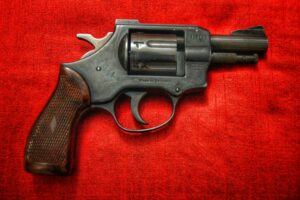
What Happens During a Traffic Stop When Police Say They “Police Find” a Firearm
In Henderson or Las Vegas, a traffic stop usually begins as a routine police contact, but it can escalate quickly if an officer believes there is a weapon in the car. The state’s story often starts with why the cops pulled the driver over, what the police officer observed, and what gave the officer a legal basis to expand the stop into a firearm-related investigation. That “why” matters because it affects whether the later search was lawful and whether the evidence can be suppressed.
If police find a gun after asking questions, shining a flashlight, or ordering people out of the vehicle, the next step often involves documenting the location—like the front passenger seat area, the back seat, a locked container, or the center console. That location can become the foundation for claims about access, sight, and control. Prosecutors routinely argue that if the gun found was within reach, then a person could possess it in a criminal sense.
Just as importantly, what you say during the stop can become admissions. Even casual statements like “I didn’t know it was there” can be spun into the idea that you had knowledge but are now trying to avoid responsibility. In certain circumstances, silence is legally safer than trying to explain, because explanations can create inconsistencies that a prosecutor later uses to argue guilt.
How “Probable Cause” and Searches Shape the Entire Firearms Case
Search law is often where firearm cases are won or lost. The Constitution requires a lawful basis for many searches, and whether the officer had probable cause (or another lawful reason) can determine if the gun is admissible in court. In Nevada, the way the police describe the odor of alcohol, alleged suspicious movements, or a report of violence can be used to justify expanding a stop—so the timeline matters.
A vehicle search may be defended by the state as consent-based, incident to arrest, based on probable cause, or related to officer safety. Each theory carries limits, and a defense attorney looks closely at whether the stop was prolonged, whether consent was truly voluntary, and whether the scope of the search matched what the officer claimed to be looking for. If the police overstepped, the defense can file motions to suppress the evidence, which can reduce or even end the case.
This is also why you should not “talk your way out of it.” Trying to negotiate roadside rarely works, and it can supply the prosecution with damaging details about who knew what, who had access, and whether anyone was “carrying” the firearm in an illegal manner. Protecting your legal position starts with understanding that everything said in a stop can be used later.
What Happens After Arrest: Booking, Bail, and Early Case Strategy
If the police officer decides there is enough to arrest someone for possession or illegal possession, the process moves quickly: handcuffs, transport, booking, and a first appearance. In Clark County, the early window after an arrest is where defense strategy matters most because it is when the state’s narrative is being written into reports, and witnesses’ memories are fresh.
At this stage, prosecutors will look at the evidence they have—statements, the gun found, the location (like the passenger seat or glove box), and any prior criminal history, such as a convicted felon status. Those facts influence bail, charging decisions, and whether the state tries to add other offenses. A skilled attorney can intervene early to prevent avoidable mistakes and to start gathering proof that supports your version of events.
Early defense work also includes identifying what the police did not do. Did they test for fingerprints? Did they document who had keys, who owned the vehicle, or whether the locked container belonged to someone else? If the state’s case is built on assumptions, a strong defense can attack those assumptions before they harden into courtroom “facts.”
Why Constructive Possession Is the Core Theory in Shared-Car Firearm Cases
Most shared-vehicle cases are not about someone being caught holding a gun. They are about the prosecution claiming constructive possession, meaning the state alleges a defendant knew the firearm and could exercise control over it. This concept matters because it allows prosecutors to bring possession charges even when multiple occupants could plausibly be responsible.
For the accused, constructive possession is dangerous because it can feel unfair: you may have been in the wrong car at the wrong time, or you may have been a passenger who never opened the center console. But in certain circumstances, prosecutors argue that proximity equals power and that access equals possession. That is why your defense must focus on the real-world details of who used the vehicle, who had the right to open compartments, and what you could actually see.
The prosecution’s goal is to simplify: “The gun found was near you, so you possessed it.” The defense goal is to complicate with truth: multiple people had access, the item was hidden, your role was limited, and the state cannot prove beyond a reasonable doubt that you exercised control.
Knowledge and Control: What Prosecutors Try to Prove in Clark County Court
In a Nevada firearm case, prosecutors often emphasize knowledge—what you allegedly knew about the weapon. They look for statements, behavior, or circumstances suggesting you were aware of the gun. That could include alleged “furtive movements,” inconsistent answers, or claims that the item was in plain view. The defense, by contrast, focuses on whether the gun was actually visible, whether it was concealed, and whether the state is relying on speculation.
Next comes control. The state may argue you could access the firearm quickly, especially if it was under the front passenger seat, inside the glove box, or within the center console. But “ability” is not the same as legal possession. A defense lawyer pushes back by showing that practical control may have belonged to someone else—like the driver, the owner of the vehicle, or the person who had the keys to a locked container.
This is where case facts become everything. A shared car used by family members, friends, or coworkers creates real doubt about who placed the item there and who truly “possessed” it. That doubt is not a technicality—it is the difference between a dismissal, a reduction, or a conviction.
Where the Gun Was Located Changes the Entire Legal Analysis
Location is not just a detail—it is the prosecution’s roadmap. A gun found on the back seat may support a different argument than a firearm found in the passenger seat area or under the front passenger seat. If the gun is buried under bags or tucked into a compartment, it becomes harder for the state to argue you had immediate sight and knowledge.
A firearm inside the glove box or center console raises another key issue: who had the right and ability to open it? If the compartment was locked or if the locked container belonged to someone else, that can undermine the state’s theory of control. In such a situation, the defense can argue that the state is trying to impose guilt by association rather than prove actual possession.
These details are also important because they impact charging decisions and plea leverage. Prosecutors often treat cases more aggressively when they believe the weapon was accessible to the driver or a passenger. The defense can counter by demonstrating limited access, lack of exclusivity, and missing forensic proof, like fingerprints or DNA.

The Most Common Firearm Charges When Police Find a Weapon in a Car
When police discover a weapon in a shared vehicle, the charges depend on who the state believes “possessed” it and whether the accused is prohibited from having firearms. In Clark County, the most severe allegations often arise when the state claims the accused is a convicted felon or otherwise a prohibited person under Nevada law. In those cases, prosecutors treat the situation as high-risk and push for harsh Nevada criminal penalties.
Even when a person is legally allowed to own firearms, prosecutors may still charge an offense related to how the firearm was carried, stored, or concealed. Questions about a permit, how quickly the gun was accessible, and whether the item was hidden in the center console or under a seat can shape what the state files.
Because the consequences can include jail, probation, and a long-term record, it is critical to understand that “nobody claimed it” does not end the investigation. In many cases, that is exactly when the state leans harder into constructive possession to pick a target.
Illegal Possession Allegations for Prohibited Persons and Convicted Felons
If prosecutors believe the accused is a prohibited person—commonly a convicted felon—the case can become a felony-level threat quickly. Nevada has statutes restricting firearm possession for certain individuals, including many people with felony convictions. One statute often implicated in these cases is NRS 202.360, which addresses prohibited possession in defined circumstances.
From a defense standpoint, two battles often emerge at once: whether the accused is legally prohibited, and whether the state can prove possession at all. Even if a person has a disqualifying history, the state still must show that the person knowingly exercised control over the gun. That means your attorney may challenge both the prior-status theory and the constructive possession theory—because either failure can change the outcome.
This is also where people get trapped by assumptions. Being near a gun in a shared car is not the same as possessing firearms under the law. But prosecutors may still attempt to prosecute, and that is why early defense work—before statements and reports multiply—matters so much.
Concealed Carry, Permit Issues, and “Carrying” Allegations in Nevada
Not every firearm case involves prohibited possession. Some involve allegations about how the gun was carried, concealed, or accessible inside the vehicle. Nevada’s concealed carry rules and permitting requirements can become relevant when prosecutors argue that the firearm was hidden in a way that violates the law or that the person lacked the proper permit.
The details matter: was the gun in a holster, in a bag, in the glove box, or under the passenger seat? Did the police officer claim it was concealed and immediately accessible? In certain circumstances, what looks like storage to a driver can be treated as “carrying” by the state. A defense lawyer will look at how the firearm was positioned and whether the legal definition is actually met.
Even when the firearm is lawfully owned, you can still face an arrest if officers believe there was a violation. The defense strategy may involve showing lawful possession, lawful transport, and a lack of intent to conceal unlawfully, while also challenging the stop and search itself.
Other Offenses That Can Be Added When a Gun Is Found
A firearm discovery can trigger prosecutors to look for other offenses beyond the weapon itself. If police find drugs, ammunition, or signs of intoxication, the state may add charges based on the broader context of the stop. Allegations tied to alcohol, prior disputes, or a fight can be used to paint the accused as dangerous, even when the core issue is possession.
Sometimes the state also pursues charges if it believes the gun was stolen, used in a threatening manner, or connected to an earlier incident involving violence. In those cases, the firearm becomes a central piece of evidence that prosecutors use to pressure a plea. The defense response is to separate speculation from proof and force the state to connect the dots with admissible facts.
For the accused, the practical risk is that one discovery can multiply into a larger case. That is why the legal strategy must address not only possession, but also how the case narrative is being expanded—and how to contain that expansion early.

FAQ
Can I be arrested if a gun is found in the glove box, but the car isn’t mine?
Yes, it can happen, especially if the police officer believes you had access to and knowledge of the firearm in the glove box. Prosecutors may rely on constructive possession to argue you could exercise control over the weapon, even without proven ownership.
That said, being in a shared vehicle does not automatically mean you legally possessed the gun. A defense attorney can challenge whether the state can actually prove knowledge and control beyond a reasonable doubt, and whether the stop or search was lawful.
What if I were sitting in the front passenger seat and the police found a gun under the passenger seat?
Sitting in the front passenger seat often makes you a target because prosecutors may claim the firearm was within reach and therefore under your control. They may argue the location supports possession, especially if the gun was easy to access or visible during the stop.
However, proximity is not the same as legal possession. The defense can focus on whether you had actual knowledge, whether other occupants had access earlier, whether the gun was hidden, and whether the state has real evidence—like fingerprints—tying you to the weapon.
Can the police search the center console during a traffic stop in Las Vegas?
Sometimes, but it depends on the legal basis for the search. The state may claim consent, officer safety, or probable cause to search the center console. Whether that justification holds up depends on what happened during the stop and what the officer can lawfully do under the circumstances.
If the search went beyond what the law allows, a defense lawyer can file motions to suppress the evidence. Suppression can significantly weaken the prosecution’s case because it challenges whether the gun can be used in court at all.
Conclusion
When firearms are discovered in shared vehicles and criminal liability becomes the issue, the state often tries to simplify the story: a gun found near you equals possession, and possession equals guilt. But Nevada cases—especially in Las Vegas, Henderson, and across Clark County—are rarely that simple. The legal questions of constructive possession, probable cause, lawful search, and real-world access can make the difference between a conviction and a successful defense outcome.
If you are dealing with allegations of illegal possession, claims that you were possessing firearms, or accusations tied to a convicted felon status, the consequences can include jail, probation, and long-term damage to your record and opportunities. Still, legal defenses exist—especially when the state lacks forensic proof, relies on assumptions, or cannot clearly establish knowledge and control beyond a reasonable doubt.
If police find a firearm in a shared vehicle, time matters. Contact The Defense Firm today for a free consultation with an experienced Nevada criminal defense attorney who can challenge the evidence, protect your rights, and fight for the best possible outcome in your case.