 English
 Spanish
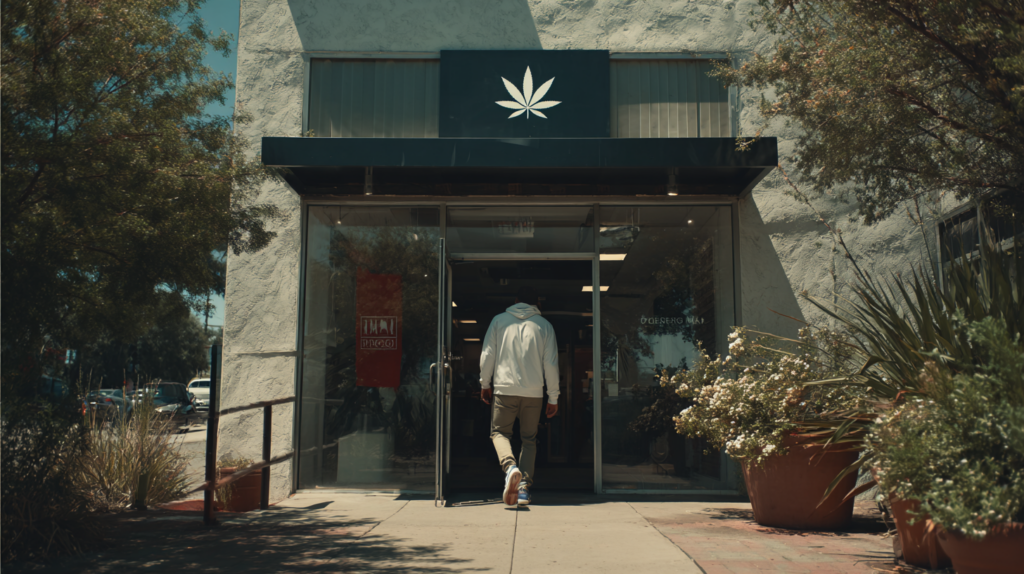
Nevada legalized recreational marijuana for adults in 2017, and since then, the state has built one of the most regulated and commercially active cannabis markets in the country. For most Nevada residents and visitors, this means that buying, possessing, and consuming marijuana is now a legal activity, but only up to a point, in specific places, and under specific conditions. What the legalization framework did not do was make cannabis consequences-free. Dozens of specific marijuana-related acts remain criminal in Nevada, carrying everything from misdemeanor fines to serious felony drug charges that can result in real prison time. And thousands of people in Las Vegas are arrested every year for marijuana charges they did not realize were still illegal under the new legal framework.
Understanding exactly where the legal lines are drawn is the foundation of protecting yourself from an unexpected cannabis arrest in Nevada. The legal status of recreational marijuana in Nevada is not a blanket permission to possess or consume cannabis without restriction; it is a tightly defined set of permissions that leave substantial areas of marijuana activity subject to criminal charges. A marijuana arrest that results from activity the defendant believed was legal is an arrest that deserves aggressive challenge, because the legalization framework creates real ambiguities that a skilled criminal defense attorney can exploit. And an arrest for activity that clearly violates the remaining prohibitions deserves the same thorough defense strategy as any other drug charge in Nevada, because the consequences of a marijuana conviction, even under the current legal framework, are real and lasting.
What Recreational Marijuana Legalization Actually Permits in Nevada
Nevada’s recreational marijuana legalization, governed primarily by NRS Chapter 678B, permits adults aged 21 and older to possess up to one ounce (28.35 grams) of cannabis flower or up to 3.5 grams of cannabis concentrate. Adults may also grow up to six marijuana plants per person, with a household maximum of 12 plants, at a private residence, provided the plants are kept in an enclosed, locked space that is not visible from a public place. Cannabis may be purchased from licensed marijuana dispensaries throughout Nevada, and both residents and visitors may legally purchase and possess within the permitted limits.
What the legalization does not permit is equally important for anyone who wants to stay on the right side of Nevada law. Marijuana cannot be consumed in a moving vehicle, whether by the driver or any passenger. It cannot be consumed in any public place, including parks, sidewalks, parking lots, casinos, restaurants, and bars that have not been specifically licensed for cannabis consumption. It cannot be transported across state lines, including into states where marijuana remains illegal, which creates exposure for anyone driving from Nevada to California, Arizona, or Utah with cannabis in their vehicle. It cannot be possessed or used by anyone under 21. And selling marijuana outside the licensed dispensary system, even between adults and even in small quantities, remains a criminal offense under Nevada drug distribution law.
The Public Consumption Prohibition and Its Enforcement in Las Vegas
Public consumption of marijuana is one of the most commonly enforced cannabis prohibitions in Las Vegas, and it catches tourists and locals alike. Under NRS 678B.530, consuming cannabis in any public place is a misdemeanor, with a fine of up to $600 for a first offense. The Las Vegas Strip and Fremont Street Experience are public places under this statute, which surprises many visitors who assume that the same cultural permissiveness that allows open containers of alcohol on the Strip extends to cannabis. It does not. Sidewalks, hotel common areas, rideshare pickup zones, and the outdoor spaces of restaurants and bars are all public places where marijuana consumption is prohibited, regardless of whether the consumer is a licensed adult in possession of a legal quantity.
Enforcement of the public consumption prohibition by Las Vegas Metropolitan Police is active, particularly in high-traffic tourist areas where the concentration of first-time cannabis consumers is highest. Most first-offense public consumption citations result in a fine rather than arrest, but the fine is still a criminal charge, not a civil infraction, and it creates a criminal record entry that appears on background checks if not addressed properly. Repeated public consumption violations carry escalating consequences, and consuming cannabis in a vehicle, even a parked one, can lead to additional charges related to marijuana DUI if the officer believes the consumption was recent enough to affect driving ability.
The Cannabis Acts That Remain Felony Drug Charges in Nevada
While minor marijuana offenses under the current framework are generally misdemeanors, a significant range of cannabis-related conduct remains a felony under Nevada law, and the consequences are every bit as serious as for other felony drug charges. Understanding these boundaries is critical for anyone who operates in, around, or within the cannabis market in Nevada.
Marijuana distribution outside the licensed dispensary system, meaning selling, delivering, or transferring cannabis to another person without a state license, is charged under NRS 453.3385 as possession with intent to distribute, a category B felony carrying one to six years in prison, even if both the seller and the buyer are adults and the quantity involved is small. The legalization framework did not create a gray market for unlicensed sales; it specifically preserved all criminal penalties for distribution activity that occurs outside the state-regulated and state-taxed dispensary system. Defendants who believed they were operating in a legal gray zone by selling cannabis between friends or associates face the same serious felony consequences as defendants in any other distribution case.

Marijuana Trafficking and Large-Quantity Possession
Marijuana trafficking under NRS 453.3385 is triggered by possession of quantities substantially in excess of the legal personal possession limit. Possession of more than one ounce of cannabis is marijuana trafficking if the quantity exceeds the threshold that triggers a trafficking inference, such as 50 pounds or more for a trafficking charge, though the intent to distribute inference can arise at much lower quantities based on other circumstantial evidence. Cannabis concentrate presents a different quantity analysis because of its higher potency and compact form, and quantities of concentrate that appear modest in volume may be sufficient to support distribution or trafficking charges based on their equivalent potency.
For defendants whose marijuana possession falls into the ambiguous zone between clear personal use and clear distribution, meaning quantities above one ounce but substantially below trafficking thresholds combined with some but not all of the standard distribution indicators, the same analysis that applies to other drug charges cases applies here: the prosecution must prove intent through circumstantial evidence, and an experienced drug defense attorney challenges each piece of that evidence with the alternative interpretation that supports personal use.
Marijuana DUI: Impaired Driving and Cannabis in Nevada
Marijuana DUI is one of the most legally complex and aggressively prosecuted aspects of cannabis law in Nevada, and it is one that many people who use marijuana legally do not adequately understand. Under NRS 484C.110, it is illegal to drive in Nevada while impaired by any substance, including cannabis, regardless of whether that cannabis was legally purchased and legally possessed. A driver who consumed marijuana at home before getting behind the wheel can be charged with DUI of drugs even if they never exceeded the legal possession limit and even if they believed they were not impaired at the time of driving.
The evidentiary challenge in marijuana DUI cases is significant and creates both prosecution and defense complications. Unlike alcohol, for which blood alcohol content (BAC) provides a relatively reliable measure of current impairment, THC, the active compound in cannabis, metabolizes and persists in the bloodstream in ways that do not correlate well with current impairment level. A person who consumed cannabis days earlier may have detectable THC blood levels that technically exceed the per se impairment threshold in Nevada (2 nanograms per milliliter of blood for THC) without being meaningfully impaired at the time of the stop. Nevada courts have grappled with this scientific reality, and it creates a genuine defense opportunity in marijuana DUI cases that is not available in alcohol DUI cases.
The Per Se Threshold and Its Scientific Limitations
Nevada law establishes a per se impairment threshold for marijuana DUI of 2 ng/mL of THC in blood, but this threshold has been criticized by scientists and defense attorneys alike as not accurately reflecting actual impairment in the way that the BAC 0.08% threshold does for alcohol. The scientific literature is clear that THC blood levels are a poor predictor of current functional impairment, and that regular cannabis consumers often have blood THC levels that exceed the per se threshold when they are not impaired in any functional sense. This disconnect between the legal threshold and actual impairment is the foundation of the marijuana DUI defense, and it is a defense that, unlike alcohol DUI defenses, where a high BAC creates an uphill battle, can succeed even when the blood test result exceeds the per se threshold.
The Defense Strategy for Marijuana Charges in Nevada
A marijuana defense in Nevada is built around the same fundamental principles as any drug charge defense, adapted to the specific legal landscape created by the legalization framework. For possession charges, the primary questions are whether the quantity exceeded the legal limit, whether the circumstances of discovery were lawful under the Fourth Amendment, and whether the possession occurred in a context that triggers a criminal charge versus a civil infraction. For public consumption citations, the defense may challenge whether the location actually constituted a public place under the statute, whether the officer’s observation was accurate, and whether the citation was properly issued.
For marijuana DUI charges, the defense challenges both the basis for the traffic stop and the reliability of the THC blood test evidence. A thorough plea negotiation strategy accounts for the scientific uncertainty around THC blood levels and impairment, presenting the jury or the prosecutor with a genuine factual dispute that the prosecution cannot resolve simply by pointing to a number above the per se threshold. Expert toxicology testimony about the relationship between THC blood levels and actual cognitive impairment is frequently essential in marijuana DUI cases, and an attorney who retains the right expert changes the dynamics of what the prosecution can prove.

FAQ
How much marijuana can I legally possess in Nevada?
Adults 21 and older may legally possess up to one ounce (28.35 grams) of cannabis flower or up to 3.5 grams of concentrate under Nevada’s recreational law. Possession above these limits is a criminal offense ranging from a misdemeanor to a serious felony drug charge, depending on quantity, regardless of the possessor’s intent.
Can I be arrested for marijuana even though it’s legal in Nevada?
Yes, Legalization is a tightly bound set of permissions; public consumption, excess possession, unlicensed distribution, marijuana DUI, and any activity involving persons under 21 remain criminal offenses under Nevada law. Federal law also still classifies marijuana as a Schedule I substance, creating additional exposure on federal property regardless of state legalization.
What is the defense against a marijuana DUI charge in Nevada?
The primary defense targets the disconnect between a THC blood level and actual impairment at the time of driving; Nevada’s 2 ng/mL per se threshold does not correlate with functional impairment the way alcohol’s 0.08% BAC does, a point supported by scientific literature and expert toxicology testimony. Combined with a challenge to the traffic stop and scrutiny of the officer’s impairment observations, this defense gives defendants a realistic path to a favorable outcome.
Conclusion
Nevada’s marijuana legalization is one of the most progressive cannabis frameworks in the United States, but it is not a guarantee against arrest or prosecution for activity outside its specific boundaries. The thousands of people arrested annually for marijuana charges in Las Vegas after 2017 are a reminder that the legal landscape requires understanding and careful navigation, not the casual assumption that everything involving cannabis is now consequence-free. If you have been arrested for a marijuana charge in Nevada, whether for public consumption, possession over the limit, marijuana DUI, or any distribution-related offense, the legal protections available to you are real and worth pursuing.
Contact The Defense Firm for a free consultation with attorney K. Ryan Helmick. Cannabis charges in Las Vegas are defended aggressively by attorneys who understand both the legal marijuana framework and the criminal defense strategies that work within it. Call today.