 English
 Spanish
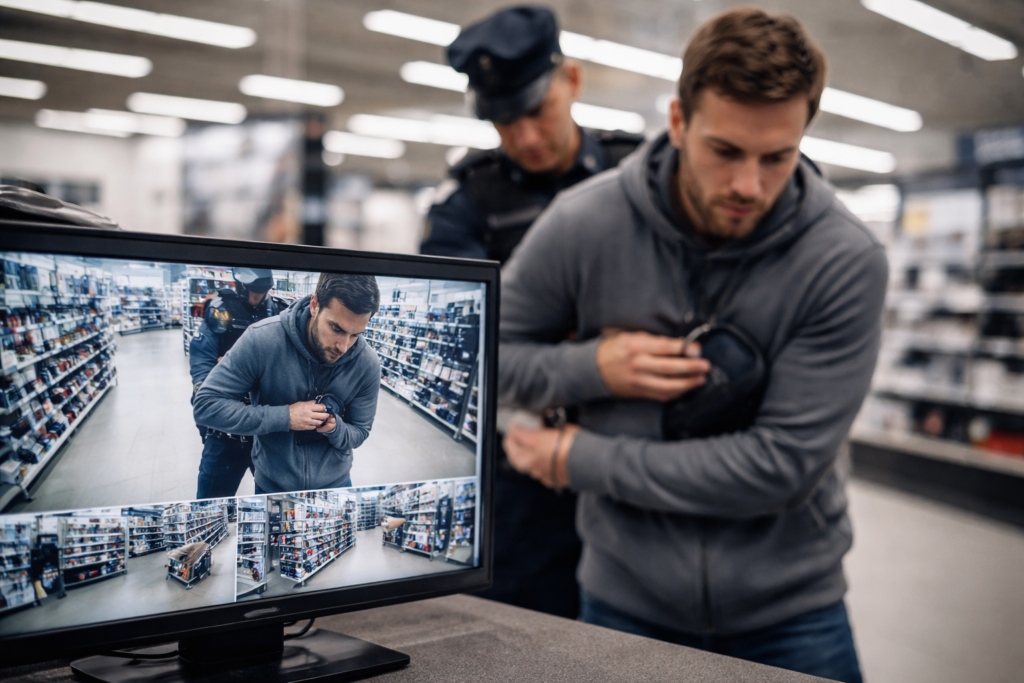
In today’s world, video surveillance is everywhere. From retail stores and casinos to apartment complexes and office buildings across Las Vegas and Clark County, cameras are constantly recording daily activity. When a theft accusation arises, employers and prosecutors often rely heavily on surveillance footage as the centerpiece of their case. This leads many accused individuals to ask a critical question: Can surveillance footage alone convict you of theft under Nevada law?
The short answer is no—video footage by itself is rarely enough to secure a theft conviction. Nevada criminal courts require proof of every legal element of theft beyond a reasonable doubt, and video evidence often leaves key questions unanswered. Understanding how courts evaluate video evidence, and where its limitations lie, is essential if you are facing criminal charges. This article is intended for individuals in Nevada who are facing theft accusations, as well as their families and anyone interested in how surveillance footage is used in criminal cases.
This article explains how surveillance footage is used in Nevada theft cases, what prosecutors must still prove, and how a criminal defense attorney can challenge video-based accusations before they result in jail time or a permanent record.
How Surveillance Footage Is Used in Nevada Theft Investigations
Surveillance footage typically enters a theft case early in the legal process. Law enforcement may obtain security camera footage from a business, employer, or third party to identify a suspect or support probable cause for an arrest. In many Las Vegas cases, this footage becomes the foundation of the prosecution’s case.
However, video surveillance is considered circumstantial evidence, not direct proof of guilt. Circumstantial evidence is proof that requires inference to connect it to a conclusion of fact, such as a video that suggests, but does not directly prove, that theft occurred. While it may show a person’s presence near property or depict certain suspects’ actions, it does not automatically establish criminal intent or confirm that a crime actually occurred. Prosecutors must still connect the footage to other relevant evidence.
From a defense perspective, early review of video footage is critical. A defense attorney evaluates whether the footage was lawfully obtained, whether it has been altered, and whether it actually supports the conclusions law enforcement claims it does.
What Prosecutors Must Prove in a Nevada Theft Case
To obtain a theft conviction in Nevada, the prosecution must prove several elements beyond simply showing a video. These elements include that a crime occurred, that the accused is the person shown, and that the accused acted with the intent to permanently deprive the owner of property.
Surveillance video rarely proves intent on its own. A person picking up an item, placing it in a bag, or walking past a register may look suspicious, but those actions are not automatically criminal. Context matters, and Nevada courts require proof that the conduct was intentional and unlawful.
This is where reasonable doubt often arises. Courts typically look for additional proof to build a complete narrative, such as witness testimony, physical evidence, or digital records, to meet the standard of proof beyond a reasonable doubt. Without supporting physical evidence, credible eyewitness testimonies, or clear admissions, video footage alone leaves room for alternative explanations. That uncertainty is legally significant in a criminal case.
The Limitations of Video Surveillance as Evidence
Poor Quality and Incomplete Footage
Many security cameras capture grainy, low-resolution footage or lack proper angles. Shadows, obstructions, and camera placement can distort what actually happened. In busy Las Vegas environments, footage may show movement but not clearly identify stolen items or facial features.
Incomplete footage also creates problems. Cameras may not show what happened before or after the alleged act, leaving gaps in the story. These gaps undermine claims that the video tells the full truth of the incident.
A criminal defense attorney uses these limitations to argue that the footage does not meet the standard of sufficient evidence required for a conviction.
Context and Interpretation Issues
Video evidence does not explain why someone acted a certain way. Actions that appear suspicious on camera may have innocent explanations, such as confusion, mistake, or authorized access to property.
Prosecutors often rely on assumptions when interpreting surveillance footage. Defense counsel challenges those assumptions by highlighting alternative interpretations and emphasizing that proving guilt requires more than speculation.
Mistaken Identity and Video-Based Accusations
Why Video Footage Often Leads to Misidentification
One of the most common defense issues in video-based theft cases is mistaken identity. Cameras may capture clothing, height, or general appearance, but not definitive identification of the accused.
In crowded areas or workplaces with uniforms, video surveillance may show multiple individuals who look similar. Without corroborating evidence, prosecutors may incorrectly link the footage to the wrong person.
Mistaken identity creates powerful reasonable doubt, especially when no fingerprints, DNA, or possession of stolen property connects the accused to the alleged theft.
Identity Theft and Third-Party Access
In some cases, footage shows activity tied to an account, badge, or register, but not the actual person responsible. Shared credentials, stolen access cards, or compromised systems can result in identity theft scenarios.
A defense attorney investigates who had access to the area or system at the time of the incident, weakening the prosecution’s narrative and shifting focus away from the accused.
Surveillance Footage Versus Physical and Eyewitness Evidence
Nevada courts weigh video evidence alongside other forms of proof. Physical evidence, such as recovered property or transaction records, often carries more weight than video alone. Likewise, credible eyewitness testimonies can strengthen or weaken the prosecution’s claims.
When a theft case relies solely on camera footage, prosecutors face an uphill battle. Without physical recovery of items or consistent witness accounts, the case often lacks the depth required for conviction.
This imbalance is a key focus of strategic defense planning, especially in early negotiations with prosecutors.
How Defense Attorneys Challenge Surveillance Footage
Questioning How the Footage Was Obtained
Defense counsel examines whether police followed proper procedures when collecting video evidence. Issues such as a lack of a warrant, improper chain of custody, or unauthorized access can render footage inadmissible in court.
If the footage was obtained unlawfully, a judge may exclude it entirely, significantly weakening the prosecution’s case.
Challenging Authenticity and Accuracy
Video files can be edited, compressed, or selectively clipped. A defense attorney may challenge whether the footage accurately represents the events or whether key portions are missing.
Highlighting inconsistencies in timestamps, angles, or continuity can raise doubts about reliability and credibility.

Can Surveillance Footage Support an Arrest but Not a Conviction?
In many Nevada cases, surveillance footage is enough to justify an arrest but not enough to sustain a conviction at trial. Police may rely on video to identify a suspect, but identification alone does not equal proof.
Once formal criminal charges are filed, the standard increases dramatically. The state must present enough evidence to convince a jury beyond a reasonable doubt—not just show suspicious behavior on camera.
Understanding this distinction is crucial for anyone arrested based primarily on video evidence.
The Role of Early Legal Counsel in Video-Based Theft Cases
Early involvement of a criminal defense attorney allows immediate review of footage before narratives solidify. Attorneys can request preservation of original files, identify weaknesses, and prevent misinterpretation from shaping the case.
Waiting too long can limit options. Once prosecutors frame the footage as definitive proof, correcting that perception becomes more difficult. Early action protects legal rights and expands available defense strategies.
If you believe video evidence is being used unfairly against you, speaking with an attorney immediately can make a decisive difference.
FAQ
Can surveillance footage alone convict me of theft in Nevada?
Generally, no. Surveillance footage by itself is rarely enough to support a theft conviction. Prosecutors must still prove intent, identity, and that a crime occurred beyond a reasonable doubt. Video evidence is usually considered circumstantial and must be supported by additional proof to meet legal standards.
Is video footage enough evidence to arrest someone for theft?
Yes, video footage may be sufficient for an arrest if police believe it establishes probable cause. However, the standard for arrest is much lower than the standard for conviction in court. An arrest does not mean the evidence is strong enough to secure a guilty verdict.
What if the video footage is unclear or grainy?
Poor-quality footage can significantly weaken the prosecution’s case. Unclear images raise reasonable doubt, especially regarding mistaken identity or alleged actions. A criminal defense attorney can highlight these flaws and argue that the footage does not reliably show criminal conduct.
Can video footage be thrown out in court?
Yes. If surveillance footage was obtained unlawfully, altered, or lacks proper authentication, it may be excluded by a judge. Excluding video evidence often dramatically changes the outcome of a theft case.
Should I speak to the police if they show me surveillance footage?
It is generally risky to speak with the police without legal counsel. Statements made during questioning can be used to strengthen the prosecution’s case. Consulting a criminal defense attorney before answering questions protects your rights and your future.
Conclusion
While surveillance footage can be compelling, it rarely tells the full story. Nevada law requires proof of every element of theft beyond a reasonable doubt, and video alone often falls short of that standard. Issues like mistaken identity, lack of intent, poor quality footage, and missing context frequently undermine these cases.
Legal options exist, even when video evidence appears damaging. The earlier a defense attorney becomes involved, the more effectively the evidence can be challenged and reframed.
If you are facing a theft accusation in Las Vegas or Clark County based on surveillance footage, do not assume the case is already decided. Contact The Defense Firm to schedule a confidential consultation with a Nevada criminal defense attorney who can evaluate the footage, explain your options, and begin building a defense strategy tailored to your situation.