 English
 Spanish

A motion to suppress evidence in Las Vegas is not one motion governed by one universal deadline. Nevada uses a layered system, and the type of evidence being challenged can determine the legal basis, timing requirements, appeal rights, and what a successful motion actually accomplishes.
A calibration record, body-camera footage, lineup procedure, or warrant involving phone location data can raise different issues. That is why a suppression challenge often begins with discovery and the underlying records before it becomes a courtroom argument.
The five statutory grounds for a Nevada suppression motion
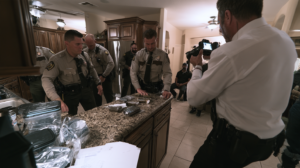
Nevada’s primary suppression statute, NRS 179.085, identifies several grounds for challenging an unlawful search or seizure.
A person may seek relief when:
- Property was illegally seized without a warrant.
- The warrant was insufficient on its face.
- There was no probable cause supporting the warrant.
- The warrant was illegally executed.
- Continued retention of the property by law enforcement is unreasonable under the circumstances.
The distinction between those grounds matters.
When relief is granted because property was illegally seized, the warrant was defective, probable cause was lacking, or the warrant was unlawfully executed, the statute provides that the property must be returned and generally may not be admitted as evidence at a hearing or trial.
The fifth ground works differently.
If the problem is only that law enforcement’s continued retention of the property is unreasonable, the court can order the property returned without necessarily excluding evidence derived from it.
That means winning a motion under one ground does not always produce the same result as winning under another.
Who can file the motion and where it is heard
NRS 179.085 is not limited on its face to someone already charged with a crime.
It refers more broadly to a person aggrieved by an unlawful search and seizure or deprivation of property.
The appropriate court can depend on the type of relief requested and whether criminal proceedings are already pending.
A motion seeking the return of property generally goes to the court with jurisdiction where the property was seized.
A suppression motion involving the traditional search-and-seizure grounds may also be filed in the court where the criminal trial will occur.
If there is no pending criminal proceeding, the request for return of property can operate differently and may be treated as a civil request for equitable relief.
Suppression deadlines depend on the court and the motion
Nevada uses several overlapping timing rules for suppression motions. For most pretrial motions, including suppression motions, NRS 174.125 provides the general framework. In a judicial district with two or more judges, a written motion generally must be filed at least 15 days before trial. Because Clark County is part of the Eighth Judicial District, that is the rule ordinarily relevant in a Las Vegas criminal case. If fewer than 15 days separate the defendant’s plea from the trial date, the statute provides a shorter filing period, and courts may allow a later motion for good cause when the basis for the delay is properly established.
A separate rule in NRS 179.085 generally requires traditional suppression motions to be made before trial or hearing unless the defendant did not previously have an opportunity to file the motion or was unaware of the grounds. That exception matters because a constitutional issue may not become clear until discovery reveals it. Additional procedural deadlines can also apply to supporting affidavits or declarations. The key point is that there is no single suppression deadline that applies identically to every Nevada case.
Discovery can reveal the grounds for suppression
The timing exceptions in Nevada law are important because many suppression arguments depend on information that only appears after the defense receives discovery.
A defendant may not know that a calibration record is missing, body-camera footage was not preserved, or a lineup procedure deviated from agency policy until the defense obtains the underlying records.
That is why evidence challenges should not begin with assumptions.
They begin with identifying what records should exist, requesting them, and comparing what actually happened with the warrant, statute, regulation, or agency procedure that governed the investigation.
Winning a suppression motion does not necessarily end the case
A successful suppression motion can substantially affect a prosecution, but it does not automatically end the entire criminal case.
Nevada gives the State certain rights to appeal suppression rulings.
The specific appeal procedure depends on whether the ruling came from a district court or justice court.
A district court suppression order can be subject to an expedited state appeal under Nevada law.
Justice court rulings have a separate appeal route to district court and their own deadlines.
As a result, a favorable suppression order may be a major defense victory without necessarily being the final procedural step.
Whether the prosecution can continue without the excluded evidence depends on the remaining evidence and the nature of the charges.
A denied suppression motion may still be preserved for appeal
Losing a suppression motion at the trial-court level does not necessarily mean the legal issue disappears.
Under certain circumstances, Nevada allows a defendant to enter a conditional plea while preserving the right to seek appellate review of a specified pretrial ruling.
That procedure requires consent from both the court and the prosecutor, and the issue being preserved must be identified in writing.
If the defendant later prevails on appeal, the plea can be withdrawn.
Whether a conditional plea is appropriate depends on the strategy and circumstances of the individual case, but it is one reason a denied motion is not always the final word on a suppression issue.
Minor paperwork mistakes do not automatically suppress evidence
Not every error in a search warrant or criminal procedure leads to suppression.
Nevada law expressly distinguishes meaningful constitutional or procedural failures from technical irregularities that do not affect a defendant’s substantial rights.
NRS 179.105 provides that warrant-based evidence should not be suppressed merely because of technical defects that do not affect substantial rights.
NRS 178.598 applies a similar principle more broadly, directing courts to disregard errors or irregularities that do not affect substantial rights.
The practical question is therefore not simply whether police made a mistake.
The defense must examine what the error was, what right it affected, and whether it undermined the legality or reliability of the evidence.

Lineup procedures can create evidence worth challenging
Nevada law requires law-enforcement agencies to maintain procedures governing live lineups, photo lineups, and show-ups.
However, the statute does not create one detailed statewide procedure controlling every lineup.
Individual agencies may have their own written policies, which means the defense often needs to obtain the specific department’s procedures through discovery.
If officers failed to follow an agency policy, that fact may be important, but the failure does not automatically mean a witness identification will be excluded.
Instead, the defense must examine how the lineup was conducted, whether the procedure was suggestive or unreliable, and whether the circumstances affected the defendant’s legal rights.
Body-camera violations do not automatically exclude testimony
Nevada also requires law-enforcement agencies to adopt policies governing the use of body-worn cameras.
Those policies generally address when cameras should be activated and deactivated, subject to statutory exceptions.
Nevada law also establishes a minimum retention requirement that agency policies must incorporate and provides for disciplinary consequences when officers fail to operate equipment properly, manipulate recordings, or improperly erase footage.
But the statute does not automatically exclude an officer’s testimony simply because footage was not preserved or because a body-camera policy was violated.
A missing video instead becomes part of the evidentiary analysis.
The defense may investigate why the recording is missing, what the policy required, whether the loss was accidental or intentional, and how the absence affects the reliability of the prosecution’s version of events.
Breath-test calibration records can matter in a DUI case
Nevada’s breath-testing regulations provide more detailed technical requirements.
An evidential breath-testing device generally must be calibrated within the required period before it is used, and agencies must maintain records showing testing, operation, calibration, and repair information.
A roadside preliminary breath device follows a different calibration and accuracy-check schedule.
That distinction matters because confusing the two types of devices can lead to the wrong legal argument.
The defense can examine the device involved, the applicable calibration schedule, and the records showing whether the machine complied with the required standards.
A missing calibration record does not automatically exclude a breath result, but it can create an issue that requires closer examination of the reliability and foundation for the evidence.
Missing records can become part of the defense strategy
Lineup procedures, body-camera records, and breath-test calibration logs have one important feature in common.
Nevada law may require agencies to maintain policies or records without automatically prescribing suppression as the remedy for every violation.
That means the absence of a document is usually the beginning of the analysis rather than the end.
A defense lawyer can determine what should have existed, whether it was produced, why it may be missing, and whether the problem supports suppression, impeachment, another evidentiary challenge, or a broader defense strategy.
That is also why discovery deadlines and suppression deadlines are closely connected.
A defendant cannot reasonably challenge a problem that has not yet been disclosed.
Some evidence has its own statutory timeline
Nevada law also establishes specific deadlines for certain evidence outside the traditional search-warrant context.
For example, sexual assault forensic evidence kits are governed by statutory submission and testing deadlines.
Those rules apply specifically to that type of evidence and should not be treated as general laboratory deadlines for every drug, toxicology, or forensic test.
As with other evidence rules, a missed deadline does not automatically create a suppression remedy unless the governing law or constitutional analysis supports that result.
The defense must examine the specific rule applicable to the evidence in the case.
Frequently Asked Questions
Does winning a motion to suppress automatically dismiss my Nevada criminal case?
No. Suppression can remove important evidence from the prosecution’s case, but it does not automatically dismiss the charges. The State may also have a right to appeal certain suppression orders. Whether the case can continue depends on what evidence remains and how important the excluded evidence was to proving the charges.
Can a small mistake in a search warrant get the evidence thrown out?
Not necessarily. Nevada law generally does not suppress warrant-based evidence solely because of minor technical irregularities that do not affect the defendant’s substantial rights. The stronger suppression issues involve problems such as lack of probable cause, an invalid warrant, unlawful execution, or another violation affecting a constitutional or substantial legal right.
What happens if my motion to suppress is denied?
A denial does not always end the issue. Depending on the case, a defendant may continue toward trial or may be able to preserve a specific suppression issue for appellate review through a conditional plea, if the court and prosecutor agree. The appropriate strategy should be discussed with defense counsel based on the charges, evidence, and importance of the disputed ruling.
Conclusion
A successful motion to suppress evidence in Las Vegas is rarely based on simply identifying a paperwork mistake. It requires determining exactly how the evidence was obtained, which legal rule governed that process, what records should exist, and whether the violation affected a constitutional or substantial right.
The warrant, supporting affidavit, body-camera file, calibration records, lineup procedures, digital evidence, and other discovery can each reveal a different defense issue.
If you or someone in your family is facing criminal charges and there are questions about an illegal search, an invalid warrant, missing evidence, or another problem with the prosecution’s case, contact The Defense Firm for a free confidential consultation. A Las Vegas defense lawyer can review the evidence and determine whether a motion to suppress or another evidentiary challenge may be available.