 English
 Spanish
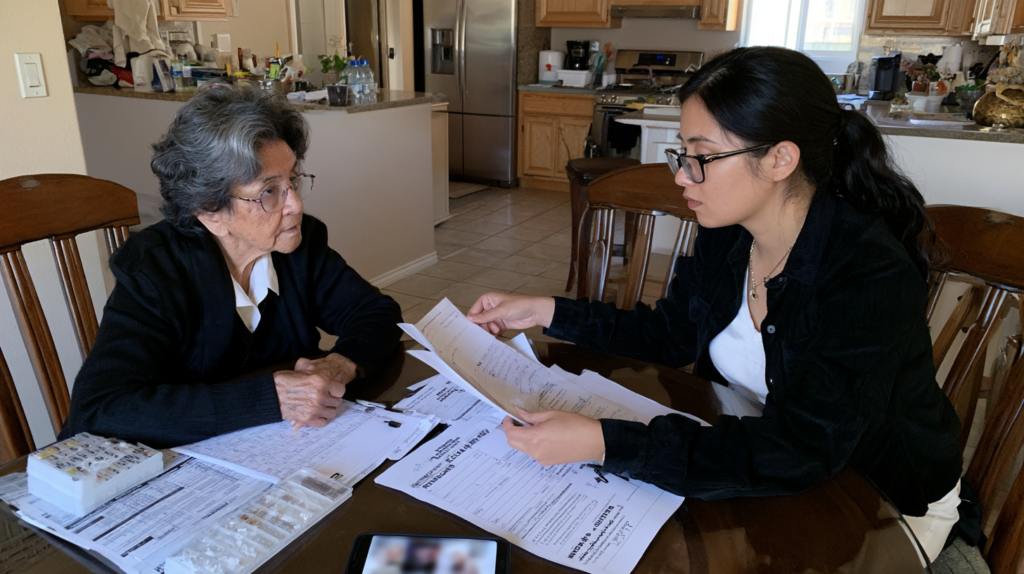
An elder abuse case can begin as a disagreement inside a family. One sibling may have moved in to care for a parent while another lives out of state, and a dispute about money, medical care, or daily decisions can suddenly turn into a police investigation.
Nevada treats these accusations seriously. Elder abuse charges in Las Vegas can range from a gross misdemeanor to a category B felony carrying up to 20 years in prison, depending on the conduct, harm involved, prior history, and whether the allegation concerns abuse, neglect, exploitation, isolation, or abandonment.
Nevada elder abuse law covers multiple offenses with different penalties
Nevada addresses elder abuse primarily through NRS 200.5099, with key definitions in NRS 200.5092. The law protects an older person, meaning someone age 60 or older, as well as a vulnerable person whose condition limits normal activities of daily living or creates certain forms of incapacity. Covered conduct includes abuse, neglect, exploitation, isolation, and abandonment, including willfully causing pain, depriving someone of necessary care, or inflicting psychological or emotional anguish through threats, control, isolation, or harm to property or pets.
The penalties depend on the conduct and resulting harm. A first offense involving abuse, neglect, isolation, or abandonment may be treated as either a gross misdemeanor or a category C felony, with up to 364 days in county jail and a $2,000 fine at the gross-misdemeanor level or 1 to 5 years in prison for a category C felony. A second abuse or neglect offense can become a category B felony carrying 2 to 6 years, while a case involving substantial bodily harm, substantial mental harm, or death can carry 2 to 20 years in prison, even on a first offense. Our guide to Nevada felony categories A through E explains how those classifications differ.

Elder neglect charges often depend on whether the caregiver had a legal duty
An elder neglect charge frequently involves a family member who had been providing day-to-day care. A fall, pressure sore, missed medication, or deteriorating health can look like neglect even when the caregiver has been trying to manage difficult circumstances.
Under Nevada law, neglect generally applies only to someone who has assumed responsibility to care for the older or vulnerable person, whether legally, voluntarily, or through a contract.
The law focuses on the failure to provide necessary food, shelter, clothing, medical care, or other services needed for the person’s physical or mental health.
That first question, whether the defendant actually had the duty to provide that care, can be one of the most important issues in the defense.
The State must connect the caregiver’s conduct to pain or suffering
Nevada law also requires prosecutors to connect the caregiver’s conduct to the alleged harm or risk of harm.
A caregiver may face liability for causing physical pain or mental suffering, permitting or allowing unjustifiable suffering, or placing the person in a situation where they may suffer because of abuse or neglect.
The terms allow and permit matter. Allowing can involve failing to act despite knowing or having reason to know what was happening, while permitting focuses on allowing conduct that a reasonable person would not approve.
Medication logs, text messages asking relatives for help, medical calls, home-health records, and evidence that the older person refused care can all become important in distinguishing neglect from a caregiver who simply lacked adequate support.
Family caregiving records can become central defense evidence
Elder neglect cases often turn on documents and communications showing what the caregiver actually did.
Records showing appointments, prescription management, requests for assistance, transportation, financial support, or efforts to obtain home-health services can provide context that may be missing from the original complaint.
The older person’s own decisions can also matter. A competent adult may refuse medical treatment, medication, food, or assistance despite the caregiver’s efforts.
When an accusation also involves physical contact, our battery and assault defense practice explains the potential overlap, while allegations involving a spouse may also raise issues addressed by our domestic violence defense practice.
Financial exploitation often begins with a dispute over money or a power of attorney
When the family dispute involves money, prosecutors may focus on financial exploitation.
These cases frequently involve the relative who managed the older person’s bank accounts, bills, property, or financial decisions under a power of attorney.
Nevada defines exploitation to include certain conduct by someone who has the older person’s trust and confidence or who uses a power of attorney or guardianship to obtain control of money or property through deception, intimidation, undue influence, or conversion.
The State must also prove an intent to permanently deprive the older or vulnerable person of the property.
Having a power of attorney does not automatically prove exploitation
A signed power of attorney does not automatically protect someone from an exploitation charge, but it also does not prove wrongdoing.
An agent can still face criminal allegations if prosecutors believe the authority was used for personal benefit rather than for the older person’s interests.
At the same time, paying the parent’s rent, reimbursing documented expenses, following instructions about gifts, or managing legitimate household costs may not show an intent to permanently deprive anyone.
Nevada law also distinguishes improper undue influence from the normal influence family members may naturally have over one another.
The value of the property can determine the exploitation penalty
Nevada uses value thresholds for financial exploitation.
For a first offense involving less than $650, the court may choose between a gross misdemeanor and a category C felony.
When the amount is $650 to less than $5,000, the charge can be a category B felony carrying 2 to 10 years in prisonand a possible fine of up to $10,000.
At $5,000 or more, the charge can remain a category B felony but carry 2 to 20 years in prison and a possible fine of up to $25,000.

Multiple transactions can be combined to determine the value
Nevada law allows prosecutors to aggregate the value of property obtained or used.
That means a series of smaller withdrawals or transfers over months or years can be combined and treated as one higher-value exploitation allegation.
If the total value cannot be determined, a first offense may fall back to the court’s choice between a gross misdemeanor and a category C felony.
A second exploitation offense can become a category B felony carrying 2 to 20 years, regardless of the amount involved.
The court must also order restitution when required. Our guide to restitution and asset forfeiture explains how those financial orders can affect a criminal case.
Other crimes can receive an elder-victim sentencing enhancement
Prosecutors do not always charge a case directly under Nevada’s elder-abuse statute.
Nevada also has a sentencing enhancement under NRS 193.167 for certain crimes committed against someone age 60 or older or a vulnerable person.
Qualifying crimes can include battery, assault, robbery, embezzlement, and certain false-pretend offenses.
For a felony, the enhancement can add 1 to 20 years to the sentence and must generally be served consecutively to the underlying sentence.
The added term cannot exceed the sentence imposed for the underlying crime, and the judge must consider the facts of the offense, criminal history, harm to the victim, and mitigating evidence.
Isolation can become a criminal offense in family disputes
Some elder abuse cases begin when one relative prevents another from visiting or communicating with an older family member.
Nevada defines isolation to include intentionally preventing an older person from receiving visitors, mail, or calls against that person’s express wishes.
It can also include falsely telling others that the older person is unavailable or does not want contact.
Physically restraining the person to prevent a visit can also fall within the statute.
Abandonment focuses on withdrawing necessary care
Nevada defines abandonment as deserting an older or vulnerable person in an unsafe manner or withdrawing necessary assistance when the defendant had a duty to provide care.
A first offense involving isolation or abandonment may be treated as either a gross misdemeanor or category C felony.
A second offense can become a category B felony carrying 2 to 10 years in prison and a potential fine of up to $5,000.
The existence of a caregiving duty and the circumstances surrounding the withdrawal of assistance can therefore become central defense issues.
Doctors and other professionals can trigger an investigation
Many elder abuse cases begin after a doctor, nurse, social worker, or care provider makes a mandatory report.
Under NRS 200.5093, numerous professionals must report suspected abuse, neglect, exploitation, isolation, or abandonment when they encounter it through their work.
Mandatory reporters can include physicians, nurses, paramedics, hospital employees, social workers, home-care employees, facility staff, and law-enforcement officers.
A medical appointment or hospital visit can therefore turn into an investigation even when the original concern was unrelated to criminal conduct.
Mandatory reports and statements can quickly shape a criminal investigation
Mandatory reporters generally must report suspected elder abuse within 24 hours to the Aging and Disability Services Division, a police department, sheriff’s office, or another designated reporting channel. The receiving agency generally must begin investigating within 3 working days, and information may also reach a unit within the Nevada Attorney General’s Office that investigates crimes involving older and vulnerable people. That means a family dispute can move from an agency report to a criminal investigation very quickly.
A family member accused of elder abuse may feel the need to explain the situation immediately, but those statements can become evidence of duty, knowledge, intent, and control over money or care decisions. Our guide to what to do before talking to police explains why speaking with counsel first can protect the defense. If felony charges are filed, the case may also proceed through a preliminary hearing in Clark County, where those elements can begin to be tested.

Frequently Asked Questions
Can two relatives be charged over the same elder exploitation allegations?
Yes. Nevada has a separate conspiracy offense involving abuse, exploitation, or isolation. A first offense can be a gross misdemeanor, while a subsequent offense can become a category B felony. People convicted of participating in the conspiracy may also share responsibility for restitution.
Is someone protected from liability for reporting suspected elder abuse?
A person who makes a report in good faith can receive protection from civil and criminal liability under Nevada law. That protection does not extend to someone who committed the abuse, neglect, exploitation, isolation, or abandonment being reported.
What is the sentence for a first-time elder abuse conviction in Nevada?
A first abuse or neglect offense without substantial harm may allow the court to impose a gross misdemeanor rather than a felony, depending on the statutory provision and circumstances. Evidence showing the defendant’s caregiving history and mitigation can therefore become important at sentencing.
Conclusion
An elder abuse investigation may begin with one family member’s version of what happened, but the criminal case will ultimately depend on evidence of duty, intent, harm, financial control, and the defendant’s actual conduct.
Caregiving records, bank statements, medical history, communications between relatives, powers of attorney, and evidence showing why certain decisions were made can change how the allegations are understood.
If you or someone in your family is facing an elder abuse, neglect, exploitation, isolation, or abandonment investigation in Nevada, contact The Defense Firm for a free confidential consultation. A Las Vegas criminal defense lawyer can review the family history, financial records, caregiving responsibilities, and statutory elements before additional statements are made.