 English
 Spanish


An eyewitness identification can become one of the most important pieces of evidence in a Nevada criminal case, especially when a photo lineup, live lineup, or show-up is what connects a suspect to the alleged crime. But many people assume Nevada law requires police to follow a detailed set of statewide lineup procedures. It does not.
Nevada requires law-enforcement agencies to have an eyewitness lineup policy, but the statute says surprisingly little about what that policy must contain. There is no statewide requirement for blind administration, sequential presentation, specific filler rules, confidence statements, or recording of the procedure. That makes the agency’s own policy and what officers actually did critical when a defense lawyer evaluates whether an identification can be challenged.
Nevada law requires police agencies to have a lineup policy
NRS 171.1237 requires every law enforcement agency to adopt policies and procedures governing the use of live lineups, photo lineups, and show-ups.
The statute also defines those three forms of identification.
A live lineup involves presenting a group of people, including the suspect, to an eyewitness so the witness can determine whether the perpetrator is among them.
A photo lineup uses an array of photographs, including one of the suspects, for the same general purpose.
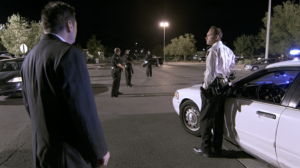
A show-up is different because the suspect is presented individually to the witness for possible identification.
Beyond those definitions, the statute’s central requirement is simple: the agency must have a policy.
Nevada law does not prescribe exactly what that policy must contain.
Nevada does not require many commonly recommended lineup procedures
Eyewitness-identification reform often focuses on several procedures designed to reduce the risk of mistaken identification.
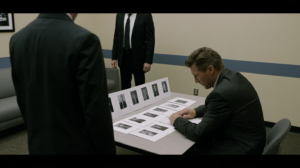
One is blind administration, where the officer conducting the lineup does not know who the suspect is.
Another is sequential presentation, where photographs or people are shown one at a time rather than simultaneously.
Other commonly discussed practices include telling the witness that the perpetrator may not be present, establishing rules for choosing fillers, obtaining an immediate confidence statement, and recording the identification procedure.
NRS 171.1237 does not require any of those specific practices.
Nevada law does not impose a statewide blind-administration rule, sequential-presentation requirement, filler-selection standard, required witness instruction, confidence-statement procedure, or mandatory recording rule for police lineups.
That does not mean an individual police department cannot require those practices through its own internal policy.
It means the requirement must be found in the agency’s policy, not assumed from the Nevada statute.
Nevada law does not provide an automatic remedy for a lineup-policy violation
NRS 171.1237 also does not specify what happens when an agency fails to follow its own lineup policy.
The statute does not provide an automatic suppression rule.
It also does not state that an identification must automatically be excluded if an agency’s policy is incomplete, violated, or unavailable.
That makes the actual police policy and the way the identification was conducted especially important.
A violation can still provide useful material for a defense lawyer to question the reliability of the identification and cross-examine witnesses about how the procedure was handled.
But a policy violation does not automatically mean the identification disappears from the case.
Nevada knows how to impose detailed procedures when it chooses to
The limited language of the lineup statute becomes clearer when compared with another Nevada law in the same area.
NRS 171.1239 addresses the electronic recording of certain custodial interrogations.
Unlike the lineup statute, that provision requires agencies to adopt detailed written policies and specifies more of what those policies must contain.
It also addresses when entire interrogations must be recorded in certain homicide and sexual-assault investigations conducted in places of detention.
The rule contains exceptions, including certain equipment failures and good-faith failures to operate recording equipment.
Even that more detailed statute does not automatically create an evidentiary remedy for every violation.
The comparison is important because it shows that Nevada can prescribe detailed procedural requirements when the Legislature chooses to do so.
With police lineups, it did not.
The agency’s own policy becomes critical in an identification case
Because Nevada does not impose one detailed statewide lineup procedure, the policy of the specific law-enforcement agency involved in the case becomes critical.
That turns the issue into a discovery question.
- What lineup policy did the agency have when the identification occurred?
- What did that policy require?
- Did officers follow it?
- Was the procedure documented?
- Was it recorded?
Those questions cannot always be answered by reading Nevada statutes alone.
Defense counsel may need to obtain the agency’s written policy and compare it with reports, photographs, video, witness statements, and other records describing what actually happened.
A policy violation can still matter to the defense
The absence of an automatic suppression remedy does not make lineup procedure irrelevant.
If an officer failed to follow the department’s own policy, that fact may give the defense a concrete basis for challenging the reliability of the identification.
It can become important during cross-examination.
For example, the defense may question why a particular procedure was used, whether witnesses received instructions, how fillers were selected, whether officers knew who the suspect was, and whether any confidence statement was documented.
The strength of those arguments depends on what the agency’s actual policy required and how far the officers departed from it.
The key point is that the defense needs the documents before it can evaluate the problem.
Eyewitness identification matters most when it is the prosecution’s main evidence
Lineup procedure becomes particularly important when eyewitness identification is the primary connection between the defendant and the alleged crime.
That can occur in robbery, burglary, theft, assault, and other cases where the witness did not previously know the person they later identified.
If the prosecution also has surveillance video, physical evidence, digital records, or another documented connection between the defendant and the scene, the eyewitness identification may be only one part of a larger case.
If little or no corroborating evidence exists, however, one witness’s identification can carry much more weight.
In that situation, the circumstances surrounding the lineup, photo array, or show-up become especially important to the defense.
Show-ups, photo lineups, and live lineups are not the same
Nevada defines three separate identification procedures, and understanding which one occurred matters.
A live lineup involves a group of people presented to the witness.
A photo lineup uses an array of photographs.
A show-up presents one suspect individually.
A show-up can naturally create different suggestiveness concerns because the witness is not choosing from a group.
But Nevada’s statute does not provide a separate detailed statewide procedure for any of the three methods.
That makes it important to identify exactly which procedure officers used and then obtain the policy that governed it.
Why discovery matters in an eyewitness-identification challenge
A defendant generally cannot evaluate whether officers followed a lineup policy without seeing the policy itself.
The same is true for the documentation surrounding the identification.
A defense lawyer may need to review:
- The agency’s written lineup policy.
- The photographs or individuals used in the lineup.
- Reports describing what officers told the witness.
- Any audio or video recording of the procedure.
- The witness’s statements before and after the identification.
- Documentation of the witness’s level of certainty.
- Information showing which officers knew the suspect’s identity.
The goal is not merely to ask whether Nevada law required blind administration.
Nevada’s statute does not.
The more useful question is whether the agency adopted safeguards of its own and whether officers followed them.
Nevada does not establish the lineup rules for every Clark County agency
It is important not to assume that every police department in Clark County uses exactly the same identification procedure.
NRS 171.1237 requires agencies to adopt policies, but it does not create a single detailed statewide policy.
That means LVMPD, another municipal police department, a sheriff’s office, or another law-enforcement agency may have its own procedures.
The content of those policies should be verified rather than guessed.
In an actual criminal case, defense counsel can request the relevant policy through discovery and compare it with the procedure used in the defendant’s identification.
Frequently Asked Questions
Does Nevada require blind administration of a photo lineup?
No. NRS 171.1237 requires law-enforcement agencies to adopt policies governing lineups, but the statute does not specifically require blind administration. An individual agency may adopt that requirement in its own policy, which is why the relevant policy should be obtained and reviewed in the criminal case.
What happens if police did not have or follow a written lineup policy?
Nevada law requires agencies to adopt a lineup policy, but NRS 171.1237 does not provide an automatic suppression remedy when a policy is missing or was not followed. That problem can still be important to the defense because it may support cross-examination and arguments about the reliability or fairness of the identification procedure.
What is the difference between a show-up and a police lineup?
A show-up presents a single suspect to an eyewitness for possible identification. A live lineup presents a group of people that includes the suspect, while a photo lineup presents an array of photographs. Nevada defines all three procedures but does not establish detailed statewide procedural rules for how each one must be conducted.
Conclusion
An eyewitness identification can appear straightforward in a police report: the witness looked at a lineup and selected the defendant.
The actual procedure may be much more important than that summary suggests.
Nevada requires police agencies to maintain lineup policies, but the law does not dictate many of the safeguards people commonly assume are mandatory. That makes the specific agency policy, the witness instructions, the lineup materials, and the way officers conducted the procedure essential parts of the defense review.
If an eyewitness identification, photo lineup, live lineup, or show-up is being used against you or someone in your family, contact The Defense Firm for a free confidential consultation. A Las Vegas defense lawyer can request the relevant lineup policy and case records, compare those requirements with what actually happened, and determine how the identification can be challenged as part of the defense.